Connecting Royal Route
Warsaw, Poland
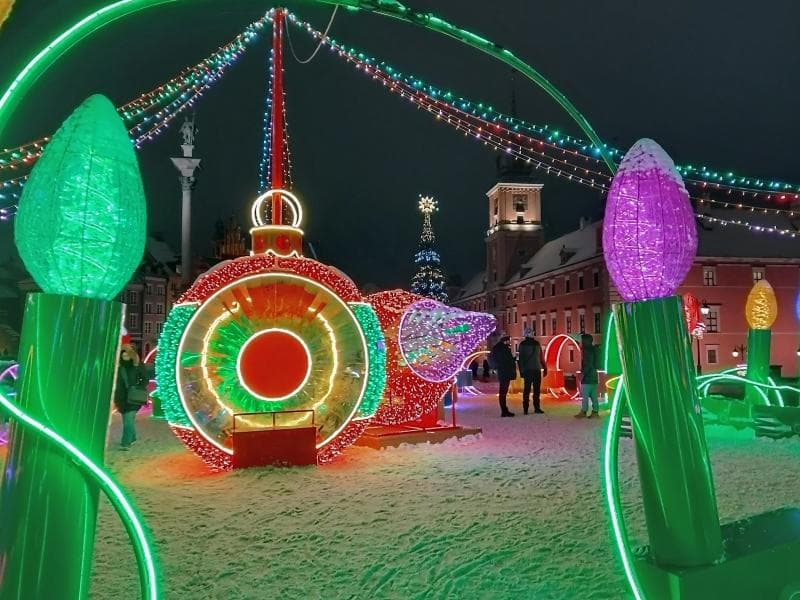
Explore Nowy Świat Street, a vibrant part of Warsaw's historic Royal Route in Poland, blending history, culture, and modern city life.
Overview
The Royal Route, known in Polish as 'Trakt Królewski', is a historically significant and captivating pathway stretching through the heart of Warsaw, Poland. This grand communication route originally led southward from the city's Old Town to the majestic Wilanów Palace. While the entire route is a tapestry of history, the section incorporating Nowy Świat Street is particularly vibrant, offering a harmonious blend of historical grandeur and contemporary city life. Nowy Świat, meaning 'New World Street', serves as a pivotal link in this iconic thoroughfare, connecting the bustling Krakowskie Przedmieście to the south and ultimately leading towards Ujazdów Avenue. It is widely recognized as a major attraction, inviting curious travelers to delve into Warsaw's rich cultural narrative.
History & Cultural Background
The Royal Route's immense cultural value was formally recognized on September 16, 1994, when it was designated an official national Historic Monument of Poland. Nowy Świat Street itself gained its evocative name in the 17th century, reflecting Warsaw's significant expansion beyond its original Old Town fortifications. Initially, this thoroughfare functioned as a vital artery, connecting the burgeoning city with various aristocratic palaces and villages situated to the south.
By the dawn of the 18th century, the formerly open fields bordering Nowy Świat had undergone a dramatic transformation, becoming densely urbanized with a collection of wooden palaces and stately manors. During the Napoleonic era, Warsaw experienced further substantial growth, prompting a comprehensive reconstruction of Nowy Świat. The older wooden structures were replaced with impressive neoclassical buildings crafted from stone and brick. This period marked its ascent to prominence as Warsaw's primary business and shopping district, a symbol of affluence and luxury that, in many ways, it retains today.
Tragically, like much of Warsaw, Nowy Świat was severely damaged during World War II. However, in a testament to the city's enduring spirit, it was meticulously rebuilt in the post-war period. The reconstruction efforts largely adhered to its classical architectural style, with most buildings thoughtfully restored to a two-story height, preserving its historic charm.
What Makes It Special
The Royal Route is an extraordinary 10-11 kilometer path that gracefully links three former royal residences, offering an unparalleled journey through Polish history. Nowy Świat Street is celebrated for its elegant cafes, chic boutiques, and an array of restaurants that contribute to its perpetually lively atmosphere. During summer weekends, a significant portion of Nowy Świat transforms into a pedestrian-only zone, inviting leisurely strolls and fostering a vibrant street life.
This street is not merely a path; it is a living exhibition connecting iconic landmarks such as the Royal Castle, the serene Łazienki Park, and the magnificent Wilanów Palace. Its very existence, having been painstakingly rebuilt after the devastation of World War II, stands as a powerful testament to Warsaw's indomitable resilience. Along Nowy Świat, visitors can also discover unique artistic expressions, including a captivating Soviet-era mural commemorating an act of Polish resistance, and the unexpected artificial palm tree at the Charles de Gaulle roundabout.
Stories, Fun Facts & Local Details
The very name 'Nowy Świat', or 'New World', is a delightful historical footnote, signifying the city's burgeoning expansion in the 17th century as it stretched beyond its medieval confines. A particularly intriguing detail is the artificial palm tree located at the Charles de Gaulle roundabout. This striking installation serves as a poignant symbol of the city's multicultural past, subtly referencing the Jewish community that once thrived in the area.
Beyond the main thoroughfare, the charm of Nowy Świat extends into its enchanting side streets, such as Foksal and Chmielna. These smaller arteries are bustling with an eclectic mix of bars, restaurants, and unique shops, perfect for discovery. As Nowy Świat approaches its southern end, it gracefully broadens into Plac Trzech Krzyży, or 'Square of the Three Crosses', an area now distinguished by its array of designer boutiques. The square itself takes its name from three historical gold crosses that once marked this important crossroads.
For those with a keen eye, plaques can be spotted on buildings, commemorating the former residences of celebrated Polish figures, including the renowned composer Karol Szymanowski and the esteemed poet Leopold Staff.
Visitor Perspective
For a curious traveler, Nowy Świat Street offers an immersive experience, perfect for unhurried strolls, indulging in window shopping, and savoring the local cafe culture. It is an exceptional spot for people-watching, particularly on those warm summer weekends when the street is transformed into a vibrant pedestrian promenade, filled with locals and visitors alike.
While the entire length of Nowy Świat can be comfortably walked in approximately 15 minutes, the true joy lies in allowing ample time to explore its charming side streets and hidden courtyards, each revealing more of Warsaw's character. Walking along this historic street provides a unique opportunity to grasp both the storied past and the dynamic present of Warsaw. Conveniently, Nowy Świat is highly accessible via public transportation, with the 'Nowy Świat-Uniwersytet' metro station providing easy access to this remarkable destination.
Coordinates: 21.01178, 52.22977
View on Google Maps💬 How Travelers Describe This Place
Based on community votes
Unique
748Photogenic
304Must See
85Beautiful
73Interesting
35
Traveler Stories
Discover memorable experiences shared by travelers who have visited this place.
No traveler stories yet.
Be the first traveler to share what made this place memorable.

Tour
By
Spot
Discover amazing places around the world. Your journey starts here.
Explore
© 2026 TourBySpot. All rights reserved.