Congress Square Lawn
Ljubljana, Slovenia
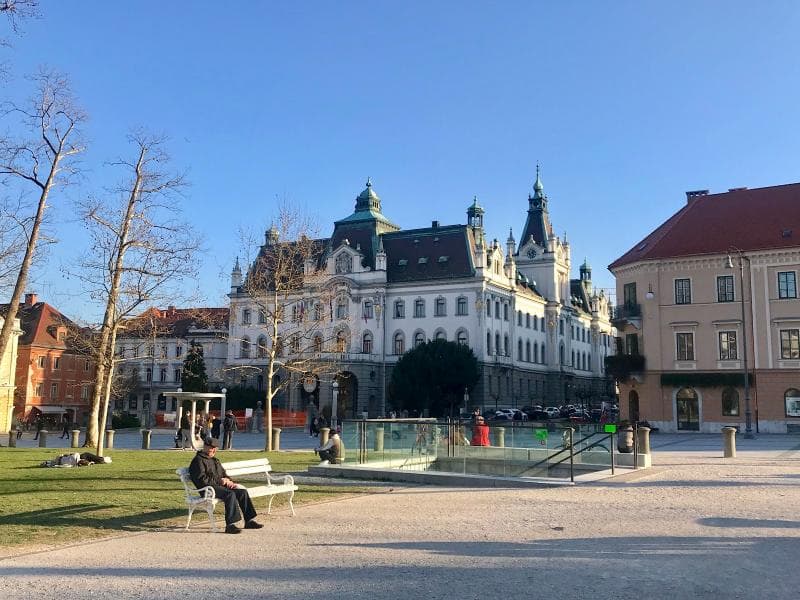
Discover Congress Square Lawn (Zvezda Park) in Ljubljana, Slovenia, a historic green space central to national events and cultural life.
Overview
Congress Square Lawn, more formally known as Zvezda Park (Star Park), lies at the vibrant heart of Ljubljana's historic Congress Square (Kongresni trg) in Slovenia. This significant green space offers a serene escape amidst the city's bustling activity, serving as both a historical landmark and a popular gathering spot for locals and visitors alike. It is a place where history resonates with every step, surrounded by architecturally rich buildings that narrate tales of Slovenia's past and present. From leisurely strolls beneath its mature trees to contemplating the various monuments, the lawn provides a central point for experiencing Ljubljana's unique charm.
As a central part of Congress Square, Zvezda Park is easily accessible and forms a natural starting point for exploring many of Ljubljana's key attractions. It’s an open, welcoming space, freely accessible year-round, inviting contemplation, relaxation, and participation in the city's lively cultural calendar.
History & Cultural Background
The origins of Congress Square, and by extension its central lawn, date back to 1821. It was established on the former site of a Capuchin monastery, specifically for the Congress of the Holy Alliance, a pivotal diplomatic meeting involving Austria, Prussia, and Russia. This event gave the square its enduring name.
Throughout its history, Congress Square has been a stage for monumental events that shaped Slovenia's destiny. In 1918, it was the site where independence from Austro-Hungarian rule was proclaimed, leading to the establishment of the State of Slovenes, Croats, and Serbs. Decades later, during the socialist period, the square underwent name changes, being known as Revolution Square and later Liberation Square, though its original name was restored in 1990.
The square also played a critical role in Slovenia's path to independence from Yugoslavia. In 1988, it hosted the first mass demonstration against the Yugoslav government, a pivotal moment that sparked wider movements. Subsequently, the declaration of Slovenia's independence on June 25, 1991, was celebrated here, cementing its place as a symbol of national identity and freedom.
In the late 1930s, the renowned Slovene architect Jože Plečnik significantly redesigned the square, integrating new trees into the park's layout. His work has since been recognized and inscribed as part of Plečnik's legacy on the UNESCO World Heritage List in 2021.
What Makes It Special
What truly distinguishes Congress Square Lawn is its seamless integration of historical depth, architectural beauty, and vibrant contemporary life. At its core is Zvezda Park, designed with paths radiating outwards in a star pattern, providing both aesthetic appeal and shaded pathways. This design is not merely decorative; it invites a sense of discovery and connection to the city's pulse.
The lawn is encircled by an impressive array of significant buildings that collectively tell Ljubljana's story. These include the main building of the University of Ljubljana, formerly the Provincial Palace where the 1821 Congress took place; the elegant Ursuline Church of the Holy Trinity; the historic Slovenian Philharmonic Hall; and the neoclassical Kazina building. Each structure contributes to the square's grandeur and its role as a cultural and educational nexus.
Stories, Fun Facts & Local Details
The name 'Zvezda Park' literally means 'Star Park,' a nod to the star-shaped arrangement of its paths. Within this park, visitors can discover several intriguing monuments and features. There's a replica of a gilded bronze statue of an Emonan patrician, discovered from the ancient Roman city of Emona, whose remains lie beneath modern Ljubljana. The original is preserved in the National Museum.
Another notable feature is the Anchor Monument, placed in 1954 to symbolize Slovenia's victory over Italian expansionism and the unification of the Slovenian Littoral with the rest of Slovenia. The park also hosts a music pavilion from the 1830s, a replica of the Holy Trinity Column, and a memorial by Jože Plečnik honoring women who protested during the Italian occupation. These elements offer glimpses into the varied layers of history and symbolism embedded in the square.
During the communist era, despite official renaming to 'Revolution Square' and 'Liberation Square,' locals often continued to refer to it by its historical name, Congress Square, showcasing a quiet resilience of cultural identity.
Visitor Perspective
For the curious traveler, Congress Square Lawn offers a unique opportunity to immerse oneself in Ljubljana's living history. It's not just a site to observe; it's a space to experience. You can enjoy a peaceful afternoon, watch locals go about their day, or simply relax on one of the benches, taking in the architectural splendor that surrounds you.
The square frequently transforms into a vibrant venue for cultural events, open-air concerts, and national celebrations, especially during spring and summer. These events provide an excellent chance to witness the city's dynamic contemporary spirit and engage with local traditions. Whether you're attending a free concert, strolling through an open-air cinema event in summer, or simply enjoying the festive decorations in winter, the lawn offers a memorable experience.
As a pedestrian-friendly area in the heart of Ljubljana, it's an ideal starting point for exploring the Old Town, with major landmarks like Prešeren Square and the Triple Bridge just a short walk away. The Congress Square Lawn invites travelers to connect with Slovenia's rich heritage and its lively present.
Coordinates: 14.5022, 46.0502
View on Google Maps💬 How Travelers Describe This Place
Based on community votes
Photogenic
1.0kUnique
869Must See
416Interesting
309Beautiful
33
Traveler Stories
Discover memorable experiences shared by travelers who have visited this place.
No traveler stories yet.
Be the first traveler to share what made this place memorable.

Tour
By
Spot
Discover amazing places around the world. Your journey starts here.
Explore
© 2026 TourBySpot. All rights reserved.