Clock Tower Pavilion
Bangkok, Thailand
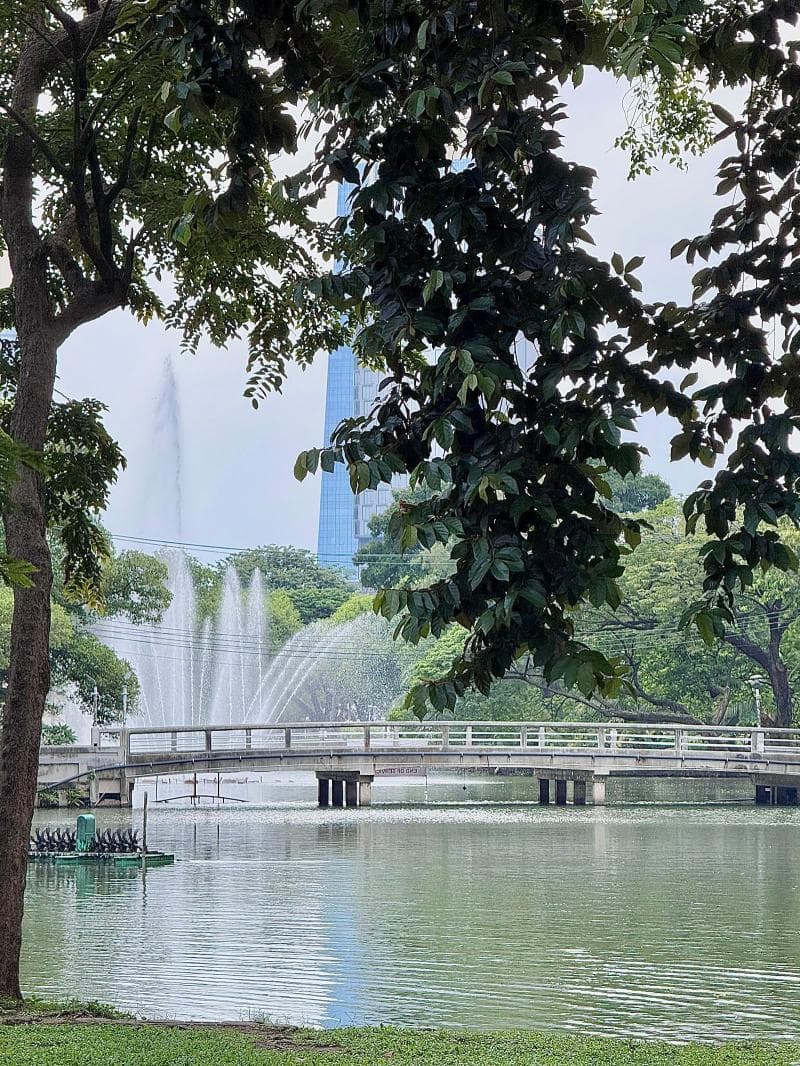

Discover the historic Clock Tower Pavilion in Lumphini Park, Bangkok, Thailand. Learn about its unique blend of Thai and Chinese architecture, history, and cultural significance.
Overview
Nestled within the verdant expanse of Lumphini Park in Bangkok, Thailand, the Clock Tower Pavilion stands as a quiet sentinel of time and history. This elegant structure, often referred to simply as the Lumphini Park Clock Tower, is much more than a mere timekeeper; it is a profound symbol of the city's journey towards modernity and its rich cultural tapestry. Positioned in the southeastern corner of the park, it offers a picturesque focal point amidst the sprawling greenery and tranquil lake, inviting curious travelers to pause and appreciate its unique charm.
Built the same year Lumphini Park first opened to the public in 1925, the pavilion was an integral part of Bangkok's inaugural vision of civic elegance. Its distinctive architectural style, a harmonious blend of Chinese motifs and Art Deco geometry, immediately sets it apart. The tower's slender lines, tiered cornices, and a clock face that gleams pale gold against the Bangkok sky contribute to its serene beauty. It’s a place where the city's pulse can be felt in a different rhythm, one of endurance and historical resonance.
History & Cultural Background
The Clock Tower Pavilion's origins are deeply intertwined with the early 20th-century modernization of Thailand's capital under King Rama VI. Constructed in 1925 for the Siamrath Phipitthapan Trade Fair, it was a gift from the Chinese community, signifying a bond of friendship and shared heritage.
The tower was conceived by the Italian architect Mario Tamagno, whose vision merged European precision with local aesthetics. While its intricate inner mechanism was imported from Europe, symbolizing the era's embrace of global advancements, its external form was designed to be distinctly Thai, with each level thought to represent the harmony between the monarchy, its people, and their faith. This fusion of influences made the clock tower a powerful emblem of punctuality, discipline, and progress – virtues championed by the King as Thailand began to engage more with the modern world.
Throughout its nearly century-long existence, the Clock Tower has silently borne witness to significant chapters of Bangkok's history, including wars, coups, and periods of immense transformation. Yet, its clock has continued to tick, its chimes echoing through the park as a metronome of endurance. It stands as a testament to the city's resilience and its ability to intertwine tradition with ongoing evolution.
What Makes It Special
What truly distinguishes the Clock Tower Pavilion is its dual role as both a historical artifact and a living landmark. It is not merely a static monument but an active participant in the park's daily life, continuing to mark the hours for joggers, tai chi practitioners, and families seeking respite from the urban bustle.
Its unique architectural style, a 'Chinese-style' or 'pagoda-style' structure that also incorporates Art Deco elements and Thai ornamentation, is a visual narrative in itself. This blend makes it a captivating subject for photography, standing out amidst Lumphini Park's lush foliage. The subtle glow of its clock face at twilight and the nostalgic tone of its hourly chimes create a serene atmosphere, offering moments of quiet contemplation in the heart of a bustling metropolis. The fact that maintenance teams still manually wind and tune its mechanism preserves an age-old craft and a soundscape familiar to generations, deepening its authenticity and charm.
Stories, Fun Facts & Local Details
Beyond its grand historical narrative, the Clock Tower Pavilion holds several delightful details that enhance its allure. While it’s often referred to as a 'Chinese Clock Tower,' its design by an Italian architect highlights Bangkok's rich international influences during that period. The gift from the Chinese community underscores the long-standing cultural and economic ties between the communities in Thailand.
Locals and regular visitors often associate the tower with the gentle rhythms of park life. Imagine the early morning light catching its pale gold face as people begin their day with exercise, or the soft glow it casts as dusk settles, muting the city's distant traffic. It's a place where time feels less about deadlines and more about moments, laps, and breaths. The tower acts as a quiet compass, guiding visitors through their leisure within the park.
Although not the most thrilling attraction for every traveler, its enduring presence and unique aesthetics make it a worthwhile spot to observe and photograph, particularly for those interested in the layers of Bangkok's past.
Visitor Perspective
For a curious traveler, encountering the Clock Tower Pavilion is an experience of gentle discovery. It's not an imposing monument but rather an integral, graceful feature that enriches the atmosphere of Lumphini Park. Located conveniently in the park's southeastern corner, it is easily accessible during a stroll. Many find it to be an ideal spot for a shaded rest, offering a pleasant break from the tropical sun, especially as it adds a touch of historical elegance to the natural surroundings.
Visitors often appreciate its photogenic qualities, particularly when framed by the park's trees or reflected in nearby waters. The tower encourages a moment of reflection, prompting thoughts about the passage of time and Bangkok's enduring spirit. Its quiet dignity stands in charming contrast to the city's rapid development, offering a tangible link to the past that continues to resonate in the present. It’s a subtle yet significant landmark that enriches the overall experience of Lumphini Park, revealing another facet of Bangkok's diverse heritage.
Coordinates: 100.54167, 13.73056
View on Google Maps💬 How Travelers Describe This Place
Based on community votes
Photogenic
826Unique
800Must See
589Interesting
387Beautiful
90
Traveler Stories
Discover memorable experiences shared by travelers who have visited this place.
No traveler stories yet.
Be the first traveler to share what made this place memorable.

Tour
By
Spot
Discover amazing places around the world. Your journey starts here.
Explore
© 2026 TourBySpot. All rights reserved.