Clarke Quay
Singapore, Singapore
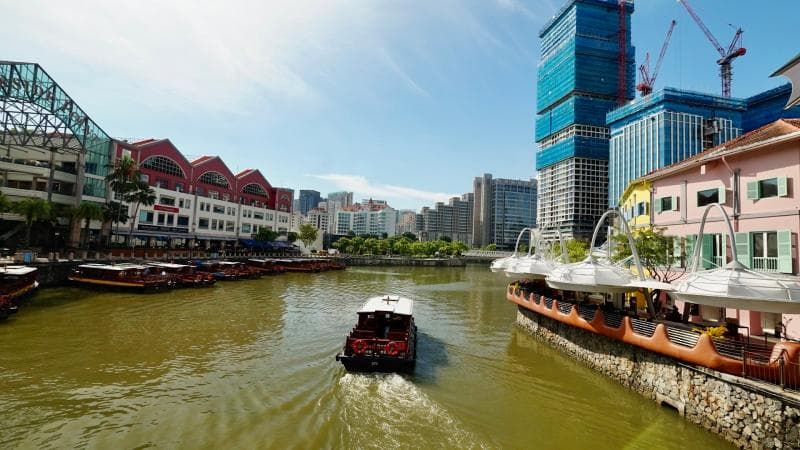
Explore Clarke Quay in Singapore, a historic riverside hub transformed into a vibrant dining, nightlife, and entertainment destination.
Overview
Clarke Quay, nestled along the historic Singapore River, stands as a vibrant testament to Singapore's rich past and dynamic present. What was once a bustling trading port, filled with the comings and goings of traditional bumboats and warehouses (known as godowns), has been meticulously transformed into one of the city's most beloved riverside destinations. Today, it’s a lively district famed for its diverse dining, captivating nightlife, and unique blend of conserved heritage architecture and modern entertainment.
By day, Clarke Quay offers a more tranquil experience, inviting visitors to stroll along its promenades, enjoy riverside views, and explore nearby cultural attractions. As evening descends, the area truly comes alive, with its brightly lit facades reflecting on the water, music spilling from numerous venues, and a convivial atmosphere that draws both locals and international travelers. It has evolved into a 'day-to-night' destination, currently known as CQ @ Clarke Quay, featuring distinct zones like The Warehouses, The Riverfront, and The Circuit.
History & Cultural Background
The history of Clarke Quay is inextricably linked to the Singapore River, which served as the lifeblood of trade from Singapore's founding in 1819. Clarke Quay itself was named after Sir Andrew Clarke, who served as Singapore's second Governor and Governor of the Straits Settlements from 1873 to 1875, playing a crucial role in establishing Singapore as a primary port for Malay states. In its early days, the quay was a pivotal transshipment zone. Coolies, or laborers, manually unloaded goods like rice, pepper, gambier, and rubber from traditional wooden boats, known as tongkangs and twakows, into the riverside godowns for storage and distribution.
By the mid-20th century, as port activities relocated and the Singapore River became increasingly polluted, Clarke Quay experienced a period of decline. However, a significant government cleanup initiative from 1977 to 1987 paved the way for its redevelopment. In 1989, Clarke Quay was officially designated a heritage conservation district, with plans mandating that new developments complement its historical character. The 'Clarke Quay Festival Village' officially opened in 1993, marking a new era. Later, British architectural firm Alsop Architects led a major revamp in 2003, redesigning shophouse facades and streetscapes to further enhance its appeal.
What Makes It Special
Clarke Quay's undeniable charm lies in its successful marriage of historical preservation and contemporary dynamism. The district’s distinct architecture features five blocks of conserved 19th-century warehouses and shophouses, now imaginatively repurposed into an array of restaurants, bars, and clubs. These buildings, often painted in vibrant pastel hues, are a visual delight, especially when illuminated at night.
Its riverside location is another key factor, offering picturesque views and the opportunity for river cruises aboard traditional bumboats. These cruises provide a unique perspective on Singapore's skyline and historical landmarks. Furthermore, Clarke Quay distinguishes itself by offering a broad spectrum of experiences – from relaxed daytime dining and exploration to energetic late-night entertainment. This versatility caters to various tastes, making it a destination that truly transforms from day to night.
Stories, Fun Facts & Local Details
Beyond its obvious attractions, Clarke Quay holds a wealth of stories. Before its redevelopment, in the Teochew dialect, the area was colloquially known as 'Cha Jung Tau,' meaning 'harbour for ships carrying firewood,' a nod to the small tongkangs that once brought firewood from Indonesia. The oldest building in Clarke Quay is the River House, an 1880s Chinese mansion that once served as both a residence and a godown. You might also spot refurbished Chinese junks moored along the river, which have been ingeniously converted into floating pubs and restaurants, offering a unique dining experience steeped in history.
The area is also a canvas for local art. The Warehouses at Block B, for instance, feature a new mural created by Singaporean artists Yip Yew Chong and tobyato, adding a contemporary artistic layer to the historic structures. For those seeking an adrenaline rush, the G-MAX reverse bungee, Singapore's first, offers an exhilarating experience that sends riders soaring high above the riverfront.
Visitor Perspective
For a curious traveler, Clarke Quay presents an engaging exploration of Singaporean heritage and modern lifestyle. During the day, it's ideal for leisurely walks, capturing photographs of the colorful shophouses, or visiting nearby attractions like the Asian Civilisations Museum, which is within walking distance.
As evening approaches, the district lights up, creating a vibrant, almost carnival-like atmosphere. It’s the perfect time to embark on a river cruise to witness the city's illuminated skyline or to enjoy a meal at one of the many restaurants, which range from international cuisine to popular local seafood spots. While drinks and prime riverside tables can be pricey, happy hours often provide more budget-friendly options. Clarke Quay is easily accessible via the Clarke Quay MRT station, making it a convenient and memorable stop on any Singapore itinerary.
Coordinates: 103.845424, 1.290318
View on Google Maps💬 How Travelers Describe This Place
Based on community votes
Must See
722Interesting
595Unique
358Photogenic
196Beautiful
19
Traveler Stories
Discover memorable experiences shared by travelers who have visited this place.
No traveler stories yet.
Be the first traveler to share what made this place memorable.
Things to see at Clarke Quay



Tour
By
Spot
Discover amazing places around the world. Your journey starts here.
Explore
© 2026 TourBySpot. All rights reserved.