Central octagon
Milan, Italy
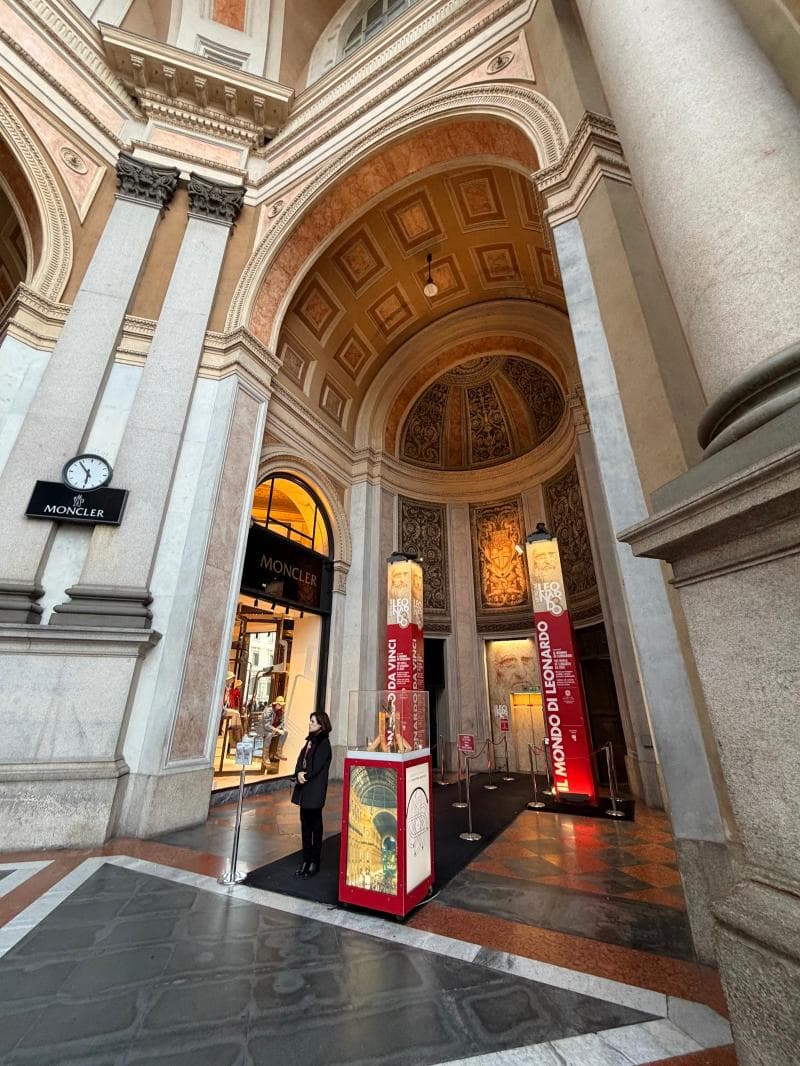
Explore Milan's Central Octagon in Galleria Vittorio Emanuele II, a stunning architectural marvel connecting history, luxury, and the famous bull mosaic tradition in Italy.
Overview
Stepping into the Central Octagon of Galleria Vittorio Emanuele II in Milan, Italy, feels like entering a grand, luminous heart at the crossroads of history and modernity. This magnificent octagonal space is not merely a central point; it is the soul of Italy's oldest active shopping arcade, a place where two glass-vaulted arcades gracefully intersect. Connecting two of Milan's most iconic landmarks—the Duomo and the Teatro alla Scala—the Central Octagon serves as a bustling meeting point, often affectionately nicknamed 'il salotto di Milano' or 'Milan's drawing room'. Its sheer architectural grandeur, adorned with intricate mosaics and a soaring glass dome, immediately captivates visitors, offering a truly immersive Milanese experience.
History & Cultural Background
The Galleria Vittorio Emanuele II, including its impressive Central Octagon, was designed in 1861 by architect Giuseppe Mengoni and constructed between 1865 and 1877. Named after Victor Emmanuel II, the first king of the unified Kingdom of Italy, the Galleria was conceived during a turbulent period of Italian unification. Mengoni envisioned it not just as a commercial hub but as a symbol of national unity, incorporating patriotic symbols throughout its design to inspire a sense of togetherness. It was a groundbreaking architectural feat for its time, making extensive use of iron, cast iron, and glass for its soaring roof and dome. This innovative approach made the Milanese Galleria a direct progenitor and an important step in the evolution of the modern glazed and enclosed shopping mall, inspiring many other similar structures across Europe. Tragically, Mengoni never saw the full completion of his masterpiece, as he fell from scaffolding and died in 1877, just before its final inauguration.
What Makes It Special
The Central Octagon is a spectacle of 19th-century engineering and artistry. It is crowned by a monumental glass dome, rising approximately 47 meters high, that bathes the space in natural light. Below, the floor is an exquisite mosaic of fine marbles, featuring allegorical figures and national symbols. Most notably, four large mosaics portray the coats of arms of the three former capitals of the Kingdom of Italy—Turin, Florence, and Rome—along with Milan's own. Additionally, in the lunettes beneath the dome, there are four mosaics representing the continents of Europe, Asia, Africa, and America, which were created in 1911 to replace original frescoes. The internal facades of the octagon are adorned in a neoclassical style, featuring superimposed orders, caryatids, telamons, and stuccoes. Surrounding this grand space are luxury boutiques, historic cafés, and restaurants, making it a vibrant center for high-end shopping and dining in Milan.
Stories, Fun Facts & Local Details
Perhaps the most famous and beloved tradition associated with the Central Octagon revolves around the bull mosaic, representing Turin. Legend has it that visitors who place their right heel on the bull's testicles and spin around three times will be blessed with good luck. Some variations also suggest it guarantees a future return to Milan. This playful ritual has been embraced by countless locals and tourists over the generations, leading to significant wear and a visible hollow in the mosaic's surface where the bull's 'delicate anatomy' is located. The mosaic has undergone several restorations, most recently in 2017 and again in 2026, to repair the damage caused by this enduring good luck charm. This blend of superstition, history, and civic pride makes the bull mosaic a living, interactive piece of Milanese culture.
Visitor Perspective
For any curious traveler, the Central Octagon offers a multi-sensory experience. As you walk across the polished marble floor, you become part of the continuous flow of people, from commuters hurrying through to tourists gazing upwards in awe. The sheer scale of the dome and the intricate details of the ironwork are best appreciated by taking a moment to look up. Then, turn your attention to the floor to seek out the famous bull and partake in the unique Milanese tradition. Beyond the architectural marvels and the lucky spin, the octagon is a place to observe daily Milanese life unfolding, whether it's people meeting for coffee, shopping at renowned luxury stores, or simply soaking in the elegant atmosphere. It is a vibrant hub that connects you not only to Milan's past but also to its present, offering a memorable snapshot of this dynamic city.
Coordinates: 9.19, 45.46556
View on Google Maps💬 How Travelers Describe This Place
Based on community votes
Photogenic
735Interesting
524Unique
480Must See
152Beautiful
118
Traveler Stories
Discover memorable experiences shared by travelers who have visited this place.
No traveler stories yet.
Be the first traveler to share what made this place memorable.

Tour
By
Spot
Discover amazing places around the world. Your journey starts here.
Explore
© 2026 TourBySpot. All rights reserved.