Cave of Hira
Mecca, Saudi Arabia
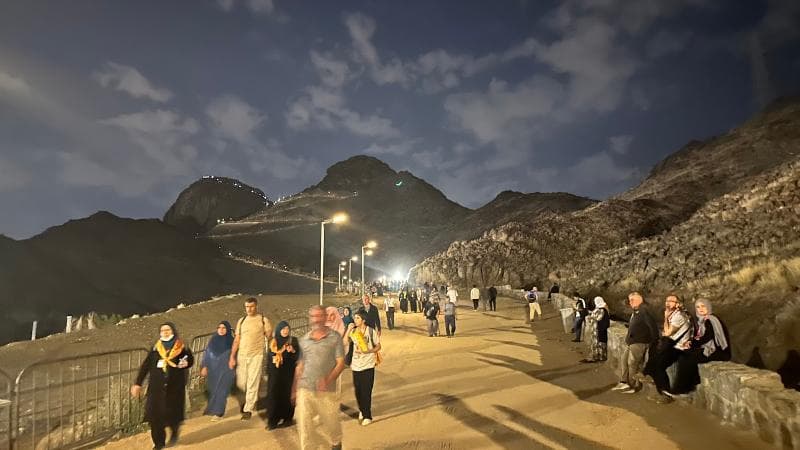
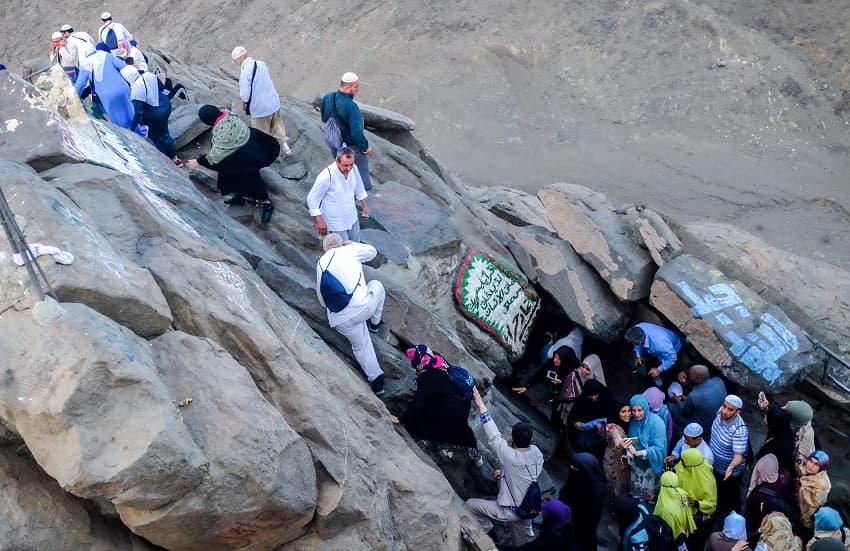
Explore the Cave of Hira on Jabal al-Nour in Mecca, Saudi Arabia, the sacred site where Prophet Muhammad (PBUH) received the first Quranic revelations. Discover its history and spiritual importance.
Overview
Nestled within the rugged peaks of Jabal al-Nour, or the 'Mountain of Light', in Mecca, Saudi Arabia, lies the revered Cave of Hira. This unassuming grotto holds immense significance for Muslims worldwide, as it was here that Prophet Muhammad (peace be upon him) received the first divine revelations of the Holy Quran. The cave, also known as Ghar-e-Hira, is a small, natural indentation near the mountain's summit, offering a profound sense of history and spirituality.
Standing approximately 634 to 642 meters above sea level, Jabal al-Nour is about 4 kilometers northeast of Masjid al-Haram, providing panoramic views of the holy city of Mecca. Despite its modest size—around 1.5 meters wide and nearly 4 meters long—the Cave of Hira attracts countless visitors seeking to connect with the pivotal moments that shaped Islamic history.
History & Cultural Background
The story of the Cave of Hira is inextricably linked to the early life of Prophet Muhammad (peace be upon him). Before his prophethood, he frequently sought solitude and contemplation, retreating to this tranquil cave away from the bustling city of Mecca. It was a place for deep thought and meditation, where he would spend extended periods, sometimes taking provisions for several days.
The most momentous event occurred in 610 CE, during the month of Ramadan, when Prophet Muhammad (peace be upon him) was 40 years old. While in deep meditation, the Angel Jibreel (Gabriel) appeared to him and commanded him to 'Read!' Prophet Muhammad (peace be upon him) replied, 'I cannot read,' as he was unlettered. Angel Jibreel (peace be upon him) embraced him firmly and repeated the command. This interaction marked the beginning of divine revelations, with the first verses of Surah Al-Alaq being revealed: 'Read! In the Name of your Lord, Who has created (all that exists), He has created man from a clot (a piece of thick coagulated blood), Read! And your Lord is the Most Generous, Who has taught (the writing) by the pen.' This profound event transformed the mountain into Jabal al-Nour, the 'Mountain of Light,' symbolizing the enlightenment that emerged from its summit.
What Makes It Special
The Cave of Hira's singular importance stems from its role as the birthplace of the Quranic revelation, marking the very inception of Islam. It is not merely a historical site but a potent symbol of divine guidance, reflection, and humility. The cave represents the moment when the message that would transform humanity began to descend, providing a foundation for faith, knowledge, and responsibility.
Unlike other sacred sites that might be central to specific rituals, the Cave of Hira's significance is more about introspection and historical connection. While not an obligatory part of Hajj or Umrah, visiting it offers a unique spiritual experience, allowing pilgrims to reflect on the Prophet's profound devotion and the genesis of Islam. The sheer act of reaching the cave, through a challenging ascent, adds to the contemplative journey, echoing the Prophet's own quest for truth and solitude.
Stories, Fun Facts & Local Details
Before the first revelation, Prophet Muhammad (peace be upon him) would often receive revelations in the form of true dreams, which further inclined him towards solitude. He would seek out this quiet retreat to meditate, distancing himself from the societal issues of idol worship and moral decay prevalent in Mecca at the time.
The cave itself is quite small, measuring approximately 3 to 4 meters in length and about 1.5 meters in width, just enough to accommodate a few people. Its entrance faces north, and historically, it aligned towards the Kaaba, adding another layer of symbolic significance. The journey to the cave involves a challenging climb up Jabal al-Nour, often taking 40 to 90 minutes. Many visitors find the physical exertion of the ascent to be an integral part of the spiritual experience, connecting them more deeply to the Prophet's endurance.
At the base of Jabal al-Nour, the Hira Cultural District has been developed, offering exhibitions and museums that bring the story of the first revelation to life for visitors.
Visitor Perspective
A visit to the Cave of Hira is a journey that combines physical effort with deep spiritual reflection. The climb up Jabal al-Nour is challenging, with paths that can be steep, especially in some sections where the incline reaches up to 70 degrees. Visitors are strongly advised to wear comfortable, sturdy footwear and carry sufficient water, particularly during the warmer months.
The best times to undertake the ascent are early mornings or late afternoons to avoid the intense midday heat and larger crowds. Upon reaching the summit, the breathtaking views of Mecca provide a serene backdrop for contemplation. While the cave itself is modest, the experience of being in the very spot where Islam began is profoundly moving. Pilgrims often take a moment inside or near the cave for quiet remembrance and prayer.
It is important to remember the sacred nature of the site; visitors are encouraged to maintain appropriate conduct and avoid littering, preserving its sanctity for all. While immensely significant, it is worth noting that visiting the Cave of Hira is not a mandatory rite of Hajj or Umrah, but rather a deeply personal and enriching pilgrimage.
Coordinates: 39.8592, 21.45737
View on Google Maps💬 How Travelers Describe This Place
Based on community votes
Unique
836Interesting
797Photogenic
286Beautiful
255Must See
86
Traveler Stories
Discover memorable experiences shared by travelers who have visited this place.
No traveler stories yet.
Be the first traveler to share what made this place memorable.

Tour
By
Spot
Discover amazing places around the world. Your journey starts here.
Explore
© 2026 TourBySpot. All rights reserved.