Castle Walls
Lisbon, Portugal
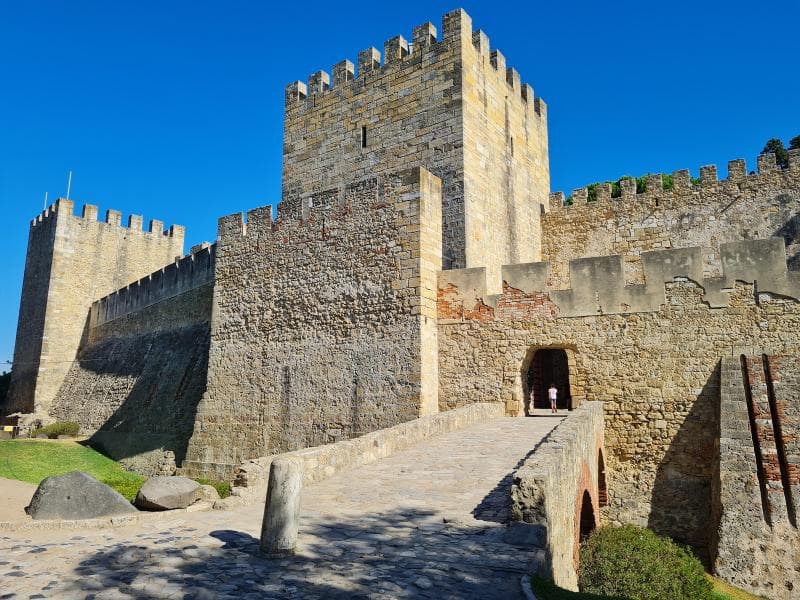
Explore the ancient Castle Walls of São Jorge Castle in Lisbon, Portugal. Discover centuries of history, breathtaking panoramic views, and captivating legends.
Overview
Perched majestically atop one of Lisbon's highest hills, the Castle Walls of São Jorge Castle offer a tangible connection to the city's layered past. More than mere fortifications, these ancient ramparts represent centuries of defense, transformation, and cultural exchange. Walking along these walls is not just a stroll; it's an immersive journey through time, providing unparalleled panoramic views of Lisbon, the shimmering Tagus River, and the surrounding historic neighborhoods. They stand as enduring testaments to the strategic importance of this site and the many civilizations that have called it home.
The walls are an integral part of the larger São Jorge Castle complex, inviting visitors to explore their battlements, towers, and hidden corners. They whisper stories of sieges, royal courts, and everyday life within this historic stronghold, making them a must-see for anyone curious about Lisbon's deep historical roots.
History & Cultural Background
The history of the Castle Walls of São Jorge Castle stretches back long before the current structures, with archaeological evidence suggesting human presence on this hill as early as the 8th century BCE. The first defensive walls were likely erected around 48 BCE when Lisbon became a Roman municipality.
Successive civilizations, including the Suebi and Visigoths, built upon these early foundations. However, it was during the Moorish occupation, particularly from the 10th and 11th centuries, that the castle's present fortification layout took shape. The Moors significantly expanded and fortified the site, making it the 'alcáçova' or citadel, a heavily fortified residence for the Moorish governors and elites. This period saw the construction of thick walls, towers, and gates designed to protect the city from various threats.
In 1147, the castle was famously captured by Christian forces led by Afonso Henriques, the first King of Portugal, with the aid of Northern European crusaders. This event, known as the Siege of Lisbon, marked a pivotal moment, transitioning the castle from Moorish to Portuguese rule. The walls continued to serve as a crucial defensive stronghold and were later incorporated into the Royal Palace of the Alcáçova.
Further expansions occurred in the 14th century under King Denis I and King Ferdinand I, who ordered the construction of the 'Cerca Fernandina' (Ferdinand's Wall) to encircle previously unprotected parts of the city. This massive undertaking, completed in just two years, featured 77 towers and extended for 5,400 meters, reinforcing Lisbon's defenses against Castilian forces.
The castle suffered significant damage during the devastating 1755 earthquake, after which it took on a more military role. Extensive restoration efforts in the 20th century, particularly in 1938 and the 1940s, aimed to preserve and reconstruct the walls, bringing them closer to their medieval appearance.
What Makes It Special
The Castle Walls of São Jorge are truly special due to their accessibility and the extraordinary experiences they offer. Visitors can walk the full circuit of the battlements, immersing themselves in the defensive architecture of centuries past. From these elevated walkways, the panoramic vistas are simply breathtaking, stretching across Lisbon's terracotta rooftops, the wide expanse of the Tagus River, the 25 de Abril Bridge, and even the Cristo Rei statue on the opposite bank.
Along the ramparts, eleven remaining towers invite exploration, each with its own history. Notable among them is the Torre de Ulisses (Ulysses Tower), which houses a camera obscura providing a unique 360-degree real-time view of the city. The design elements, such as the low barbican wall on the southern and eastern sides, were strategically built to prevent siege engines from reaching the main walls, while the steep hillsides naturally protected the northern and western flanks. Narrow passages and archer slits offer a glimpse into the formidable defensive strategies employed, allowing defenders to shoot arrows at enemies while remaining protected.
Stories, Fun Facts & Local Details
The walls are steeped in fascinating stories and historical details. One of the most famous legends associated with the castle walls is that of Martim Moniz. During the 1147 siege, it's said that this brave Portuguese knight sacrificed himself by blocking a castle gate with his own body, preventing the Moorish defenders from closing it and allowing Christian forces to enter. While historians debate the exact details, a bust and plaque commemorate his legendary act at the 'Porta de Martim Moniz'.
Another intriguing feature is the small door on the northern wall, known as the 'Door of Treason'. This covert entrance allowed secret messengers to enter or exit the citadel undetected during times of siege. Beyond the historical anecdotes, the castle grounds are also home to a charming and unexpected local detail: a flourishing population of peacocks that roam freely, adding a vibrant and somewhat surreal touch to the ancient setting. These colorful birds often strut across the courtyards and even perch atop the walls, delighting visitors.
Archaeological excavations continue to uncover remnants of previous settlements beneath the castle, offering tangible evidence of the Phoenician, Roman, and Moorish communities that once thrived on this strategic hilltop. These finds are often displayed in the castle's museum, further enriching the historical narrative of the walls.
Visitor Perspective
For the curious traveler, walking the Castle Walls at São Jorge Castle is a profoundly moving experience. As you traverse the ancient stone paths, you can almost feel the echoes of history beneath your feet. The climb along the ramparts, though sometimes steep, is always rewarded with ever-expanding views of Lisbon's picturesque landscape. It's a place where you can pause, reflect, and truly grasp the city's dramatic evolution from a fortified outpost to a vibrant capital.
The defensive design, from the strategic placement of towers to the battlements themselves, encourages a sense of wonder at the engineering prowess of past eras. It's an opportunity to connect with the narratives of those who defended these walls and those who sought refuge within them. Whether you're a history buff eager to delve into Portugal's past or simply a traveler seeking a moment of awe-inspiring beauty, the São Jorge Castle Walls offer a unique and unforgettable perspective on Lisbon, marrying historical depth with stunning visual appeal.
Coordinates: -9.13348, 38.71387
View on Google Maps💬 How Travelers Describe This Place
Based on community votes
Must See
961Interesting
710Beautiful
448Unique
156Photogenic
87
Traveler Stories
Discover memorable experiences shared by travelers who have visited this place.
No traveler stories yet.
Be the first traveler to share what made this place memorable.

Tour
By
Spot
Discover amazing places around the world. Your journey starts here.
Explore
© 2026 TourBySpot. All rights reserved.