Castle Hill
Budapest, Hungary
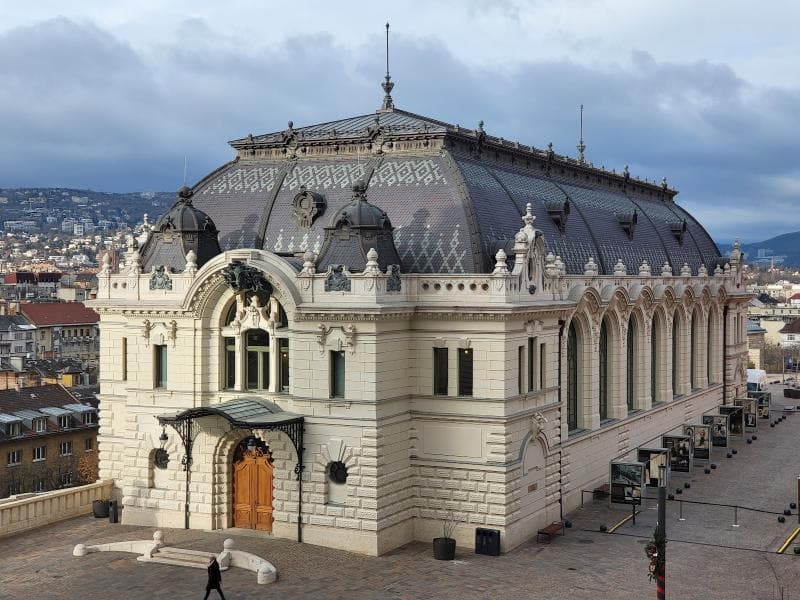
Explore Castle Hill, a UNESCO World Heritage site within Buda Castle, Budapest, Hungary. Discover its rich history, stunning architecture, and panoramic Danube views.
Overview
Castle Hill (Várhegy in Hungarian) is a prominent limestone plateau on the Buda side of Budapest, Hungary, recognized as a UNESCO World Heritage site. It rises impressively above the Danube River, offering a commanding presence and historical significance to the city. This ancient district, often called the Castle Quarter (Várnegyed), is not just a geographical feature but a vibrant historical tapestry, home to the magnificent Buda Castle complex, Matthias Church, Fisherman's Bastion, and a labyrinth of charming cobbled streets. It serves as a living museum, chronicling centuries of Hungarian history through its preserved architecture and cultural institutions.
History & Cultural Background
The story of Castle Hill began in the 13th century, after devastating Mongol invasions prompted King Béla IV to commission a fortified settlement and royal residence to protect against future attacks. This strategic hilltop location quickly became the heart of medieval Buda. Over centuries, successive monarchs expanded and renovated the royal palace, incorporating various architectural styles including Gothic, Renaissance, and eventually, a grand Baroque design. The hill has witnessed countless sieges and reconstructions. During the 16th and 17th-century Ottoman occupation, it served as a military base. However, the most destructive period was during World War II's Siege of Budapest in 1945, which left much of the district, including the palace, in ruins. Post-war, under the communist government, the palace was rebuilt in a simplified Baroque style and repurposed as a cultural complex, housing institutions like the Hungarian National Gallery and the Budapest History Museum. Today, ongoing restoration efforts aim to return many vanished buildings to their former glory, reflecting a renewed appreciation for Hungary's complex identity.
What Makes It Special
Castle Hill's allure lies in its unique blend of history, architecture, and breathtaking panoramic views. The Buda Castle complex, a sprawling former royal residence, now hosts the Hungarian National Gallery, showcasing Hungarian art, and the Budapest History Museum, which delves into the city's two-millennium past. Dominating Holy Trinity Square, the iconic Matthias Church stands with its distinctive multi-colored tiled roof and intricate Gothic architecture, a site of coronations and royal weddings. Adjacent to it, the fairytale-like Fisherman's Bastion, with its seven turrets symbolizing the seven Magyar tribes, offers unparalleled vistas across the Danube to Pest, including the Parliament Building. Beyond these major landmarks, the hill itself is a geological marvel, formed from Pannonian sea marl and protected by a hard layer of freshwater limestone, giving it a flat, wide plateau with steep slopes. Its natural defensive posture and elevation make it a natural fortress and a spectacular viewpoint.
Stories, Fun Facts & Local Details
Walking through Castle Hill is like stepping back in time. Along the Castle Hill Promenade (Tóth Árpád Sétány), visitors can enjoy picturesque views, especially when cherry blossoms bloom in spring. A notable detail at the main gate of Buda Castle is the statue of the Turul bird, a mythical creature representing the strength and origins of the Hungarian people. Beneath the hill lies the fascinating Buda Castle Labyrinth, a system of natural caves and man-made tunnels that has served various purposes, from prehistoric shelter to wine cellar, prison, and even a military hospital during wartime. This underground world adds another layer of mystery and history to the area. For a charming ascent, the historic Budapest Castle Hill Funicular provides a scenic ride from Adam Clark Square directly to the top of the hill, a tradition dating back to the late 19th century. The district also boasts quaint cobblestone streets lined with charming cafes and shops, inviting leisurely exploration away from the main attractions.
Visitor Perspective
Exploring Castle Hill is an immersive experience. While the district is compact enough to explore in a few hours, its rich tapestry of sights, from grand palaces to quiet residential alleys, rewards a more unhurried pace. Whether arriving by the historic funicular, a public bus, or a steep walk from the riverbank, the journey up prepares you for the visual feast awaiting at the summit. The lack of vehicular traffic in many areas preserves a serene, old-world atmosphere, allowing for contemplation of the views and historical depth. It’s a place where every corner seems to whisper tales of kings, battles, and everyday life through the centuries. The free-to-explore courtyards and terraces of the Royal Palace offer some of the best perspectives of the city, making it a truly rewarding destination for any curious traveler seeking both historical insight and breathtaking beauty in Budapest.
Coordinates: 19.0317, 47.5028
View on Google Maps💬 How Travelers Describe This Place
Based on community votes
Photogenic
639Unique
421Interesting
366Must See
298Beautiful
212
Traveler Stories
Discover memorable experiences shared by travelers who have visited this place.
No traveler stories yet.
Be the first traveler to share what made this place memorable.

Tour
By
Spot
Discover amazing places around the world. Your journey starts here.
Explore
© 2026 TourBySpot. All rights reserved.