Castle Gardens
Budapest, Hungary
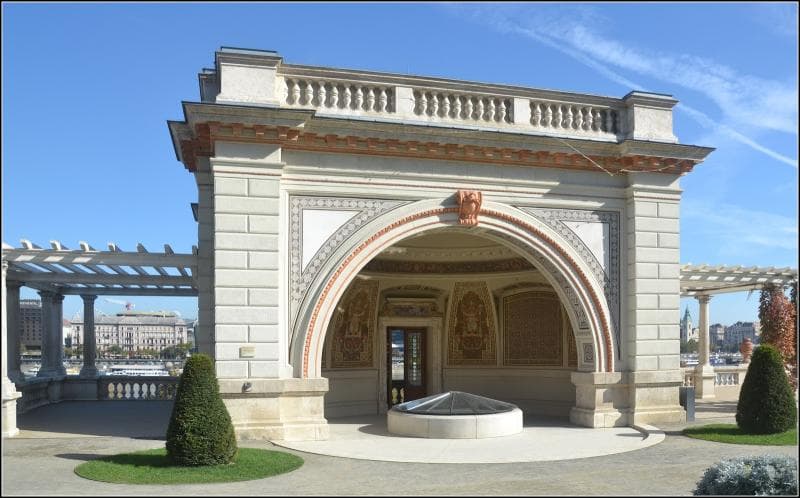
Explore the serene Castle Gardens of Buda Castle in Budapest, Hungary. Discover stunning Neo-Renaissance architecture, rich history, and breathtaking Danube views.
Overview
Nestled beneath the majestic Buda Castle in Budapest, Hungary, the Castle Gardens offer a captivating blend of historical grandeur and natural beauty. This significant sub-spot is not merely a collection of green spaces; it is a meticulously designed landscape that serves both as a picturesque entrance to the Castle District and a cultural haven. While the term 'Castle Gardens' broadly encompasses the various green areas around the Royal Palace, it prominently refers to the Buda Castle Garden Bazaar, known locally as Várkert Bazár. This Neo-Renaissance complex gracefully descends from the castle walls towards the Danube River, providing unparalleled panoramic views of Pest and the river itself.
These gardens invite visitors to explore their architectural elegance, tranquil pathways, and vibrant cultural life. They act as a historical and aesthetic bridge, connecting the city below with the ancient fortifications above. Whether seeking a moment of quiet reflection, an architectural marvel, or a scenic route to the Royal Palace, the Castle Gardens promise a memorable experience in the heart of Hungary's capital.
History & Cultural Background
The history of gardens on Budapest's Castle Hill stretches back centuries, with evidence of plant cultivation even during the Renaissance court of King Mátyás. Early depictions from the 15th and 16th centuries, such as Hartmann Schedel's chronicle, illustrate the presence of these green spaces.
A significant development occurred in the 19th century when Palatine Joseph, known for his love of botany and inspired by Florence's Boboli Gardens, established exquisite English-style landscape gardens on the southern and eastern slopes of Castle Hill. He introduced thousands of plant species to Hungary, including many types of roses and trees like sycamores.
The Buda Castle Garden Bazaar, a masterpiece of Neo-Renaissance architecture, was constructed between 1875 and 1883. It was designed by Miklós Ybl, one of Hungary's most celebrated architects, whose other notable works include the Hungarian State Opera House. The Bazaar was conceived not as a market, despite its name, but as a 'Cultural Palace with an Ornamental Garden,' forming a grand extension and entrance to the Royal Palace from the riverfront.
Throughout its existence, the gardens and the Bazaar have witnessed periods of both splendor and neglect. After sustaining damage during World War II, the gardens underwent significant reconstruction. The Várkert Bazár itself experienced a peculiar phase during the communist era, serving as a popular open-air disco and concert venue until the 1980s. Today, through extensive restoration efforts like the National Hauszmann Program, it has been revitalized into a vibrant cultural center, hosting exhibitions, concerts, and various events, while its gardens continue to be a cherished public space.
What Makes It Special
What sets the Castle Gardens apart is their unique synthesis of architectural brilliance, historical narrative, and breathtaking natural beauty. The Neo-Renaissance complex of the Buda Castle Garden Bazaar stands as an architectural jewel, offering a magnificent ceremonial gateway to the Buda Castle. Its intricate design, featuring ornate facades, arcades, and pavilions, creates a harmonious transition between the bustling city below and the serene castle district above.
Beyond its aesthetic appeal, the gardens offer functional elegance with a series of stairways, escalators, and even lifts, providing convenient access up the steep Castle Hill. This thoughtful design ensures that the stunning views of the Danube River, the Chain Bridge, and the Pest side of Budapest are accessible from multiple vantage points as one ascends through the lush greenery.
Moreover, the Castle Gardens are more than just a visual spectacle; they are a living cultural space. The Várkert Bazár regularly hosts art exhibitions, dance shows, film screenings, and concerts, transforming the historical setting into a dynamic hub of contemporary culture. This blend of historical preservation and modern utility, set against the backdrop of one of Europe's most iconic cityscapes, truly makes these gardens a special and multifaceted destination.
Stories, Fun Facts & Local Details
A curious detail about the Buda Castle Garden Bazaar is its name. Despite 'Bazaar' suggesting a marketplace, it was never intended or used as a traditional commercial market. Instead, it was designed as an 'Ornamental Garden' and a 'Cultural Palace,' reflecting its original purpose as an elegant public space and a grand entryway to the Royal Palace. This linguistic quirk often surprises visitors who expect rows of stalls and vendors.
Another fascinating aspect is the botanical legacy within the broader Castle Gardens. Palatine Joseph, an avid gardener, played a pivotal role in shaping some of the castle's green spaces. His passion for plants led to the introduction of over two thousand plant species to Hungary, including more than three hundred types of roses, enriching the local flora and leaving a lasting imprint on the landscape.
For those who enjoy discovering hidden gems, the wider Buda Castle District harbors several 'secret gardens.' These quieter, often overlooked green spaces provide peaceful escapes from the more crowded tourist paths, offering moments of solitude amidst historical surroundings. One can imagine centuries of stories unfolding within these secluded corners, far from the main thoroughfares.
Finally, the transformation of the Várkert Bazár from a royal garden complex to a bustling open-air disco during the communist era, and then back to a sophisticated cultural venue, is a testament to Budapest's resilience and evolving identity, weaving multiple layers of history into its very fabric.
Visitor Perspective
From a visitor's perspective, the Castle Gardens offer an inviting and often free experience within the Buda Castle complex. While certain exhibitions within the Várkert Bazár may require a ticket, many of the garden areas and courtyards are open to the public without an entry fee, often accessible 24/7.
The gardens are an ideal place for a leisurely stroll, a relaxing picnic with a view, or simply to take a break from the more intense sightseeing of the Castle District. The various pathways, stairs, escalators, and even elevators within the Buda Castle Garden Bazaar provide a pleasant and scenic alternative route to ascend to the Royal Palace, bypassing the more conventional, and sometimes crowded, entrances.
Exploring on foot is highly recommended, as it allows travelers to fully appreciate the intricate details of Ybl's architecture and the diverse plant life. Guided tours are also available for those wishing to delve deeper into the history and significance of the Várkert Bazár and specific sections like St. Stephen's Hall. The Castle Gardens provide a different, more serene side to the bustling Castle District, inviting curious travelers to uncover its tranquil beauty and rich heritage.
Coordinates: 19.03972, 47.49611
View on Google Maps💬 How Travelers Describe This Place
Based on community votes
Beautiful
873Interesting
477Unique
422Photogenic
157Must See
53
Traveler Stories
Discover memorable experiences shared by travelers who have visited this place.
No traveler stories yet.
Be the first traveler to share what made this place memorable.

Tour
By
Spot
Discover amazing places around the world. Your journey starts here.
Explore
© 2026 TourBySpot. All rights reserved.