Cascade Staircase
Chisinau, Moldova
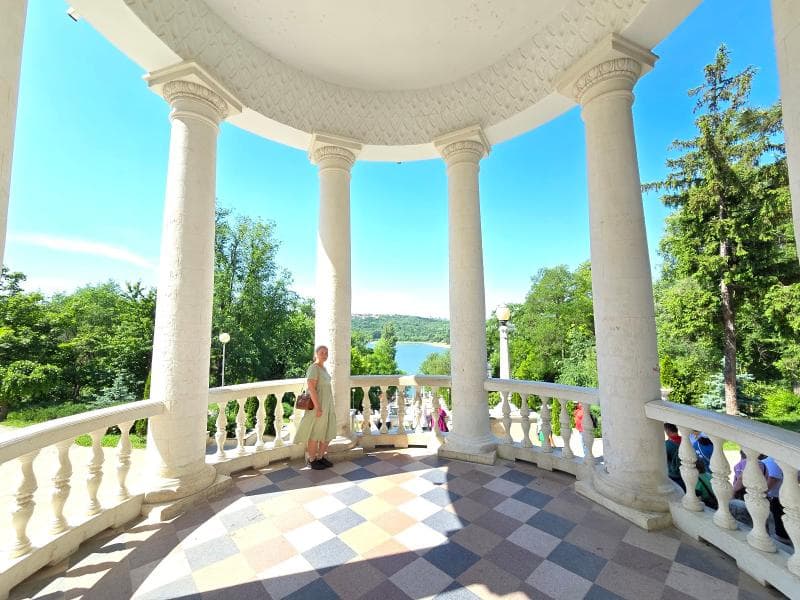
Discover the majestic Cascade Staircase in Chisinau's Valea Morilor Park, Moldova. Explore its history, unique architecture, and panoramic views.
Overview
Nestled within the verdant embrace of Valea Morilor Park in Chisinau, Moldova, the Cascade Staircase stands as a testament to both architectural ambition and natural beauty. This monumental structure is far more than a mere passage; it is an iconic landmark, gracefully connecting different elevations of the park. It descends from an upper promenade, offering breathtaking views down towards the serene Valea Morilor Lake. Popular with both locals and international travelers, the staircase is a favored spot for leisurely strolls, capturing memorable photographs, and simply soaking in the tranquil atmosphere of one of Chisinau's most picturesque corners. The Cascade Staircase, composed of 218 steps, is an impressive feat, notably surpassing the famous Potemkin Stairs in Odessa in length.
History & Cultural Background
The history of the Cascade Staircase is deeply intertwined with Chisinau's post-war reconstruction and the broader development of Valea Morilor Park. Its construction commenced in the 1950s, a period when the park, then known as the 'Lenin Komsomol Central Park of Culture and Leisure,' was undergoing significant transformation. An intriguing theory suggests that Leonid Brezhnev, who served as the First Secretary of the Communist Party of Moldova during those years, played a personal role in championing this ambitious project, envisioning it as a jewel for the capital. The design was primarily attributed to architects Robert Kurtz and Svetlana Stomovaya (or Kurz), who conceptualized a structure that integrated classical elements with the grandiosity typical of Soviet monumental architecture.
The staircase earned its evocative name because, in its original design, water was intended to flow down its steps, creating a real cascade effect that enhanced its allure. The original plans even included multi-colored lighting, designed to evoke the vibrant ambiance of Black Sea spa resorts, which were highly popular at the time. However, following the dissolution of the Soviet Union, the Cascade Staircase, like many public spaces, suffered from neglect and fell into disrepair. A significant rehabilitation project in 2016 brought the staircase back to its former glory. This restoration was a meticulous effort, with architects relying on limited historical photographs and sketches, even drawing upon personal archives of Chisinau residents to faithfully reconstruct intricate details and sculptures.
What Makes It Special
What truly sets the Cascade Staircase apart is its harmonious blend of architectural grandeur and natural setting. Its design, rooted in classical style yet infused with Soviet monumental aesthetics, features wide, ascending flights adorned with elegant balustrades, decorative flower vases, and stylized lanterns that lend it a distinct charm, particularly enchanting in the evening. Beyond its aesthetic appeal, the staircase serves as a prime vantage point, rewarding climbers with expansive panoramic views of the glistening Valea Morilor Lake and the lush parkland that stretches out around it.
Its sheer scale is impressive, boasting 218 steps, a detail often highlighted as it makes the staircase longer than the more widely known Potemkin Stairs in Odessa. The structure is flanked by fountains and statues, further enhancing its visual impact and providing focal points along the ascent. It represents a profound connection between human design and the natural world, transforming a functional ascent into a memorable journey through a piece of living history and art.
Stories, Fun Facts & Local Details
The Cascade Staircase holds a special place in the hearts of Chisinau residents, having been a beloved destination for young people and couples seeking romantic strolls since its early days. While the water no longer flows down its steps as originally envisioned, the name ‘Cascade’ persists, keeping alive the memory of its unique initial concept. A fun fact for eagle-eyed visitors: near the staircase, one can discover 'Le Petit Prince' statue, a whimsical and tiny monument measuring only 11 centimeters, making it the smallest public monument in Moldova.
The broader Valea Morilor Park itself is rich with stories. In 2009, fragments of a mammoth skeleton were discovered at the bottom of the park's drained lake, a significant and rare find for Moldova, hinting at the ancient history of the land. The park also hosts 'Tamara's spring,' a local detail attributed to a Siberian man named Gennady who spent years painstakingly arranging stones around the spring. Locals often throw coins into the park's fountains, a charming tradition expressing a wish to return to this beautiful spot.
Visitor Perspective
A visit to the Cascade Staircase promises a rich experience for any traveler. The ascent itself is an opportunity to appreciate the scale and beauty of the architecture, while the summit offers unparalleled vistas across Valea Morilor Lake and the surrounding park. Many find the staircase particularly enchanting in the evening, when the ambient lighting adds a magical glow. The serene atmosphere makes it an ideal place for quiet contemplation or capturing stunning photographs.
For those planning a visit, it is advisable to wear comfortable shoes, as the climb can be extensive. Visiting during the early morning or late afternoon hours is recommended for the best photographic light and cooler temperatures, especially during warmer months. The Cascade Staircase is also a cultural hub, frequently hosting events and concerts. Located within the easily accessible Valea Morilor Park, it can be reached via various public transport options, including trolleybuses and buses, making it a convenient and rewarding destination within Chisinau.
Coordinates: 28.8158842, 47.0217597
View on Google Maps💬 How Travelers Describe This Place
Based on community votes
Beautiful
799Interesting
424Photogenic
234Must See
181Unique
30
Traveler Stories
Discover memorable experiences shared by travelers who have visited this place.
No traveler stories yet.
Be the first traveler to share what made this place memorable.

Tour
By
Spot
Discover amazing places around the world. Your journey starts here.
Explore
© 2026 TourBySpot. All rights reserved.