Carved Ceiling Panels
Antalya, Turkey
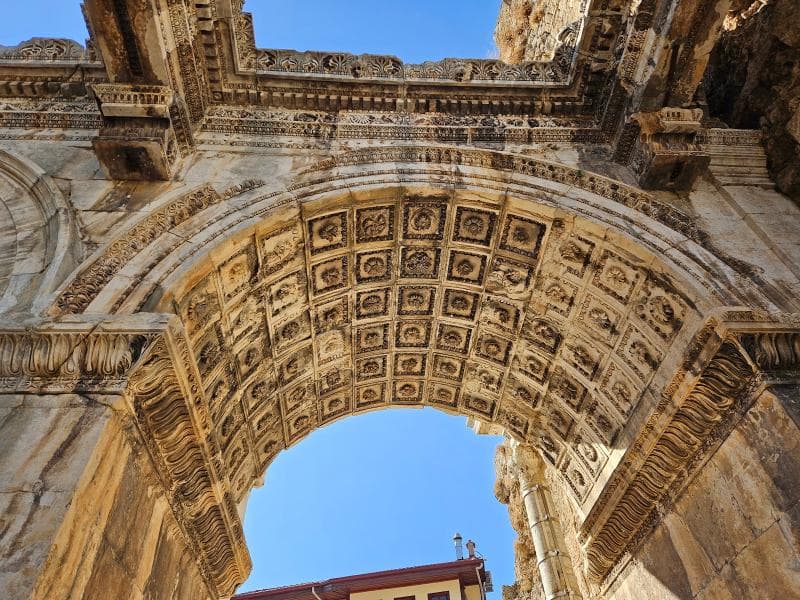
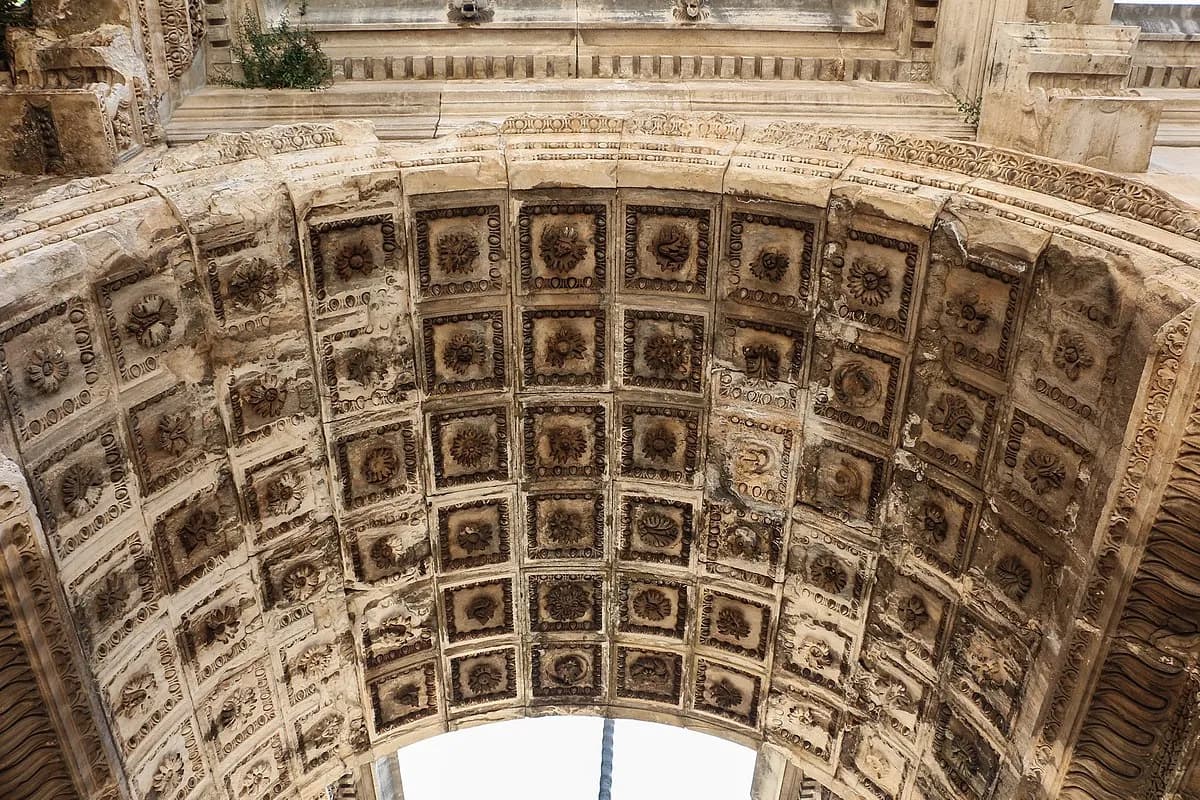
Discover Hadrian's Gate in Antalya, Turkey, and marvel at its ancient carved ceiling panels. Explore Roman history and intricate floral motifs.
Overview
Hadrian's Gate, known locally as Üçkapılar or 'Three Gates,' stands as a magnificent Roman triumphal arch marking the historic entrance to Kaleiçi, Antalya's charming old town. While many admire its grand facade and three imposing archways, a truly remarkable detail often goes unnoticed: the exquisitely carved ceiling panels nestled within each vaulted passage. These intricate artworks offer a silent, yet profound, glimpse into the Roman Empire's artistic prowess and its connection to the rich bounty of Anatolia.
As you prepare to step from the bustling modern streets of Antalya into a bygone era, pausing beneath these arches reveals a world of meticulously crafted details that have endured for nearly two millennia. The carved ceiling panels are not merely decorative; they are storytellers, each rosette and floral pattern whispering tales of ancient craft and cultural significance. To fully appreciate Hadrian's Gate is to remember to look up, for it is there that some of its most delicate and well-preserved secrets reside.
History & Cultural Background
Erected in 130 AD, Hadrian's Gate commemorates the pivotal visit of the Roman Emperor Hadrian to Attaleia, the ancient name for Antalya. This monumental gateway was designed as a triumphal arch, a testament to Roman power and engineering, built primarily from white marble. It features three symmetrical archways, each flanked by Corinthian columns that showcase the sophisticated architectural styles of the era. Over time, the gate was incorporated into the city walls, which inadvertently became its protector, shielding its delicate interior details from the elements and human interference for centuries.
The preservation of Hadrian's Gate, particularly its hidden artistic elements, is a marvel of architectural history. Its strategic position as the main ceremonial entrance to the city meant it bore witness to countless passages, from imperial processions to daily commerce. The gate's history is a layered tapestry, reflecting Roman splendor, Byzantine modifications, and Seljuk additions to its flanking towers, yet its Roman core, including the barrel-vaulted ceilings, remains remarkably intact.
What Makes It Special
The carved ceiling panels are arguably one of Hadrian's Gate's most compelling features. Found within the barrel vaults of each of the three archways, these panels are distinct coffered blocks, each intricately carved. They feature a diverse array of motifs, including delicate rosettes, elaborate floral patterns, and subtle vegetal designs. Some carvings specifically depict daisy-like flowers, along with fruit and leaf motifs, believed to symbolize the agricultural richness and fertility of Antalya and its surrounding region during ancient times.
What truly sets these carvings apart is their exceptional state of preservation. While much of the gate has been exposed to nearly 1900 years of history, the ceilings, once enclosed by surrounding city walls, remained protected. This fortunate circumstance means visitors today can observe Roman decorative work almost exactly as it left the masons' tools—precise, unhurried, and vibrant with detail. The egg-and-dart moulding further enhances the sophisticated aesthetic, creating a visual feast for those who take the time to appreciate the artistry overhead.
Stories, Fun Facts & Local Details
Beyond their aesthetic beauty, these ceiling panels are silent witnesses to centuries of local life. The gate itself is often referred to as Üçkapılar, meaning 'Three Gates' in Turkish, a simple yet evocative name highlighting its most prominent feature. Local lore, though historically inaccurate, tells tales of the Queen of Sheba passing through these very arches on her way to visit King Solomon, adding a layer of mythical charm to the site.
Another fascinating detail underfoot, visible through a glass panel in the central arch, are the deep grooves worn into the original Roman pavement. These ruts were carved over centuries by countless chariot wheels and carts traversing the gate, a tangible connection to the daily life of ancient Attaleia. Together, the subtle ceiling carvings and the dramatic wheel marks illustrate the dual nature of Roman presence: grand artistic statements above and the grind of everyday existence below. They encapsulate the vibrant historical tapestry of Antalya.
Visitor Perspective
For the curious traveler, walking through Hadrian's Gate is an immersive journey, and the carved ceiling panels are a vital part of that experience. It's easy to rush through, focused on the transition into Kaleiçi, but pausing to look upward is profoundly rewarding. The cool shade of the arches provides a moment of reflection, allowing you to appreciate the intricate craftsmanship that went into every detail. Observing the rosettes and floral motifs evokes a sense of wonder at the Romans' dedication to beauty, even in functional structures.
These carvings invite you to connect with the past, imagining the lives of those who walked beneath them long ago. They serve as a quiet reminder that history is not just about grand events, but also about the enduring human touch evident in art and architecture. The panels, with their symbolic representations of nature, root the gate not only in Roman history but also in the fertile lands of Antalya itself, making your passage through Hadrian's Gate a truly holistic historical and cultural encounter.
Coordinates: 30.70851, 36.88523
View on Google Maps💬 How Travelers Describe This Place
Based on community votes
Photogenic
826Unique
800Must See
589Interesting
387Beautiful
90
Traveler Stories
Discover memorable experiences shared by travelers who have visited this place.
No traveler stories yet.
Be the first traveler to share what made this place memorable.

Tour
By
Spot
Discover amazing places around the world. Your journey starts here.
Explore
© 2026 TourBySpot. All rights reserved.