Cantonal Museum Of Fine Arts
Lausanne, Switzerland
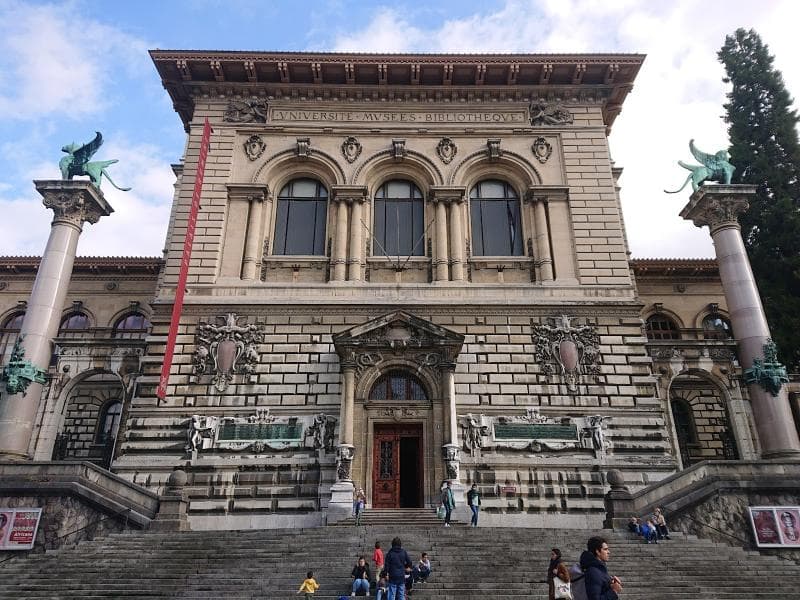
Discover the Cantonal Museum of Fine Arts (MCBA) in Lausanne, Switzerland, now at Plateforme 10. Explore its rich collection and modern architecture.
Overview
The Cantonal Museum of Fine Arts (Musée Cantonal des Beaux-Arts, or MCBA) in Lausanne, Switzerland, is a vibrant cultural institution that has recently found a magnificent new home. While it was historically located within the impressive Palais de Rumine for over a century, the MCBA moved into its purpose-built space at Plateforme 10 in October 2019, marking a significant new chapter in its long history. Plateforme 10 is a dynamic new arts district near Lausanne's central train station, bringing together three major cantonal museums: the MCBA, Photo Elysée (photography), and mudac (contemporary design and applied arts). The MCBA's collection boasts over 10,000 works, primarily spanning from the late 18th century to Post-Impressionism, with a strong emphasis on artists from the Vaud canton.
History & Cultural Background
The Cantonal Museum of Fine Arts has a rich history rooted in private initiative, dating back to its creation in 1841. It first opened as the Musée Arlaud, funded by the artist Marc-Louis Arlaud, who also became its first curator. For many years, the museum focused on collecting Swiss contemporary art. As its collection grew, the museum sought larger premises. From 1906 until 2019, the MCBA was housed in a section of the magnificent Palais de Rumine.
The Palais de Rumine itself is a landmark of Lausanne, a late 19th-century building constructed in the Florentine Renaissance style. Its existence is owed to the generous bequest of Gabriel de Rumine, son of Russian nobility, who left 1.5 million Swiss Francs to the city to erect a public utility building upon his death in 1871. Designed by Lyonnais architect Gaspard André, the Palais was inaugurated in 1902, though construction continued until 1904. It famously hosted the signing of the Treaty of Lausanne in 1923. Today, the Palais de Rumine continues its public mission by housing the Cantonal and University Library, along with other cantonal museums focusing on archaeology and history, geology, and zoology (Naturéum).
Despite its historical significance, the Palais de Rumine eventually became too small for the expanding art collection, leading to a decades-long search for a new home. The decision to move to a dedicated building near the train station was finalized in 2009, culminating in the opening of the MCBA at Plateforme 10.
What Makes It Special
The MCBA's current home at Plateforme 10 is special not only for its contemporary architecture but also for its visionary concept as an integrated arts district. Designed by the Spanish architectural firm Barozzi Veiga, the monolithic MCBA building itself is a work of art, featuring a striking brick facade and thoughtfully designed interior spaces that encourage a profound connection between the visitor and the artworks. The design intentionally avoids overshadowing the art, instead enhancing it through its minimalist aesthetic and generous natural light. The former locomotive shed's gable has even been integrated into the new building, a subtle nod to the site's industrial past.
The museum's collection is particularly renowned for its five great collections: those of Abraham-Louis-Rodolphe Ducros, Charles Gleyre, Théophile-Alexandre Steinlen, Félix Vallotton, and Louis Soutter. These artists, many with strong ties to the Vaud region, allow the MCBA to offer a unique perspective on Swiss and international art history, often presenting works not seen elsewhere. The museum's acquisition policy continually enriches these holdings, balancing existing collections with new contemporary art.
Stories, Fun Facts & Local Details
The name 'Plateforme 10' itself holds a charming local detail: 'Plateforme' refers to its proximity to the train station and the idea of bringing diverse artistic disciplines together, while '10' completes the nine existing train platforms. The logo even incorporates a slash through the zero, representing the old turntable that rotated locomotives, which can still be seen in front of the MCBA. This blending of industrial heritage with cutting-edge art creates a unique atmosphere for discovery.
The relocation of the MCBA to Plateforme 10 was a complex, multi-decade endeavor. Plans for a new, more suitable venue had been discussed for 30 years, with a significant vote in 2008 refusing a proposed site by Lake Geneva. This democratic process highlights the Swiss commitment to public engagement in cultural decisions. The final choice of the former railway depot site transformed a previously inaccessible industrial area into a vibrant public space, complete with restaurants, bookstores, and arcades, fostering a lively neighborhood feel right beside the tracks.
Visitor Perspective
Visiting the Cantonal Museum of Fine Arts at Plateforme 10 offers a seamlessly integrated cultural experience. Its location just a five-minute walk from Lausanne's main train station makes it incredibly accessible for travelers. The larger Plateforme 10 complex invites visitors to explore not just the MCBA, but also Photo Elysée and mudac, often with combined ticketing options, making it easy to immerse oneself in a diverse array of visual arts. The esplanade provides ample space for relaxation, with cafes and restaurants offering spots to reflect on the art or simply enjoy the vibrant surroundings. The museum aims to awaken curiosity in all audiences, providing spaces for discovery, exchange, learning, and contemplation, ensuring a memorable visit for art lovers and curious travelers alike.
Coordinates: 6.6254402, 46.5179913
View on Google Maps💬 How Travelers Describe This Place
Based on community votes
Unique
894Interesting
862Photogenic
443Beautiful
304Must See
35
Traveler Stories
Discover memorable experiences shared by travelers who have visited this place.
No traveler stories yet.
Be the first traveler to share what made this place memorable.

Tour
By
Spot
Discover amazing places around the world. Your journey starts here.
Explore
© 2026 TourBySpot. All rights reserved.