Buddha Collections
Vientiane, Laos
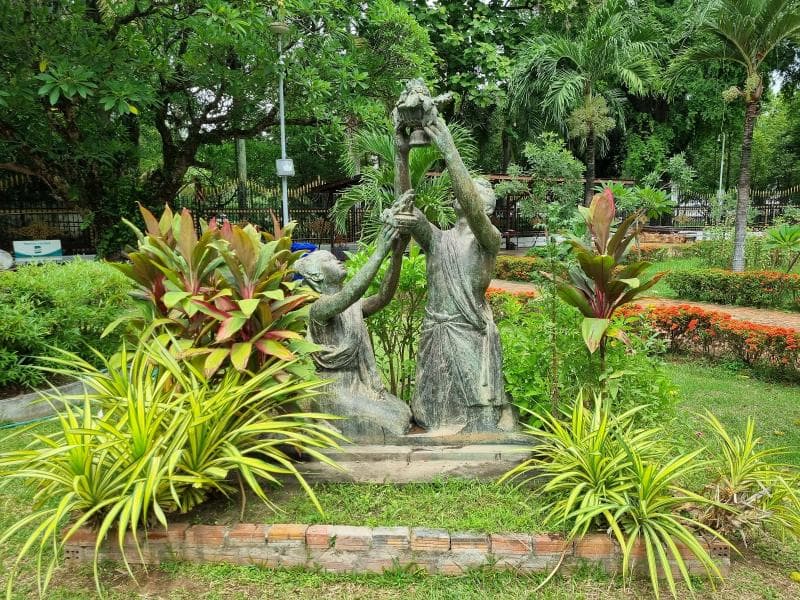
Explore the 'Buddha Collections' at Wat Ho Phra Keo in Vientiane, Laos. Discover ancient Buddhist art, historical artifacts, and royal heritage.
Overview
Stepping into Wat Ho Phra Keo in Vientiane, Laos, visitors are transported to a place steeped in history and profound spiritual significance. Once a majestic royal temple, this revered site now serves as a national museum, renowned for its extraordinary 'Buddha Collections'. While the original Emerald Buddha, for which it was built, now resides in Thailand, the museum proudly showcases a rich tapestry of Lao religious art and precious artifacts. It stands as a testament to the nation’s enduring cultural and spiritual legacy, offering a deep dive into the artistic and religious traditions of Laos.
History & Cultural Background
The story of Wat Ho Phra Keo begins in 1565, commissioned by King Setthathirath after he moved the capital of the Lan Xang Kingdom from Luang Prabang to Vientiane. Its primary purpose was to serve as the royal family's personal chapel and, crucially, to house the sacred Emerald Buddha, a revered figurine he brought from Chiang Mai. For over two centuries, this precious artifact resided within the temple, making Wat Ho Phra Keo a spiritual heartland for the Lao monarchy.
However, the temple's history is also marked by conflict and destruction. In 1779, during a Siamese (Thai) invasion, the Emerald Buddha was taken to Bangkok, where it remains to this day. The temple itself suffered extensive damage, being completely destroyed during another Siamese invasion in 1828. A significant period of reconstruction took place between 1936 and 1942, overseen by the French colonial administration. Today's structure largely reflects this rebuild. By the 1970s, Wat Ho Phra Keo transitioned from an active place of worship to its current role as a museum, dedicated to preserving and displaying Laos's rich Buddhist heritage.
What Makes It Special
The true essence of Wat Ho Phra Keo's 'Buddha Collections' lies in its diverse and exquisite array of Lao Buddhist art. The museum houses one of the country's finest collections of religious sculptures and artifacts, presenting a compelling narrative of Lao craftsmanship and devotion through the centuries. Visitors can marvel at Buddha images crafted from bronze, wood, stone, and gold, each representing different artistic periods from the Lan Xang era through the French colonial period.
Beyond the statues, the collection includes ancient palm-leaf manuscripts, which served as traditional Buddhist scriptures and historical records. There are also intricately carved wooden doors, lacquered thrones, Khmer-influenced stone carvings, and various ceremonial objects, all offering insights into the profound spiritual and artistic traditions that have shaped Laos. The building itself is a work of art, with elegant multi-tiered roofs, finely carved wooden details, and imposing naga (mythical serpent) motifs that add to its grandeur.
Stories, Fun Facts & Local Details
A central, poignant story associated with Wat Ho Phra Keo is that of the Emerald Buddha. Although the revered statue is no longer here, its legacy is deeply embedded in the temple's identity. In fact, the name 'Ho Phra Keo' itself translates to 'Altar of the Emerald Buddha,' a subtle but powerful reminder of its original purpose and the absence of its most sacred treasure.
As you approach the temple, you'll notice the majestic dragons adorning the balustrades of the stairways, their heads facing outwards as if perpetually guarding this sacred site. These mythical creatures are a common motif in Southeast Asian temple architecture, symbolizing protection and power. The surrounding, meticulously manicured gardens offer a peaceful oasis, providing a tranquil setting for contemplation and a respite from the city's bustle. It's a place full of memory, telling stories of nearly 450 years of history through its architecture and the artifacts it preserves.
Visitor Perspective
Today, Wat Ho Phra Keo operates exclusively as a museum, welcoming curious travelers to explore its historical and artistic treasures. It's important to remember that while it's no longer an active place of worship for resident monks, it remains a site of immense cultural and spiritual importance. Visitors are encouraged to dress modestly out of respect for its sacred past. While photography is generally permitted in the exterior areas, it is advisable to check for any restrictions on photography inside the museum exhibits to maintain the reverent atmosphere. Its central location in Vientiane, directly opposite Wat Sisaket, makes it easily accessible and often part of a cultural tour, allowing for a profound immersion into the deep heritage of Laos.
Coordinates: 102.61151, 17.96168
View on Google Maps💬 How Travelers Describe This Place
Based on community votes
Photogenic
910Interesting
755Must See
481Beautiful
183Unique
28
Traveler Stories
Discover memorable experiences shared by travelers who have visited this place.
No traveler stories yet.
Be the first traveler to share what made this place memorable.

Tour
By
Spot
Discover amazing places around the world. Your journey starts here.
Explore
© 2026 TourBySpot. All rights reserved.