Boudin Bakery
San Francisco, United States
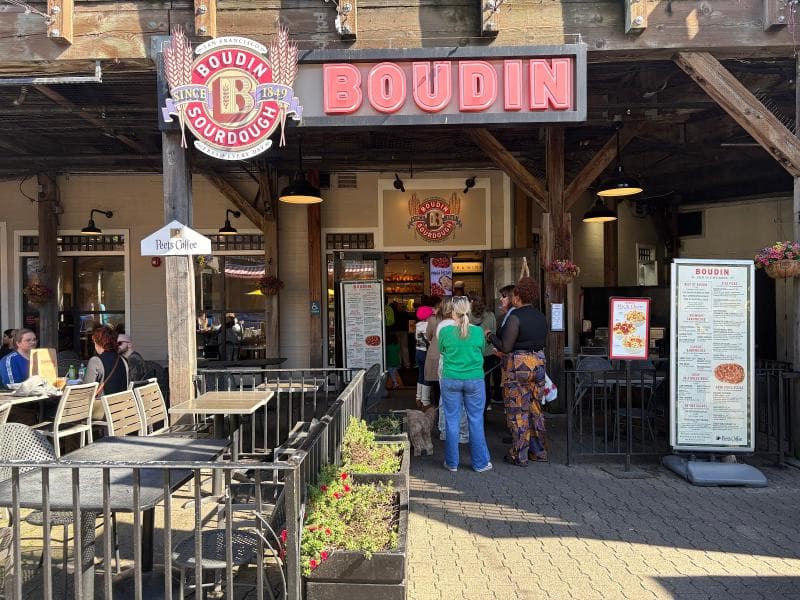
Discover Boudin Bakery at San Francisco's Fisherman's Wharf, home of 'The Original San Francisco Sourdough' since 1849. Explore its rich history and unique bread.
Overview
Boudin Bakery at Fisherman's Wharf stands as a culinary landmark in San Francisco, United States, celebrated globally for its iconic sourdough bread. It's not merely a bakery but a vibrant cultural institution offering visitors a deep dive into the art and history of sourdough. The flagship location on Jefferson Street, a prominent feature of Fisherman's Wharf, invites curious travelers to witness the bread-making process firsthand, savor freshly baked goods, and explore a rich heritage tied directly to the city's Gold Rush origins. More than just a place to eat, Boudin offers a sensory experience, from the irresistible aroma of baking bread to the engaging sight of bakers at work, making it an essential stop for anyone exploring San Francisco's famous waterfront.
History & Cultural Background
The story of Boudin Bakery begins in 1849 with Isidore Boudin, a French immigrant from a family of master bakers, who arrived in San Francisco during the California Gold Rush. He established the bakery and, blending French baking techniques with the sourdough prevalent among local miners, created what is now known as 'The Original San Francisco Sourdough.' This unique bread owes its distinctive tangy flavor to a 'mother dough' or 'starter' that has been continuously fed and maintained since its inception, containing a special strain of wild yeast, Lactobacillus sanfranciscensis, which thrives in San Francisco's foggy microclimate.
Boudin Bakery proudly holds the title of San Francisco's oldest continually operating business. Its survival through pivotal moments in the city's history is legendary. Most notably, during the devastating 1906 earthquake and subsequent fires that ravaged over 80 percent of San Francisco, Isidore's widow, Louise Boudin, courageously saved the precious mother dough by carrying it to safety in a bucket. This act ensured the continuity of the bakery's legacy and its unique sourdough tradition. In 1941, ownership transitioned to the Giraudo family, with Italian immigrant Steven Giraudo becoming Master Baker, a lineage that continues to this day, preserving the time-honored methods. The current flagship store at Fisherman's Wharf, opened in 2005, replaced an earlier 1975 location, evolving into a multi-faceted experience for visitors.
What Makes It Special
What truly sets Boudin Bakery apart is its unwavering commitment to the original 1849 'mother dough.' This living starter, passed down through generations, is the heart of every loaf, imparting a flavor profile that cannot be replicated elsewhere in the world due to the specific San Francisco microorganisms it harbors. The bakery's flagship location at Fisherman's Wharf offers an unparalleled opportunity to observe this tradition in action. Through large, 30-foot observation windows, visitors can watch skilled bakers hand-crafting thousands of loaves daily. This demonstration bakery allows for a direct connection to the artisanal process, often including opportunities to ask bakers questions through an intercom system.
Beyond the bread itself, Boudin is celebrated for its iconic sourdough bread bowls, most famously filled with rich clam chowder. The bakery also produces a delightful array of 'critter breads' – sourdough loaves shaped into playful animals like alligators, crabs, or teddy bears, especially popular during holidays. This combination of historical authenticity, unique taste, and interactive visitor experience creates a truly special destination that embodies the spirit of San Francisco.
Stories, Fun Facts & Local Details
The 'mother dough' is perhaps Boudin's most fascinating story, a living relic of the Gold Rush era that has been continuously nurtured for over 175 years. It's said that a portion of this original starter is still used in every batch of bread baked today. The strain of yeast, Lactobacillus sanfranciscensis, is so intrinsically linked to the city's environment that the distinct taste of Boudin's sourdough is a flavor unique to San Francisco itself. Master bakers, like Fernando Padilla, emphasize the sourdough's iconic status, equating its importance to other San Francisco landmarks like the Golden Gate Bridge or cable cars.
A visit to Boudin is often accompanied by the warm, yeasty aroma of fresh bread, a sensory cue that enhances the entire Fisherman's Wharf experience. Many visitors find joy in watching the theatrical production process, where dough is even tossed from an upper mixing platform to the bakers below, highlighting the artisanal nature of the craft. The bakery complex also houses a museum dedicated to the history of sourdough and the Boudin family, offering a deeper historical context to the bread-making tradition.
Visitor Perspective
For travelers to San Francisco's Fisherman's Wharf, Boudin Bakery is an essential, multi-faceted experience. The main complex offers various dining options, from a casual cafe and marketplace to a full-service bistro with waterfront views. The clam chowder served in a sourdough bread bowl is often highlighted as a quintessential San Francisco meal and a must-try for first-time visitors.
While the area can be bustling, especially given its popularity as a tourist destination, Boudin offers both indoor and outdoor seating, providing options for enjoying the atmosphere. The visual spectacle of the working bakery provides entertainment and education, allowing guests to appreciate the skill and heritage involved in creating the famous sourdough. The ability to observe bakers, explore the museum, and purchase fresh bread or unique souvenirs like canned clam chowder makes for a memorable visit, deeply connecting one to San Francisco's culinary identity and historical charm. It's a place where history, tradition, and delicious food converge, leaving visitors with a true taste of the city by the bay.
Coordinates: -122.41492, 37.808506
View on Google Maps💬 How Travelers Describe This Place
Based on community votes
Photogenic
995Beautiful
989Must See
613Interesting
603Unique
581
Traveler Stories
Discover memorable experiences shared by travelers who have visited this place.
No traveler stories yet.
Be the first traveler to share what made this place memorable.

Tour
By
Spot
Discover amazing places around the world. Your journey starts here.
Explore
© 2026 TourBySpot. All rights reserved.