Black House
Lviv, Ukraine
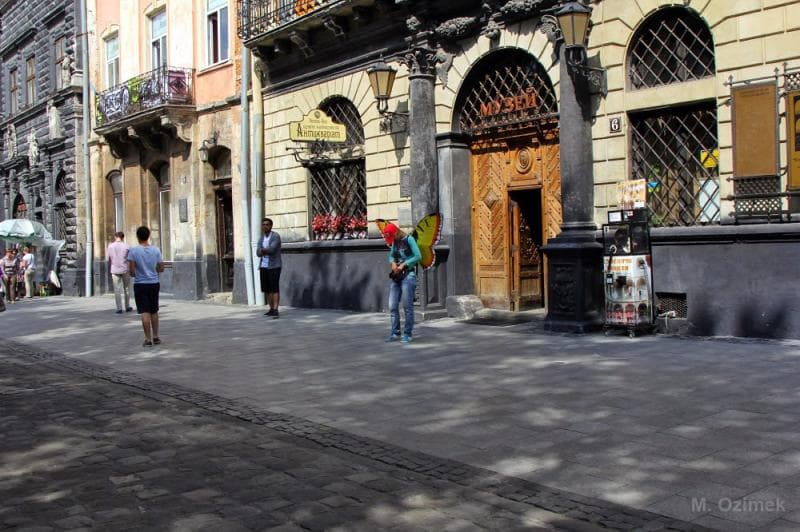
Discover the Black House (Chorna Kamianytsia) in Lviv Old Town, Ukraine. Explore this historic Renaissance building, part of the Lviv Historical Museum, and uncover centuries of history and unique architecture.
Overview
Nestled within the vibrant heart of Lviv's historic Old Town, a UNESCO World Heritage site, stands a truly unique architectural gem: the Black House, known locally as Chorna Kamianytsia. This striking Renaissance building, with its distinctively darkened facade, is an unmissable landmark on Rynok Square (Market Square), serving as a captivating testament to Lviv's rich past. Today, it forms a significant part of the Lviv Historical Museum, inviting curious travelers to step back in time and explore centuries of urban history.
History & Cultural Background
The story of the Black House begins in 1577, when it was originally constructed for Tomaso Alberti, an Italian tax-collector who significantly contributed to Lviv's economic life. The acclaimed architect Piotr Krasowski is largely credited with its initial design. Over its long lifespan, the building underwent several transformations and ownership changes, each leaving an indelible mark on its character. In 1596, Jan Lorencowicz, a prominent merchant and pharmacist, acquired the house. He added another storey and notably established one of Lviv's first pharmacies on the ground floor, a significant cultural detail for the city. Subsequent owners, including Dr. Martyn Nikanor Anchevsky, continued to enhance the building, adding intricate sculptures and baroque elements. The house saw further restorations in 1884, when a fourth floor was added, and again in 1911. Its journey into a public institution culminated in 1926 when the city government purchased the building, adapting it for museum purposes. Since 1929, the Lviv Historical Museum has been housed within its walls, preserving its legacy for future generations.
What Makes It Special
The Black House stands out on Rynok Square not only for its historical depth but primarily for its extraordinary visual appeal. Its most distinguishing feature is undoubtedly its dark, almost black, facade. This unusual coloration is a natural phenomenon; the sandstone that covers the building's exterior has oxidized over centuries, reacting with the air and soot, to develop its characteristic deep hue. This process gives it an ancient, almost mysterious aura, contrasting sharply with the pastel-colored townhouses surrounding it.
Architecturally, the Black House is a superb example of Renaissance style, influenced by Northern Italian design while incorporating local traditions. The facade is richly decorated with a technique known as 'diamond rustication,' where the limestone slabs are hewn to resemble faceted diamonds, creating a textured, robust appearance. Ornate stone carvings adorn its pilasters, window frames, and portals, featuring delicate motifs of grapevines, angelic heads, and birds. A decorative attic, common in Lviv's Renaissance architecture, crowns the building, adding to its stately presence. The meticulous craftsmanship and intricate details make it one of Lviv's most recognizable and cherished Renaissance facades.
Stories, Fun Facts & Local Details
The very name 'Black House' is a testament to its unique aging process, as the building was not intentionally constructed with a dark facade. It earned its moniker over time as the sandstone gradually darkened, a simple yet fascinating transformation that adds to its charm. Among the intriguing details are the sculptures gracing its exterior. Above the main entrance, you can observe a sculpture of Our Lady. Other figures include St. Martin, the patron of Dr. Martyn Nikanor Anchevsky, who owned the house in the 17th century, and St. Stanislaus Kostka. These sculptures weave a narrative of devotion and the personal histories of its former residents into the very fabric of the building.
Imagine the bustling activity of one of Lviv's earliest pharmacies operating right here, serving the city's inhabitants centuries ago. The Black House was not merely a grand residence but a place of commerce and daily life, reflecting the vibrant mercantile spirit of historic Lviv. The interior also boasts preserved elements like carved wooden beams and stone-decorated niches, offering glimpses into its opulent past.
Visitor Perspective
Visiting the Black House offers a deep dive into the historical and cultural layers of Lviv. As a branch of the Lviv Historical Museum, it houses various exhibitions that chronicle the city's development, daily life across different centuries, and the poignant history of the Ukrainian diaspora. While some travelers might find the focus on local coats of arms or the diaspora niche, others will appreciate the detailed insights into Western Ukraine's turbulent 20th century, including periods of war and resistance. You can explore preserved rooms and vaulted halls, gaining an intimate understanding of the architectural evolution and the lives lived within these historic walls. Standing on Rynok Square, the Black House is more than just a museum; it's a living piece of Lviv's heritage, inviting you to connect with the city's enduring spirit and its role as a crossroads of cultures between Central Europe and the East.
Coordinates: 24.0325, 49.84222
View on Google Maps💬 How Travelers Describe This Place
Based on community votes
Unique
674Beautiful
503Photogenic
261Must See
92Interesting
49
Traveler Stories
Discover memorable experiences shared by travelers who have visited this place.
No traveler stories yet.
Be the first traveler to share what made this place memorable.

Tour
By
Spot
Discover amazing places around the world. Your journey starts here.
Explore
© 2026 TourBySpot. All rights reserved.