Bird Park
Jakarta, Indonesia
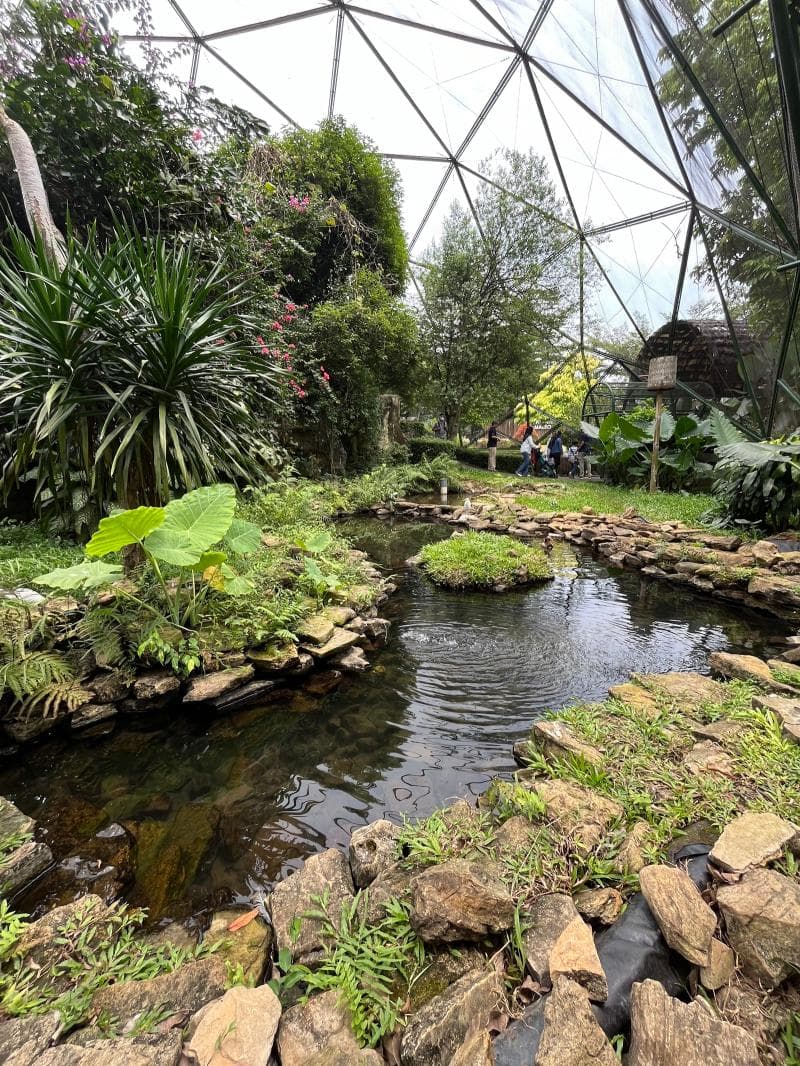
Explore Bird Park (Taman Burung) in Taman Mini Indonesia Indah, Jakarta. Discover Indonesia's diverse avian species and conservation efforts.
Overview
Nestled within the sprawling cultural park of Taman Mini Indonesia Indah (TMII) in Jakarta, Indonesia, lies the captivating 'Taman Burung' or Bird Park. This dedicated sub-spot offers a vibrant sanctuary for thousands of birds, primarily showcasing the rich avian diversity of the Indonesian archipelago. Spread across six hectares, the Bird Park is not merely a recreational attraction but also a vital center for conservation, education, and research, providing a unique immersive experience for visitors of all ages.
The park is ingeniously designed with giant domes that meticulously mimic the natural habitats of the birds, allowing many species to fly freely within these expansive enclosures. It acts as a living encyclopedia of Indonesia's winged wonders, divided geographically to reflect the distinct ecosystems found across the country. From the melodious calls of birds in the Greater Sunda region to the exotic plumage of species from Wallacea and Sahul, the Bird Park at TMII provides a fascinating journey through Indonesia's natural heritage.
History & Cultural Background
The Bird Park at Taman Mini Indonesia Indah was established with a profound vision: to bring the vast natural beauty and biodiversity of Indonesia into a miniature form, making it accessible for everyone to learn and appreciate. Built in 1976 and officially opened in 1987 by the former president Soeharto, it was conceived as an integral part of Taman Mini Indonesia Indah, which itself was the brainchild of Indonesia's first lady, Siti Hartinah (Tien Suharto), in the early 1970s.
Taman Mini Indonesia Indah, inaugurated on April 20, 1975, was envisioned as a 'Beautiful Indonesia Miniature Park' to cultivate national pride by showcasing the country's diverse cultures, traditions, and natural riches in one location. The Bird Park, or 'Taman Burung Jagat Satwa Nusantara,' specifically embodies this goal by focusing on the nation's avian fauna. Its very design, incorporating the Wallace Line as a division for its bird collection, reflects a deep understanding and educational approach to Indonesia's unique biogeography. This scientific classification, proposed by Alfred Russel Wallace in 1859, highlights the distinct faunal characteristics between the western (Asian-influenced) and eastern (Australasian-influenced) parts of Indonesia.
What Makes It Special
The Bird Park distinguishes itself through its innovative approach to bird exhibition and conservation. Rather than conventional cages, it features colossal domes where many birds roam and fly freely, offering visitors an unparalleled immersive experience. These enormous domes are divided into two primary zones: the Western Dome, representing the Greater Sunda region with birds from Sumatra, Java, Kalimantan, and Bali (such as peacocks, mynas, hornbills, and the iconic Bali Starling), and the Eastern Dome, housing species from Sulawesi, Maluku, and Papua, including the stunning Birds of Paradise, Cassowaries, Lories, and Maleos.
Beyond its impressive collection of thousands of birds across 218 species, the park functions as a crucial conservation institution. It actively participates in breeding programs for over 200 bird species, including rare and protected ones like the Javan Hawk-Eagle, contributing significantly to the preservation of Indonesia's endangered avian population. A recent revitalization in 2022-2023 further enhanced its facilities, making it greener, more modern, and even better equipped for its conservation and educational missions.
Stories, Fun Facts & Local Details
One of the most fascinating aspects of the Bird Park is its adherence to the Wallace Line, a natural boundary that dictates the distribution of species across the Indonesian archipelago. This scientific principle is brought to life within the park, allowing visitors to visually grasp how geography has shaped the evolution of distinct bird populations. Walking through the connecting tunnel between the western and eastern domes, one literally crosses this invisible line, experiencing a subtle shift in the avian inhabitants.
For those seeking closer encounters, specific interaction zones allow visitors to get up close with friendly birds. Imagine posing for a memorable photo with a toucan or a cockatoo, creating lasting memories. The park also features the Maleo Amphitheater, where engaging bird presentations and live shows are held, offering entertaining and educational insights into bird behavior and conservation. There's even an enchanting Bantimurung Cave that leads to a tranquil restaurant, where guests can relax and enjoy views of an artificial lake, with opportunities to feed pelicans.
Visitor Perspective
Stepping into the Bird Park is like entering a tranquil oasis amidst the bustling city of Jakarta. The sheer scale of the domes, with their high roofs, ensures a sense of openness and prevents any feeling of claustrophobia, allowing birds ample space to fly. The environment is designed to be immersive, with vegetation replicating natural habitats and skywalks offering eye-level views of the birds.
For families, students, and bird enthusiasts, it offers both fun and valuable learning opportunities. Educational displays provide detailed information about various Indonesian bird species, their diet, distribution, and conservation status, often referencing the IUCN Red List. Visitors can witness the successful breeding efforts firsthand, understanding the critical role the park plays in protecting endangered species. The option to feed black swans and golden fish in a serene pond connecting the domes adds a touch of interactive charm, making the visit truly memorable and impactful.
Coordinates: 106.896444, -6.301889
View on Google Maps💬 How Travelers Describe This Place
Based on community votes
Must See
963Beautiful
723Interesting
482Photogenic
396Unique
274
Traveler Stories
Discover memorable experiences shared by travelers who have visited this place.
No traveler stories yet.
Be the first traveler to share what made this place memorable.

Tour
By
Spot
Discover amazing places around the world. Your journey starts here.
Explore
© 2026 TourBySpot. All rights reserved.