Belvedere Palace
Warsaw, Poland
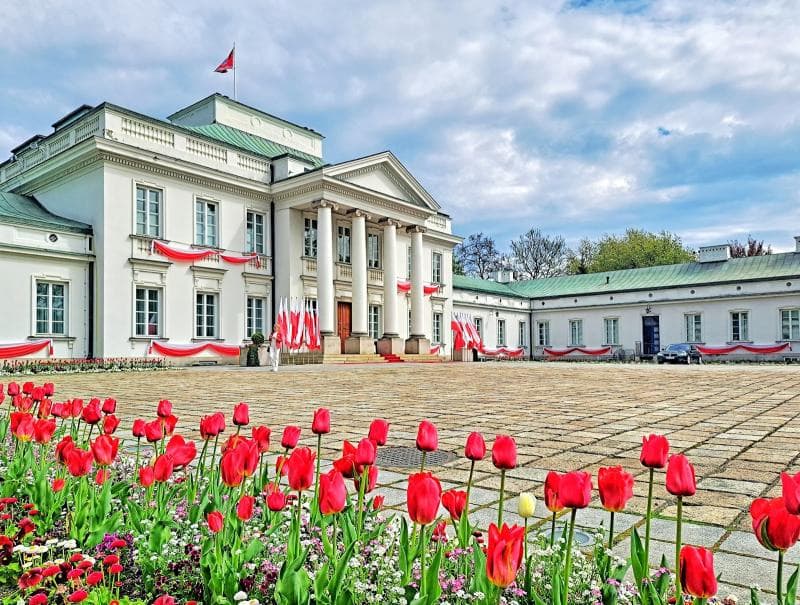
Explore Belvedere Palace in Warsaw, Poland – a historic Neoclassical presidential residence within Lazienki Park, rich in Polish history and culture.
Overview
Nestled within the sprawling, verdant expanse of Lazienki Park in Warsaw, Poland, stands the stately Belvedere Palace, a building rich in history and architectural elegance. Its name, derived from the Italian 'bel vedere,' meaning 'beautiful view,' perfectly encapsulates the picturesque surroundings it commands. While the larger Lazienki Park is renowned for its tranquil landscapes, diverse flora, and captivating structures like the Palace on the Isle, the Belvedere holds a distinct significance as one of Poland's most enduring historical landmarks. Today, it serves a pivotal role as an official residence for Polish presidents and frequently hosts foreign heads of state, making it a living monument to Polish statehood and diplomacy.
History & Cultural Background
The history of the Belvedere Palace stretches back almost 500 years, with evidence suggesting Queen Bona's residence occupied the site in the first half of the 16th century. The present structure's origins date to 1660, though it underwent substantial reconstruction and remodelling in the early 1800s. Originally, Lithuanian Chancellor Krzysztof Pac built a palace here in 1662 for his wife. The 'golden period' for the palace began in 1764 when it came into the possession of Stanisław August Poniatowski, Poland's last king. He notably repurposed a part of the palace for a porcelain manufacturing facility, producing distinctive 'Belvedere vessels.'
A significant architectural transformation occurred between 1819 and 1822 when architect Jakub Kubicki rebuilt the palace in the Neoclassical style at the expense of the Russian government. This period also saw it become the residence of the Russian Grand Duke Constantine, who fled at the onset of the November 1830 Uprising. Following Poland's regained independence in 1918, the Belvedere assumed immense national importance. It served as the residence for Marshal Józef Piłsudski from 1926 until his death in 1935, and later housed presidents like Boleslav Bierut (1945–1952), Wojciech Jaruzelski, and Lech Wałęsa (1989–1994). Remarkably, it is one of the few original buildings in Warsaw that survived the devastation of World War II, despite undergoing renovations during the war to accommodate Hans Frank.
What Makes It Special
What truly sets the Belvedere Palace apart is its profound connection to Polish history and its enduring role in the nation's political landscape. Its Neoclassical architecture, characterized by simplicity, symmetry, and grandeur inspired by ancient Greece and Rome, stands as a testament to early 19th-century aesthetics. Beyond its exterior, the palace houses historically significant interiors. The Marble Hall, for instance, features a marble statue of Marshal Józef Piłsudski and an extensive exhibition dedicated to his life. The opulent Mirror Hall dazzles with its large mirrors, marble fireplace, and paintings incorporating zodiac signs. The Pompeii Hall, adorned with murals depicting Pompeii events and tapestries, holds a special place in cultural history as the venue where a young Frederic Chopin once gave concerts. The Chapel of the Blessed Virgin Mary, with its icon of the Mother of God of Czestochowa, gained additional spiritual significance when Pope John Paul II prayed there in 1991.
Stories, Fun Facts & Local Details
The Belvedere is imbued with fascinating stories. Imagine the young Frederic Chopin enchanting audiences with his piano performances in the Pompeii Hall – a delightful detail that connects the palace to Poland's musical heritage. Marshal Józef Piłsudski, a towering figure in Polish history, made the Belvedere his home for many years, solidifying its place in the nation's memory as a seat of power. The very name 'Belvedere,' meaning 'beautiful view,' highlights the careful consideration given to its location and the scenic vistas it offers over the surrounding gardens and Lazienki Park. The palace grounds themselves boast charming elements, such as a fountain and sculptures personifying the seasons, further enhancing its serene beauty.
Visitor Perspective
For the curious traveler, visiting the Belvedere Palace offers a unique glimpse into Poland's past and present. Due to its status as an active presidential residence and state guest house, public access to the interior is generally limited. However, visitors can admire the magnificent Neoclassical exterior and explore the palace's immediate surroundings, which include beautifully maintained gardens. While individual walk-in tours are rare, organized groups (such as schools) can arrange visits on weekdays, and individual tours may be available on the last Saturday of each month by prior booking through specific agencies. Special events like 'Museum Night' occasionally provide an opportunity to explore its interiors. Even if interior access isn't possible, a stroll through Lazienki Park provides ample opportunities to appreciate the Belvedere's grandeur from afar. The park, with its peacocks, red squirrels, and famous summer Chopin concerts near the monument, offers a full day's enjoyment, making the Belvedere a captivating point of interest within a truly remarkable setting.
Coordinates: 21.029444, 52.218056
View on Google Maps💬 How Travelers Describe This Place
Based on community votes
Photogenic
915Beautiful
211Interesting
123Unique
74Must See
20
Traveler Stories
Discover memorable experiences shared by travelers who have visited this place.
No traveler stories yet.
Be the first traveler to share what made this place memorable.

Tour
By
Spot
Discover amazing places around the world. Your journey starts here.
Explore
© 2026 TourBySpot. All rights reserved.