Bell Tower
Pristina, Kosovo
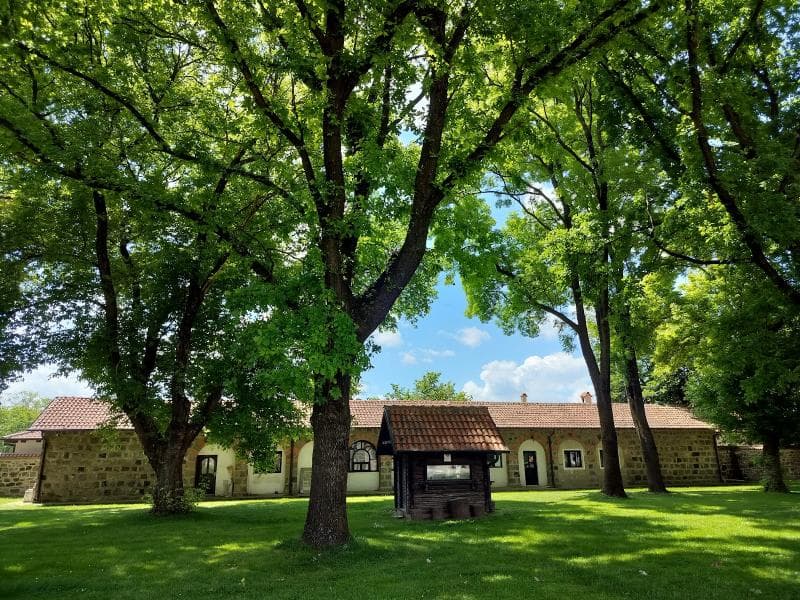
Explore the historic Gracanica Monastery near Pristina, Kosovo, a UNESCO site renowned for its Byzantine architecture, stunning frescoes, and the spiritual significance of its bells.
Overview
Nestled in the heart of Kosovo, just outside Pristina, lies the venerable Gracanica Monastery, a monumental testament to Serbian medieval art and spirituality. While many iconic monasteries boast a towering, distinct bell tower, Gracanica's architectural narrative integrates its bells more subtly into the rich tapestry of its design. The monastery, a UNESCO World Heritage site, is celebrated for its exquisite five-domed church and its breathtaking frescoes, which draw visitors into centuries of faith and history. The sound of its bells, though not emanating from a separately famed structure, forms an integral part of the monastery's living tradition, calling the faithful to prayer and marking the passage of time within its sacred walls.
History & Cultural Background
The Gracanica Monastery was founded by the Serbian King Stefan Milutin in 1321, built on the ruins of an earlier 6th-century basilica. It stands as one of his final and most magnificent endowments, originally dedicated to the Annunciation of the Holy Virgin, now celebrating the Dormition of the Holy Virgin. This architectural marvel represents the pinnacle of Medieval Serbian art in the Serbo-Byzantine tradition, characterized by its distinctive double-inscribed cross plan and the harmonious arrangement of its five domes. For centuries, Gracanica has served as a vital spiritual and cultural center for the Serb community in Kosovo, enduring turbulent times and maintaining an unbroken line of monastic life. Its designation as a Monument of Culture of Exceptional Importance in 1990 and its inclusion in UNESCO's World Heritage List in 2006 underscore its profound historical and artistic significance.
What Makes It Special
What truly sets Gracanica Monastery apart is its holistic integration of architecture, art, and spiritual life. The main church, with its five domes symbolizing Christ and the four Evangelists, showcases a unique blend of builder's creativity and engineering skill. The exterior, with its alternating red bricks and stone, creates a vibrant texture, while the interior is a mesmerizing canvas of well-preserved frescoes. These early 14th-century frescoes are considered masterpieces of the Palaeologan Renaissance, depicting biblical scenes, historical figures, and even the monastery's royal founders.
While a standalone 'Bell Tower' is not a prominent, named feature, historical accounts suggest that an open outdoor narthex, appended to the western side of the church, was probably constructed along with a bell-tower. This indicates that the monastery's bells have long been part of its architectural and spiritual identity, even if their housing isn is not a separate, towering structure. The continuous ringing of these bells has historically marked monastic routines, communal gatherings, and significant religious events, making their sound an inseparable part of the monastery's enduring sanctity.
Stories, Fun Facts & Local Details
The resilience of Gracanica Monastery is a story in itself. It has withstood centuries of challenges, from being burgled after the Battle of Maritsa in 1371 to being desecrated in the 18th century. Despite these adversities, the monastery has been continually rebuilt and restored, symbolizing the unwavering spirit of its community. Today, it operates as a nunnery, with approximately twenty nuns maintaining the daily cycle of prayer that has continued for nearly 700 years.
A fun fact for visitors is to observe the intricate details of the frescoes, where over four thousand painted faces gaze back, from saints and prophets to the royal founders King Milutin and Queen Simonida. These frescoes not only decorate but also 'witness' the countless prayers and lives lived within these walls. The marble used in its construction was likely brought from the nearby ruins of Ulpiana, adding another layer of historical connection to the ancient past of the region.
Visitor Perspective
Visiting Gracanica Monastery offers a deeply immersive experience. As you approach, the five-domed silhouette, unique in its Serbo-Byzantine style, immediately captivates. Stepping inside, the sheer volume and detail of the frescoes transport you to another era, enveloping you in a narrative of faith and history. The atmosphere is one of profound peace and contemplation, enhanced by the subtle sounds of monastic life. While you won't find a grand, separate bell tower to ascend, the presence of the bells, whether heard in the distance or imagined as part of the monastery's historical soundscape, contributes to the overall spiritual gravitas of the place. It's a journey into the heart of a living monument, where every stone and brushstroke tells a story of perseverance and devotion, making it a truly special destination for any curious traveler.
Coordinates: 21.1935, 42.5985
View on Google Maps💬 How Travelers Describe This Place
Based on community votes
Unique
948Interesting
913Must See
595Photogenic
337Beautiful
196
Traveler Stories
Discover memorable experiences shared by travelers who have visited this place.
No traveler stories yet.
Be the first traveler to share what made this place memorable.

Tour
By
Spot
Discover amazing places around the world. Your journey starts here.
Explore
© 2026 TourBySpot. All rights reserved.