Bell Tower
Pristina, Kosovo
Ascend the Bell Tower of the Cathedral of Saint Mother Teresa in Pristina, Kosovo, for breathtaking panoramic views of the city. Discover its history and cultural significance.
Overview
Soaring high above the vibrant cityscape of Pristina, Kosovo, the Bell Tower of the Cathedral of Saint Mother Teresa stands as a beacon of architectural grandeur and spiritual significance. This prominent structure is part of the largest Roman Catholic cathedral in the Balkans, a testament to modern religious architecture and a tribute to the Albanian-born humanitarian, Saint Teresa of Calcutta. The cathedral, dedicated to Mother Teresa, represents a unique blend of faith and national pride in a predominantly Muslim country.
While the broader cathedral structure itself is a sight to behold with its elegant Neo-Romanesque style, the Bell Tower specifically draws visitors with its impressive height and the unparalleled panoramic views it offers. Reaching approximately 70 meters, or around 230 to 250 feet, into the sky, it is one of Pristina's tallest buildings. For a nominal fee, visitors can ascend the tower via a lift, gaining a bird's-eye perspective of the capital and its surrounding landscapes. It is a point of orientation and an essential stop for anyone wishing to grasp the full expanse of Pristina.
History & Cultural Background
The story of the Cathedral of Saint Mother Teresa, and by extension its Bell Tower, is deeply intertwined with Kosovo's contemporary history and its journey towards religious coexistence. The foundation stone for the cathedral was ceremonially laid in 2005 by the then President of Kosovo, Ibrahim Rugova, who was Muslim. This act itself was highly symbolic, underscoring a commitment to religious tolerance and pluralism in the newly independent state.
Construction officially commenced in 2007. Though inaugurated in an unfinished state on September 5, 2010, to coincide with the hundredth anniversary of Mother Teresa's birth, the cathedral was formally consecrated seven years later, on September 5, 2017. The decision to dedicate such a significant religious edifice to Mother Teresa was not merely an act of faith but also a powerful acknowledgment of her Albanian heritage, making the cathedral a symbol of national identity and pride for many Kosovars.
What Makes It Special
Beyond its sheer size, the Bell Tower holds a distinctive place in Pristina's urban fabric. It was conceived as part of a design that originally envisioned twin bell towers, but currently, only one is fully completed and accessible to the public, offering a unique viewing experience. The tower's commanding height makes it a landmark visible from many parts of the city. Its modern construction and design contribute to Pristina's evolving skyline, contrasting with older architectural styles and reflecting the city's dynamic growth.
What truly sets the Bell Tower apart is its role as a vantage point for understanding Pristina. From its observation deck, the city unfolds beneath you, offering sweeping views that include prominent brutalist landmarks like the National Library of Kosovo. It provides a unique spatial context to the city's layout, allowing visitors to connect various districts and understand the geographical spread of Kosovo's capital.
Stories, Fun Facts & Local Details
The Bell Tower offers more than just views; it tells a story of aspiration and cultural amalgamation. While the cathedral's construction stirred some debate in a predominantly Muslim region, its dedication to Mother Teresa, an Albanian Catholic nun, ultimately became a point of shared national pride. It is a vivid illustration of how a religious structure can transcend its primary function to embody broader societal values of identity and respect. The presence of the tower and the cathedral itself are a testament to the small yet vibrant Catholic community in Kosovo.
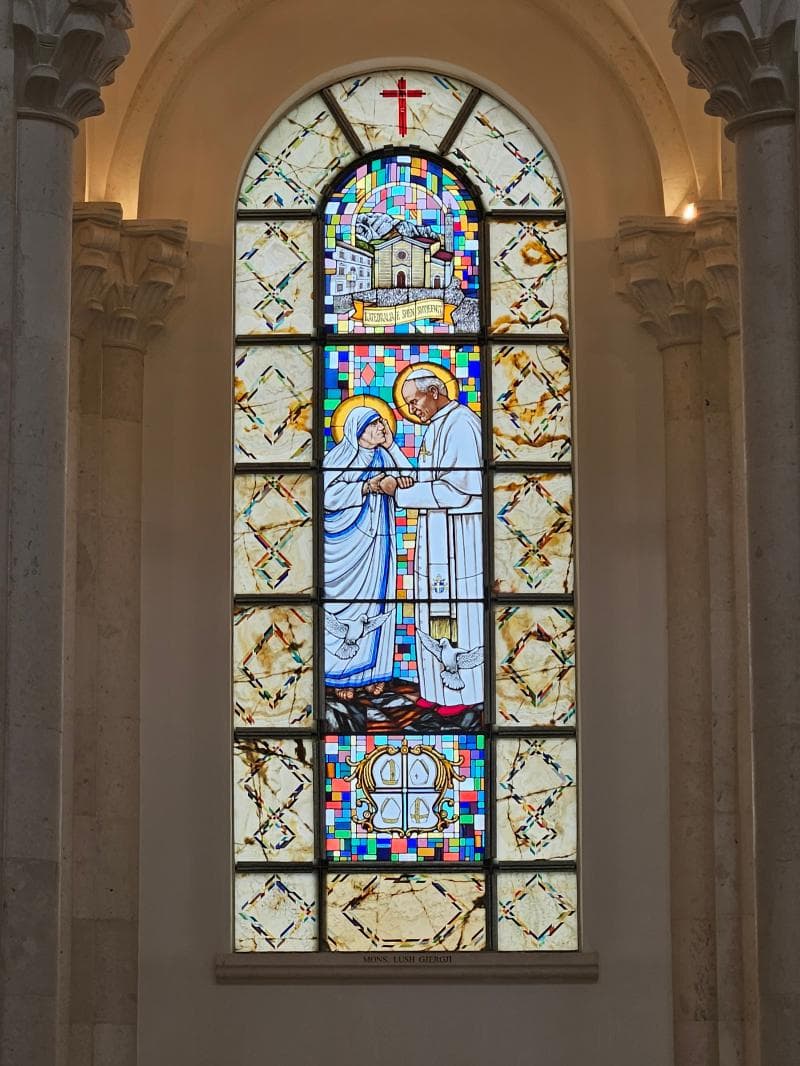
Visitors have noted the experience of riding the lift up the tower, which can feel quite a journey given its height. Once at the top, the sometimes breezy conditions add to the invigorating feeling of being so high above the city. For those interested in details, the interior of the cathedral, which the tower overlooks, features stained glass windows depicting scenes from the life of Christ and Albanian Catholic martyrs, adding depth to the cultural narrative. The cost for ascending the tower is typically around €2, a small price for such a grand perspective.
Visitor Perspective
For any curious traveler in Pristina, a visit to the Bell Tower is highly recommended. The entrance to the tower is usually found to the left side of the cathedral's main facade. The journey up in the elevator is smooth, leading to an observation area that provides stunning 360-degree vistas. From this elevated position, you can easily spot various city landmarks and appreciate Pristina's urban development alongside its natural surroundings.
It's an experience that offers both a quiet moment of reflection and an exciting visual exploration of the capital. While the views are spectacular, it's worth noting that some visitors have observed graffiti at the top of the tower, a small detail in an otherwise grand experience. The Bell Tower is accessible during the cathedral's operating hours, generally from morning to early evening. Whether you are a history enthusiast, an architecture admirer, or simply seeking the best view in town, the Bell Tower provides a memorable and insightful perspective on Pristina, symbolizing its blend of tradition, modernity, and enduring spirit.
Coordinates: 21.15944, 42.65639
View on Google Maps💬 How Travelers Describe This Place
Based on community votes
Must See
958Unique
728Interesting
481Beautiful
382Photogenic
183
Traveler Stories
Discover memorable experiences shared by travelers who have visited this place.
No traveler stories yet.
Be the first traveler to share what made this place memorable.

Tour
By
Spot
Discover amazing places around the world. Your journey starts here.
Explore
© 2026 TourBySpot. All rights reserved.