Bastion Zander
Helsinki, Finland
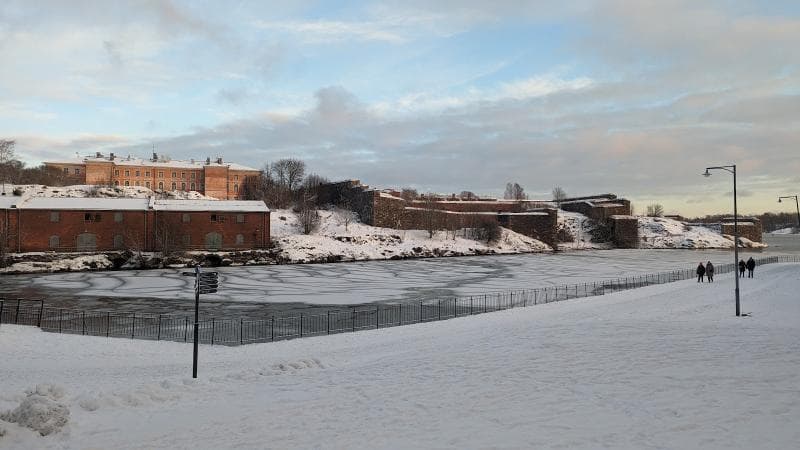
Explore Bastion Zander, a historic flag bastion within the UNESCO World Heritage site of Suomenlinna in Helsinki, Finland. Discover its history, architecture, and significance.
Overview
Bastion Zander is a significant historical landmark nestled within the UNESCO World Heritage site of Suomenlinna, an impressive sea fortress in Helsinki, Finland. Situated in the southern part of the fortress on the island of Kustaanmiekka, it stands as a testament to centuries of military architecture and strategic defense. This particular bastion, built between 1748 and 1750, forms part of a crucial chain of four bastions that once protected the vital sea approach to Helsinki. Throughout the fortress's long history, Bastion Zander has served as the distinguished 'flag bastion', where the national flag has always flown.
Visitors to Suomenlinna will find Bastion Zander located approximately 1.5 kilometers from the main pier, making it a prominent stop along the fortress's well-marked Blue Route. Its unique construction features walls predominantly formed from vertically hewn rock faces, topped with a low parapet equipped with 14 gun ports, or embrasures, designed for artillery. The bastion's commanding position offers sweeping views over the Kustaanmiekka strait, a historically significant waterway.
History & Cultural Background
The story of Bastion Zander is interwoven with the broader history of Suomenlinna itself, a fortress that began construction in 1748 under Swedish rule, then known as Sveaborg. Its initial purpose was to serve as a formidable naval base and a bulwark against Russian expansion in the Baltic Sea. Bastion Zander was one of the earliest structures to take shape, completed alongside bastions Carpelan, Gyllenborg, and Lantingshausen, forming a closed chain of fortifications that defined the highest point of Kustaanmiekka. These bastions were strategically designed to allow defenders to engage enemy forces approaching from the sea and from Vallisaari island.
Over its lifetime, Suomenlinna, and by extension Bastion Zander, has served under three different nations: Sweden, Russia, and finally independent Finland. A pivotal moment occurred in 1808 when the fortress, despite its reputation, surrendered to Russian forces after a short siege, leading to Finland becoming an autonomous Grand Duchy within the Russian Empire. Following Finland's declaration of independence, the fortress, originally named Sveaborg (Swedish for 'Swedish Fortress') and locally known as Viapori, was renamed Suomenlinna ('Fortress of Finland') in 1918. It was in this same year, 1918, that Finland's first independent flag was raised at Bastion Zander, cementing its role as a symbol of national sovereignty. In recognition of its unique military architecture and historical significance, Suomenlinna was designated a UNESCO World Heritage site in 1991.
What Makes It Special
What truly sets Bastion Zander apart is its enduring symbolic role as the flag bastion of Suomenlinna. It is here that the Finnish flag proudly flies, especially during the summer season, making it a poignant reminder of the nation's independence and history. Its construction, featuring walls of vertically hewn rock and 14 embrasures, speaks volumes about 18th-century military engineering adapted to the challenging archipelago terrain. This defensive architecture not only served a practical purpose but also contributed to the fortress's imposing presence. The bastion's location near the iconic King's Gate further elevates its prominence, as both structures together define one of the most historically significant parts of the fortress. Its strategic vantage point offers visitors not just historical insight but also breathtaking panoramas of the sea and surrounding islands, providing a tangible connection to the fortress's defensive past.
Stories, Fun Facts & Local Details
Beyond its military function, Bastion Zander holds a place in the living narrative of Suomenlinna. It's often said that the flag has consistently flown from this very spot throughout the fortress's entire existence, a tradition that continues to this day. The larger Suomenlinna complex is not merely a historical monument; it's a vibrant maritime district of Helsinki, home to approximately 800 residents and a bustling community of workers. This blend of historical preservation and contemporary life gives the fortress a unique charm. The fortress boasts an impressive six kilometers of walls and over one hundred cannons, scattered across its islands, each telling a silent story of past conflicts. While exploring Bastion Zander and its surroundings, visitors might appreciate the design influence of Vauban, a renowned French military engineer, whose principles were adapted to suit Suomenlinna's rocky islands, resulting in its distinctive star-fort style. A fun fact for families: while the walls and embrasures are fascinating, visitors are advised to be mindful of the uneven terrain and potential falling risks, especially with children.
Visitor Perspective
Experiencing Bastion Zander is an integral part of any visit to Suomenlinna. The fortress is easily accessible year-round by a short ferry or water bus journey from Helsinki's Market Square. There's no entrance fee to the fortress itself, only the cost of the boat transport. During the summer months, a water bus conveniently stops at the King's Gate, which is just about 100 meters from Bastion Zander, making access straightforward. To navigate the expansive fortress, visitors are encouraged to follow the blue signs and lines of the 'Blue Route,' a clearly marked path that connects the main sights, including Bastion Zander, and points out various services, museums, cafes, and restaurants. The Suomenlinna Visitor Center, located in the pink Jetty Barracks near the main pier, provides helpful maps and up-to-date information, and a digital guide is also available for a self-paced exploration. As you wander along the cobblestone paths and past ancient fortifications, remember to wear sturdy walking shoes and dress in layers appropriate for the often-windy archipelago weather to fully enjoy this captivating historical site.
Coordinates: 24.9863, 60.1422
View on Google Maps💬 How Travelers Describe This Place
Based on community votes
Photogenic
872Interesting
846Must See
201Beautiful
121Unique
87
Traveler Stories
Discover memorable experiences shared by travelers who have visited this place.
No traveler stories yet.
Be the first traveler to share what made this place memorable.

Tour
By
Spot
Discover amazing places around the world. Your journey starts here.
Explore
© 2026 TourBySpot. All rights reserved.