Baščaršija Square
Sarajevo, Bosnia and Herzegovina
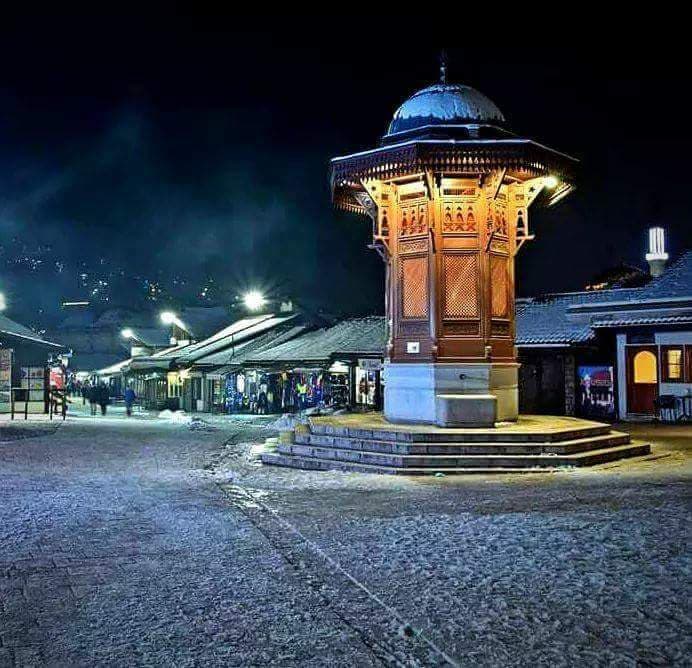
Discover Baščaršija Square in Sarajevo, Bosnia and Herzegovina – the historic heart of the old bazaar, famous for its iconic Sebilj fountain and lively atmosphere.
Overview
At the heart of Sarajevo, Bosnia and Herzegovina, lies Baščaršija, the city's historic Ottoman-era bazaar. Within this captivating district, Baščaršija Square serves as its focal point, a vibrant gathering place often affectionately known as Pigeon Square. This bustling square is instantly recognizable by the iconic Sebilj, an ornate wooden fountain that stands as a beloved symbol of the city. The name 'Baščaršija' itself derives from Turkish words, meaning 'main marketplace,' a fitting description for this area that has been the commercial and cultural pulse of Sarajevo for centuries. A visit here offers a tangible journey into the past, presenting one of Southeast Europe's most well-preserved Ottoman bazaars, teeming with life and history.
History & Cultural Background
Baščaršija's origins trace back to 1462 when Isa-Beg Isaković, the Ottoman governor of Bosnia, laid the foundations of what would become Sarajevo. He established a caravanserai, known as a han, and numerous shops, creating a new commercial hub and effectively founding the city. The bazaar flourished, particularly during the 16th century, under the patronage of Gazi Husrev-beg. This influential governor commissioned a wealth of structures, including his renowned mosque, a madrasah, a library, a hammam, and the Morića Han, significantly expanding the bazaar's reach and importance. In its golden age, Baščaršija was a sprawling center with specialized craft streets, each dedicated to a particular trade, from coppersmiths to jewelers. Throughout its long history, Baščaršija endured numerous challenges, including devastating fires in the 17th and 19th centuries that drastically reduced its size. Even during the Austro-Hungarian administration, which began in 1878, efforts were made to modernize Sarajevo, yet the core Ottoman character of Baščaršija largely remained intact. The current Sebilj fountain, for instance, was rebuilt during this period, blending Ottoman inspiration with Austro-Hungarian design. Remarkably, the bazaar even survived plans for its demolition after World War II, a testament to its enduring cultural significance and the locals' dedication. Today, it stands as a living embodiment of Sarajevo's unique identity, a place where 'East meets West'.
What Makes It Special
The undisputed centerpiece of Baščaršija Square is the Sebilj, a charming Ottoman-style wooden public drinking fountain. This hexagonal kiosk, with its carved wooden details and four cast-iron spouts, is not merely an architectural feature but a potent symbol of Sarajevo. The square around it is famously known as Pigeon Square, owing to the countless pigeons that gather here, creating a lively and picturesque scene that delights visitors. Beyond the Sebilj, Baščaršija is a treasure trove of traditional crafts. Walking through streets like Kazandžiluk (Coppersmith Street), you can witness artisans still hand-hammering intricate copperware, carrying on traditions that are hundreds of years old. The atmosphere is a sensory feast – the sounds of hammers on metal, the aroma of Bosnian coffee and grilled ćevapi, and the vibrant displays of goods ranging from pottery to textiles. The entire area pulsates with an energy that seamlessly blends its rich heritage with contemporary life, making it a truly unique experience.
Stories, Fun Facts & Local Details
Legend has it that anyone who drinks the fresh, cool water from the Sebilj fountain is destined to return to Sarajevo one day. This enduring local belief adds a touch of magic to a simple act. The Sebilj we see today is a reconstruction from 1891, designed by Austrian architect Alexander Wittek, replacing an earlier fountain from 1753 that was lost to fire. Historically, Sarajevo boasted hundreds of such sebiljs, providing free potable water to the public, sourced from the springs of Mount Trebević through a 16th-century aqueduct system. The term 'Sebilj' itself originates from an Arabic word for a public fountain, signifying a charitable endowment, and water holds significant religious importance in Islamic culture, associated with purity and paradise. The name Baščaršija perfectly encapsulates its essence: 'baš' meaning 'head' or 'main', and 'čaršija' meaning 'bazaar' or 'market' in Turkish, signifying its historical role as the city's primary marketplace. These layers of history and meaning contribute to the deep cultural resonance of the square.
Visitor Perspective
Baščaršija Square serves as a central meeting point, a vibrant crossroads where locals and visitors alike converge. For a curious traveler, simply strolling through the narrow, cobbled lanes radiating from the square is an experience in itself, offering glimpses into centuries of history and culture. The square is an ideal spot to sit at one of the surrounding cafes, savoring a traditional Bosnian coffee, enjoying a plate of ćevapi or burek, and observing the rhythmic daily life unfold. The constant flurry of pigeons adds to the charm, and it's not uncommon to see visitors feeding them, contributing to the square's nickname. From the square, it's easy to explore the myriad of small shops offering everything from handmade copper goods and jewelry to carpets and souvenirs. The blend of Ottoman and Bosnian architectural styles is evident everywhere, providing a striking visual narrative of the city's past. Baščaršija Square is more than just a landmark; it's an immersive experience that engages all senses, offering a genuine connection to the soul of Sarajevo.
Coordinates: 18.430536, 43.859417
View on Google Maps💬 How Travelers Describe This Place
Based on community votes
Unique
961Interesting
695Photogenic
605Must See
404Beautiful
336
Traveler Stories
Discover memorable experiences shared by travelers who have visited this place.
No traveler stories yet.
Be the first traveler to share what made this place memorable.

Tour
By
Spot
Discover amazing places around the world. Your journey starts here.
Explore
© 2026 TourBySpot. All rights reserved.