Baroque statues
Prague, Czech Republic
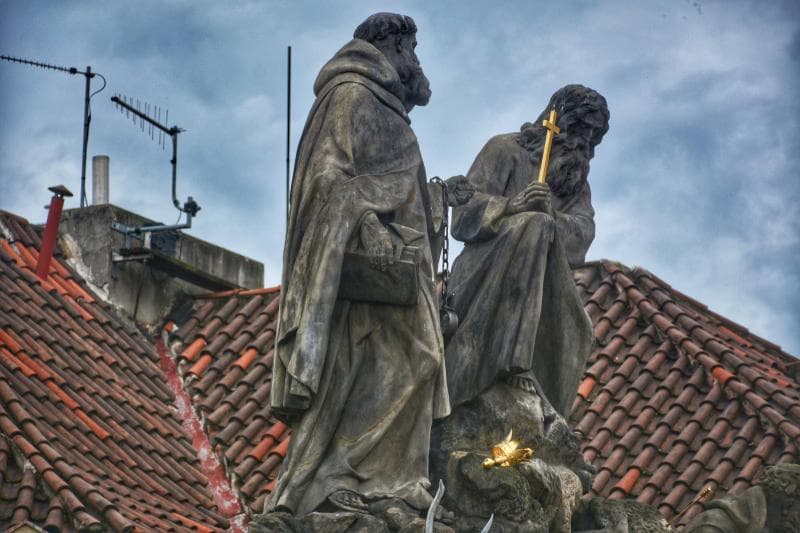
Explore the majestic Baroque statues on Charles Bridge in Prague, Czech Republic. Discover their history, fascinating stories, and cultural significance.
Overview
The Charles Bridge in Prague, Czech Republic, is not merely a passageway across the Vltava River; it is an open-air gallery adorned with thirty majestic Baroque statues. These impressive sculptures, predominantly depicting saints and religious figures, line both sides of the bridge, transforming a historical crossing into a profound cultural and artistic experience. While the bridge itself dates back to the 14th century, the statues that capture the imagination of today's visitors were primarily added much later, between the late 17th and early 18th centuries. Each figure tells a story, contributing to the bridge's unique atmosphere and its status as an iconic landmark of Prague.
History & Cultural Background
Construction of the Charles Bridge began in 1357 under the patronage of King Charles IV, replacing the earlier Judith Bridge which had been destroyed by floods. Initially, the bridge remained unadorned for centuries. The iconic Baroque ornamentation began in 1683 with the installation of the statue of St. John of Nepomuk. Over the next three decades, until 1714, a procession of eminent Bohemian sculptors, including Jan Brokoff and Matthias Braun, were commissioned by various Prague institutions, religious orders, and private patrons to create the remaining statues. These additions imbued the Gothic structure with a distinctly Baroque character, reflecting the prevailing artistic and religious fervor of the Counter-Reformation era. It's important to note that most of the sculptures seen on the bridge today are in fact replicas. The originals have been gradually moved to museums and galleries, such as the Gorlice Hall within Vyšehrad Fortress, to protect them from the elements and pollution, ensuring their preservation for future generations.
What Makes It Special
What sets the Baroque statues of Charles Bridge apart is their dramatic emotional intensity and the exceptional artistry of their creators. Unlike earlier, more static forms, Baroque sculpture aims to evoke strong feelings and capture moments of intense spiritual experience. The statues on Charles Bridge perfectly embody this, with their flowing drapery, dynamic poses, and intricate details. Sculptors like Matthias Braun, whose 'Dream of St. Luthgard' is considered one of the bridge's most valuable works, displayed incredible skill in conveying profound narratives in stone. Another powerful example is the 'Crucifix and Calvary' group, which features a bronze Christ on the cross flanked by the Virgin Mary and St. John the Evangelist. This statue includes a gilded Hebrew inscription, controversially added in 1696, which sparks discussion about the historical interplay of cultures in Prague. The sheer number of these masterpieces, thirty in total, creates a continuous artistic narrative along the bridge, offering a journey through art and history with every step.
Stories, Fun Facts & Local Details
The statues are rich with stories and local traditions. Foremost among them is the legend of St. John of Nepomuk, a 14th-century priest who was martyred by being thrown from the bridge for refusing to divulge the queen's confession to King Wenceslas IV. His statue, the oldest on the bridge, is distinct for its five-star halo and the two polished bronze plaques at its base. Tourists and locals alike rub these plaques for good luck, believing it guarantees their return to Prague. The exact spot where he was cast into the Vltava is marked by a brass cross with five stars on the parapet, another place where visitors make wishes. Adding to the bridge's mystique is the enduring legend that raw eggs and milk were mixed into the mortar during its construction to strengthen it. While historians were initially skeptical, chemical analyses have indeed found traces of egg proteins, adding a whimsical touch to its sturdy medieval engineering. There's also the story of the Bruncvík statue, which, according to legend, holds an invincible sword buried within the bridge, destined to be unearthed in Bohemia's greatest hour of need. These tales weave a captivating tapestry, turning a simple walk into an encounter with centuries of folklore and belief.
Visitor Perspective
Walking across the Charles Bridge is an essential Prague experience, and engaging with its Baroque statues is central to it. To truly appreciate their artistry and the stories they tell, consider visiting early in the morning or late at night. During these quieter hours, the bridge is less crowded, allowing for a more intimate viewing of the sculptures and offering breathtaking views of Prague Castle illuminated against the sky. As you stroll, take time to pause at each statue, observing the intricate details and considering the narrative it conveys. Many statues depict saints who were patrons of guilds, professions, or causes, offering a glimpse into the society of their time. The physical act of touching St. John of Nepomuk's plaque connects you to a long-standing tradition. The statues frame iconic vistas, offering perfect photographic opportunities of the Vltava River and the city's historic skyline. Each visit offers a chance to discover a new detail or contemplate a different story, making the Baroque statues of Charles Bridge a timeless and deeply enriching part of any Prague journey.
Coordinates: 14.41194, 50.08639
View on Google Maps💬 How Travelers Describe This Place
Based on community votes
Beautiful
995Interesting
839Must See
603Unique
388Photogenic
289
Traveler Stories
Discover memorable experiences shared by travelers who have visited this place.
No traveler stories yet.
Be the first traveler to share what made this place memorable.

Tour
By
Spot
Discover amazing places around the world. Your journey starts here.
Explore
© 2026 TourBySpot. All rights reserved.