Bamboo Platforms
Bali, Indonesia
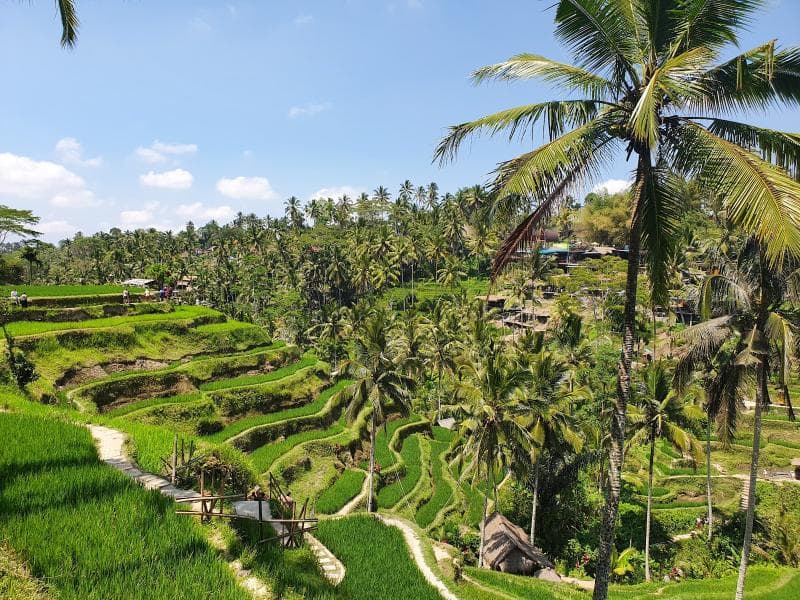
Explore Bali's Tegallalang Rice Terrace and its bamboo platforms, a UNESCO World Heritage site showcasing the ancient Subak irrigation system. Discover cultural harmony in Indonesia.
Overview
The Tegallalang Rice Terrace in Bali, Indonesia, is a breathtaking panorama of emerald-green paddies carved into a steep valley just north of Ubud. This iconic landscape, renowned for its dramatic stepped contours, is more than just a visual spectacle; it is a living testament to centuries of Balinese agricultural wisdom and cultural harmony. Within this verdant expanse, visitors encounter various structures that blend seamlessly with the natural beauty, including the distinctive bamboo platforms and bridges. These elements enhance the exploration of the terraces, offering unique vantage points and an immersive experience into the heart of Bali's agrarian life. The entire cultural landscape, encompassing the ingenious 'Subak' irrigation system that sustains it, has been recognized as a UNESCO World Heritage site since 2012.
As travelers wander through the narrow paths that wind through the fields, the presence of bamboo is ubiquitous, reflecting its importance in local construction and sustainable practices. From simple bamboo footbridges spanning irrigation canals to more elaborate bamboo platforms designed for rest or photography, these natural structures invite a deeper connection with the environment. The terraces themselves are situated at approximately 600 meters above sea level, creating a striking amphitheater of green that transitions from lush vibrancy to golden-brown hues depending on the rice growing cycle.
History & Cultural Background
The existence of the Tegallalang Rice Terrace and its accompanying bamboo structures is deeply rooted in the ancient 'Subak' irrigation system, a cooperative water management method dating back to the 8th or 9th century. This sophisticated system is not merely an agricultural technique but a profound manifestation of the Balinese Hindu philosophy known as 'Tri Hita Karana'. This philosophy emphasizes the harmonious relationship between the divine, humanity, and nature. Water, seen as a sacred gift from Dewi Danu, the goddess of water and lakes, is democratically distributed among farmers through a complex network of canals, tunnels, weirs, and bamboo pipes.
Legend attributes the introduction of the 'Subak' system to the revered sage Rsi Markandeya, whose teachings laid the foundation for a way of life that balances agriculture with cosmic order. The meticulous carving of these terraces into the natural contours of the Ceking valley by generations of farmers, initially with simple hand tools, transformed steep, unusable slopes into productive land. The structural integrity and functionality of the irrigation network often rely on natural materials, with bamboo playing a crucial role in diverting and channeling water across the fields, demonstrating the traditional ingenuity and sustainable practices of the Balinese people.
What Makes It Special
What makes the 'Bamboo Platforms' and the Tegallalang Rice Terrace truly special is their embodiment of 'Tri Hita Karana' – a philosophy that transforms agriculture into a spiritual and communal endeavor. The terraced landscape itself is a masterpiece of hydraulic engineering and community governance, where the 'Subak' council, often meeting in water temples, coordinates planting schedules and religious ceremonies. The bamboo elements within the terraces are more than just functional or aesthetic additions; they are extensions of this harmonious relationship.
These platforms and bridges, crafted from locally abundant bamboo, allow visitors to traverse the intricate landscape, stepping over irrigation channels and winding through the paddies, thereby gaining an intimate perspective of the farming methods. They offer a physical connection to the ingenuity of the farmers who, for centuries, have sculpted this land. The 'bamboo platforms' also serve as picturesque spots for contemplation and photography, framing the iconic vistas in a uniquely Balinese way. This integration of natural materials into the landscape highlights the deep respect the Balinese have for their environment and their traditional way of life.
Stories, Fun Facts & Local Details
Small shrines built from woven palm leaves and bamboo are frequently found at the corners of individual rice plots, marking spiritual boundaries and serving as places for daily offerings of flowers, rice, and incense. These 'canang sari' offerings are not mere rituals but a 'conversation with the land itself', a plea for nourishment and protection from Dewi Sri, the goddess of rice, fertility, and prosperity. The presence of these small, often bamboo-adorned shrines, underscores the sacredness of the rice fields.
As tourism grew, the local economy adapted, leading to the appearance of bamboo bridges over deeper irrigation channels and, more recently, larger bamboo-built 'nests' or 'platforms' designed for travelers seeking unique photo opportunities. While some of these newer additions cater to modern trends, they still utilize the sustainable and readily available bamboo, connecting contemporary visitor experiences with traditional resources. Interacting with local farmers, who often set up small donation booths along the trekking paths, provides a chance to learn directly about the 'Subak' system and the intricacies of rice cultivation, offering a glimpse into the dedication required to maintain these ancient fields.
Visitor Perspective
For visitors, exploring the 'Bamboo Platforms' at Tegallalang is an immersive journey into a living cultural landscape. The experience typically involves walking along narrow dirt paths, often uneven and slippery after rain, which lead down into the valley and up the other side. Along these treks, you'll inevitably cross numerous bamboo bridges that span the winding irrigation canals, providing practical passage and picturesque photo opportunities. These bridges are integral to navigating the tiered landscape, allowing closer access to the active paddies.
Beyond functional bridges, dedicated bamboo platforms have emerged, particularly in more accessible areas, offering elevated viewpoints and distinctive spots for photography, sometimes alongside popular Bali swings. Arriving early in the morning, between 7:00 AM and 9:00 AM, is often recommended to avoid crowds and the midday heat, and to experience the terraces in their most serene state, bathed in soft light. This allows for a more peaceful appreciation of the intricate bamboo work and the tranquil flow of water through the 'Subak' system, connecting visitors to the timeless rhythm of Balinese agricultural life.
Coordinates: 115.2778, -8.4216
View on Google Maps💬 How Travelers Describe This Place
Based on community votes
Unique
953Must See
695Interesting
658Photogenic
69Beautiful
22
Traveler Stories
Discover memorable experiences shared by travelers who have visited this place.
No traveler stories yet.
Be the first traveler to share what made this place memorable.

Tour
By
Spot
Discover amazing places around the world. Your journey starts here.
Explore
© 2026 TourBySpot. All rights reserved.