Ascension Cathedral
Almaty, Kazakhstan
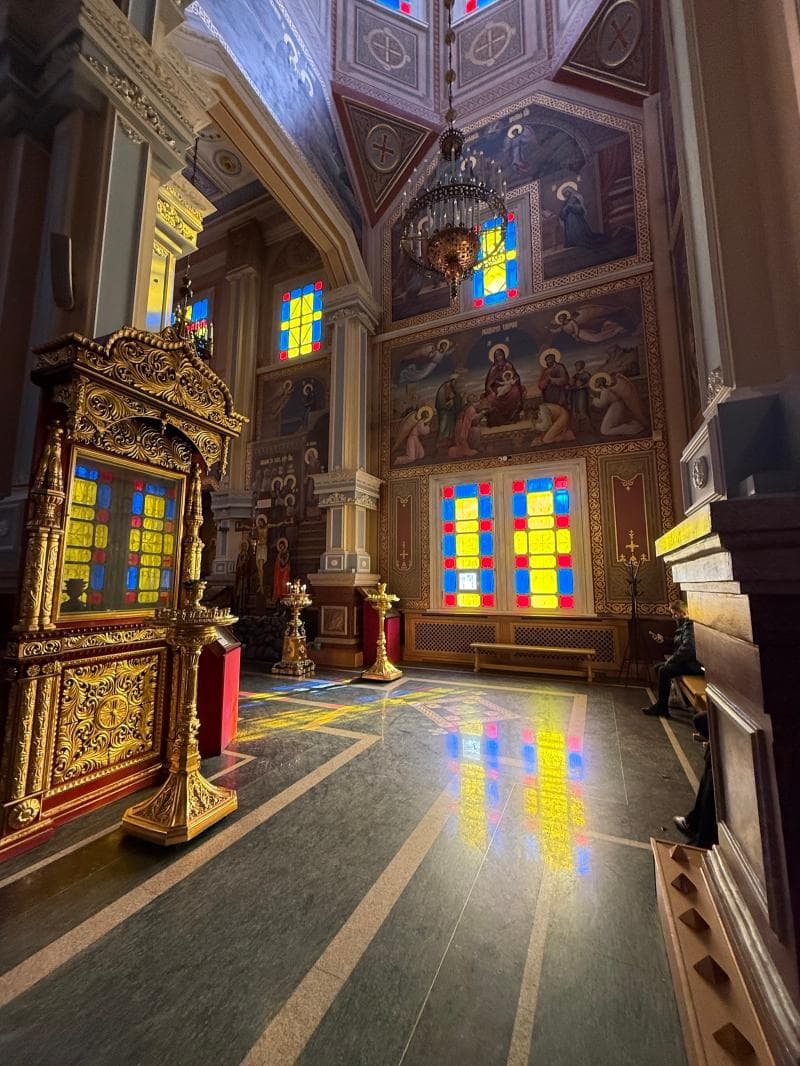
Explore Ascension Cathedral in Almaty, Kazakhstan – a stunning wooden Orthodox church known for surviving earthquakes and its vibrant architecture.
Overview
Nestled within the serene expanse of Panfilov Park in Almaty, Kazakhstan, stands the magnificent Ascension Cathedral, often referred to locally as Zenkov Cathedral. This vibrant Russian Orthodox church is an architectural marvel, captivating visitors with its kaleidoscope of colors and intricate design. It is widely celebrated as one of the tallest wooden buildings in the world and is particularly renowned for its construction method, famously (though not entirely accurately) stated to have been built without a single nail.
Its striking appearance, featuring brilliant golden domes, a pale yellow facade, and accents of green and white, makes it a focal point amidst the park's lush greenery. The cathedral serves as both an active place of worship for the Russian Orthodox community and a cherished historical landmark, drawing tens of thousands of visitors annually from across the globe.
History & Cultural Background
The history of the Ascension Cathedral dates back to the early 20th century, with construction beginning in 1904 and concluding in 1907. The vision for a grand Russian Orthodox church in Almaty (then known as Verny) emerged in the late 19th century due to the growing Orthodox community. While architect K.A. Borisoglebsky initially drafted the plans, it was regional engineer Andrei Pavlovich Zenkov who made significant modifications and oversaw the entire construction process, leading to its popular alternative name.
A pivotal moment in its history occurred just four years after its completion. On January 3, 1911, a devastating earthquake of magnitude 7.7 to 8 struck Verny, leveling almost all brick and adobe buildings in the city. Miraculously, the wooden Ascension Cathedral stood firm, suffering only minor damage such as cracked walls and decorative elements, a testament to its groundbreaking engineering.
The Soviet era brought significant changes; in the 1920s, the cathedral was closed, its bells removed, and many icons confiscated or destroyed. For decades, it was repurposed, serving as an administrative building, a museum (housing the Central State Museum of Kazakhstan), a concert hall, and even Kazakhstan's first radio transmission center in its bell tower. Following Kazakhstan's independence in 1991, the cathedral was returned to the Russian Orthodox Church in 1995 and reopened for religious services after extensive restoration.
What Makes It Special
The Ascension Cathedral's exceptional nature lies primarily in its ingenious wooden construction. Crafted almost entirely from Tian Shan spruce, sourced from the surrounding Trans-Ili Alatau mountains, the cathedral's main structure utilizes advanced carpentry techniques and wooden fasteners, with minimal to no metal nails. This unique approach, particularly Zenkov's 'anti-seismic basket' design with flexible wooden joints and a special foundation, allowed the building to absorb earthquake energy by flexing, much like a tree in the wind.
Standing approximately 56 meters tall, it is recognized as one of the tallest wooden churches globally. The cathedral's architecture is a captivating blend of traditional Russian church styles, characterized by onion domes and a cross-shaped plan, infused with local Central Asian influences such as covered porches and geometric wooden decorations. The interior boasts stunning frescoes, gilded iconostases, and intricate wooden carvings, many of which are restored icons brought from other churches.
Stories, Fun Facts & Local Details
A persistent fun fact about the Ascension Cathedral is the claim that it was built 'without a single nail'. While a powerful narrative that highlights its unique construction, it's a slight exaggeration. The vast majority of its wooden structure did indeed avoid metal fasteners, relying on expertly crafted wooden joints, though minor metal elements were used in later renovations and decorative sections. This precision engineering was crucial for its resilience in a seismically active region. The cathedral's miraculous survival of the 1911 earthquake cemented its reputation as an 'engineering marvel' and spread Zenkov's fame across the Russian Empire.
During its time as a museum and radio station, the bell tower famously housed Kazakhstan's first radio transmitters, symbolizing a unique period where sacred space served secular, technologically advanced purposes. Today, the cathedral stands as a profound symbol of cultural diversity and religious coexistence in Kazakhstan, a predominantly Muslim country with a significant Orthodox Christian minority.
Visitor Perspective
Visiting the Ascension Cathedral offers a deeply enriching experience, whether you are a history enthusiast, an architecture lover, or someone seeking spiritual solace. Located conveniently within Panfilov Park, it provides a peaceful escape in the heart of Almaty. Upon arrival, you're immediately struck by its vivid exterior and grand scale. Stepping inside, the serene atmosphere, breathtaking frescoes, and beautifully adorned icons invite quiet reflection.
The cathedral is an active place of worship, hosting regular services, and visitors are encouraged to observe silence and respect worshippers. Entry is free, but visitors should dress modestly, ensuring shoulders and knees are covered. Photography is generally allowed, but without flash, and it is best to avoid disrupting religious ceremonies. After exploring the cathedral, the surrounding Panfilov Park offers a lovely setting for a leisurely stroll, further enhancing the visit.
Coordinates: 76.9532, 43.2588
View on Google Maps💬 How Travelers Describe This Place
Based on community votes
Photogenic
551Interesting
547Unique
336Beautiful
219Must See
186
Traveler Stories
Discover memorable experiences shared by travelers who have visited this place.
No traveler stories yet.
Be the first traveler to share what made this place memorable.

Tour
By
Spot
Discover amazing places around the world. Your journey starts here.
Explore
© 2026 TourBySpot. All rights reserved.