Arms and Armor Hall
New York, United States
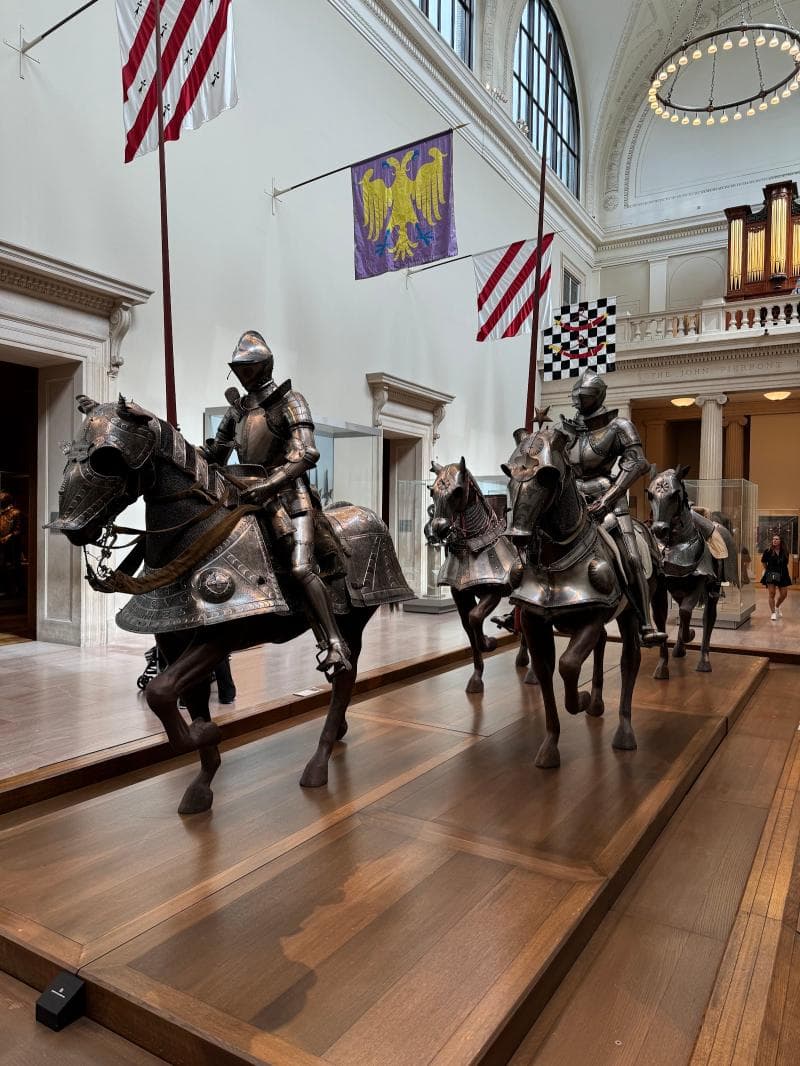

Explore the majestic Arms and Armor Hall at The Met in New York, United States. Discover centuries of global arms, armor, and weaponry.
Overview
Step into a world where history’s might and artistic mastery intertwine within The Metropolitan Museum of Art’s renowned Arms and Armor Hall. Located in the heart of New York, United States, this globally celebrated collection offers a captivating journey through centuries of human ingenuity and conflict. Housing over 14,000 objects, it stands as one of the most encyclopedic and finest collections of its kind anywhere in the world.
From the fifth through the nineteenth century, the galleries present an astonishing array of arms and armor from Europe, the Middle East, Asia, and America. More than just tools of war, these artifacts reveal profound cultural narratives, showcasing the peak of craftsmanship and design from their respective eras. The focus is often on pieces intended for display, ceremony, or tournament, highlighting their sculptural and ornamental beauty.
History & Cultural Background
The Metropolitan Museum of Art began acquiring arms and armor as early as 1896, with significant Japanese and European collections joining in 1904, quickly elevating its international standing. This burgeoning interest led to the formal establishment of a dedicated Department of Arms and Armor in 1912, a distinction it holds as the only one of its kind in the United States. Key figures like founding curator Dr. Bashford Dean were instrumental in building what is now recognized as one of the most comprehensive assemblages worldwide.
Arms and armor have been pivotal across cultures not only in warfare but also in ceremonial events, hunting, sport, and as powerful symbols of status and authority. A warrior's armor, custom-fitted and elaborately decorated, served as a highly visible declaration of rank, wealth, and taste. Even when armor faded from battlefields, it remained a significant element in portraiture and courtly display, preserving traditions of chivalry.
What Makes It Special
The Arms and Armor Hall is famed for its breathtaking displays, most notably the central equestrian court where four armored knights on horseback appear to gallop towards visitors, lances at the ready. This dramatic arrangement, with flags overhead, evokes the feeling of stepping into a medieval hall. The collection's strength lies in its diversity, depth, and sheer quality.
Among the many highlights are superb tournament and parade armors, including a series crafted for Tudor courtiers in English royal workshops at Greenwich, and magnificent Renaissance pieces. Visitors can marvel at a helmet dated 1543 by Filippo Negroli, a master Milanese armorer, and a sumptuous armor made around 1555 for King Henry II of France. The Japanese collection is particularly comprehensive, being the finest outside Japan, featuring intricate lacquered armor and exquisite swords like katana and tachi. Other notable sections include arms from Islamic cultures, rare Tibetan examples, and American firearms, such as a gold-inlaid Colt Third Model Dragoon revolver.
Stories, Fun Facts & Local Details
The curators of the Arms and Armor Hall often focus on pieces that merge artistic merit with historical importance. A fascinating anecdote involves the gold-inlaid Colt Third Model Dragoon revolver, one of a pair, which was separated during the Crimean War when Samuel Colt presented one to Czar Nicholas I and the other (now at The Met) to Sultan Abdülmecid I of Turkey. Many pieces reflect the fashion of their day, with breastplates and foot armor mirroring civilian garb, proving that even in battle, style had its place.
The department’s early growth was also spurred by influential private collectors like William H. Riggs and Rutherfurd Stuyvesant, who cultivated an appreciation for historical arms and armor within the Museum. The galleries themselves underwent a significant renovation and reinstallation in 1991, enhancing the display of its vast treasures.
Visitor Perspective
Visiting the Arms and Armor Hall is an immersive experience that can transport you to different eras and cultures. While The Metropolitan Museum of Art is vast, allowing several hours to explore the Arms and Armor galleries is highly recommended for a meaningful visit. The museum generally allows non-flash photography for personal use in most galleries, including Arms and Armor, enabling visitors to capture memories of these spectacular exhibits. Small backpacks are permitted but must be worn on the front or carried. For those traveling by public transport, the Met is conveniently located on Fifth Avenue, easily accessible via subway and bus routes.
Coordinates: -73.963244, 40.7794366
View on Google Maps💬 How Travelers Describe This Place
Based on community votes
Beautiful
836Unique
797Photogenic
396Interesting
286Must See
255
Traveler Stories
Discover memorable experiences shared by travelers who have visited this place.
No traveler stories yet.
Be the first traveler to share what made this place memorable.

Tour
By
Spot
Discover amazing places around the world. Your journey starts here.
Explore
© 2026 TourBySpot. All rights reserved.