Arena Civica
Milan, Italy
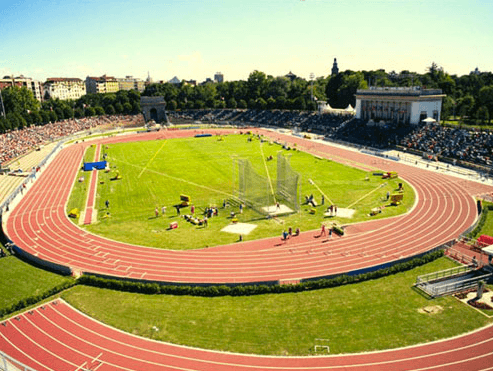
Discover Arena Civica (Gianni Brera) in Milan, Italy. Explore this historic Neoclassical amphitheater, its rich past, and diverse events in Parco Sempione.
Overview
Nestled within the serene expanse of Parco Sempione in Milan, Italy, the Arena Civica, officially known as Arena Gianni Brera, stands as a remarkable testament to Neoclassical architecture and enduring civic spirit. This elliptical amphitheater, a prominent landmark in the heart of the city, was conceived with a grandeur reminiscent of ancient Roman arenas. Originally designed to host up to 30,000 spectators, it remains a versatile venue for a diverse array of events, from athletic competitions and rugby matches to concerts and cultural gatherings.
Its strategic location in Parco Sempione places it near other significant Milanese attractions, including the majestic Castello Sforzesco and the elegant Arco della Pace, making it an integral part of Milan's cultural and historical landscape. Easily accessible by various public transportation options, the Arena Civica invites visitors to step back in time while experiencing the vibrant pulse of contemporary Milan.
History & Cultural Background
The story of Arena Civica begins with a grand vision by Napoleon Bonaparte, who, in 1806, commissioned its construction as a symbol of the newly established Cisalpine Republic and later the Kingdom of Italy. Designed by the skilled Neoclassical architect Luigi Canonica, the arena was inaugurated on August 18, 1807, with Napoleon himself in attendance. Its design drew direct inspiration from the monumental ancient Roman amphitheatres, particularly the Circo Massimo, aiming to provide Milan with a modern and impressive venue for public celebrations.
A fascinating aspect of its construction involved urban regeneration; many of the materials used were repurposed from the demolition of Spanish and Austrian fortifications around Castello Sforzesco, including the adjacent 'Tenaglia'. Throughout its early years, the Arena was a stage for extraordinary spectacles, including elaborate 'naumachiae' – mock naval battles staged by flooding the central arena with water from the nearby Naviglio canal. Over time, its name was formally changed to Arena Gianni Brera in 2002, honoring one of Italy's most influential sports journalists, a fitting tribute given its deep connection to Italian sports history.
What Makes It Special
What truly sets the Arena Civica apart is its harmonious blend of historical grandeur and enduring versatility. Its Neoclassical architecture, characterized by an imposing facade and monumental entrances, offers a visual feast that transports visitors to another era. The Palazzina Appiani, overlooking the arena, is an architectural jewel, featuring a refined loggia supported by Corinthian columns and preserving a rare monochrome frieze by Andrea Appiani depicting triumphal parades and athletic games.
Beyond its architectural beauty, the Arena Civica holds a significant place in the narrative of Italian sport. It predates the iconic San Siro stadium and served as the primary venue for football in Milan for decades, hosting legendary teams like Inter Milan for many years and even AC Milan temporarily during World War II. This 'opera house of sport', as it's sometimes called, has been a witness to—and a stage for—countless memorable sporting and cultural moments, continually adapting to the needs of the city while preserving its rich heritage.
Stories, Fun Facts & Local Details
The Arena Civica's long history is rich with captivating tales and unique events. Imagine the awe of spectators witnessing 'naumachiae', where the arena was flooded to recreate naval battles, complete with miniature ships and dramatic scenes. This innovative use of the space highlights the arena's original design for spectacular entertainment.
The Arena has also seen the likes of Buffalo Bill's Wild West Show pass through its gates, captivating audiences with equestrian feats and dramatic performances. It served as the finish line for the very first Giro d'Italia cycling race in 1909, cementing its place in the annals of Italian sports. Perhaps one of its most celebrated sporting moments was hosting Italy's first official national football team match on May 15, 1910, where the Azzurri triumphed 6-2 against France, marking a pivotal moment in the nation's football history. It holds a special place in the hearts of Inter Milan fans, having been the club's home ground for many years and considered a 'spiritual home' by some. More recently, it made headlines by hosting the Women's Derby between Inter Women and AC Milan, signifying a new chapter in its ongoing sporting legacy.
Visitor Perspective
Visiting the Arena Civica offers a profound sense of connection to Milan's past and present. As you walk through its gates, often with free entry outside of special events, you can almost hear the echoes of past crowds. The sense of history is palpable, yet the arena also buzzes with contemporary life, hosting various events that bring new energy to its ancient walls.
Its location within Parco Sempione is a significant advantage for visitors. You can combine a historical exploration of the Arena with a leisurely stroll through the park, discovering other nearby attractions like the Arco della Pace or the magnificent Castello Sforzesco. Reaching the Arena Civica is straightforward, with numerous public transport options including the Metro (M2 Moscova station), buses, and trams readily available, making it an easily accessible and enriching stop on any Milan itinerary. Whether you're a sports enthusiast, a history buff, or simply a curious traveler, the Arena Civica offers a unique glimpse into the heart and soul of Milan.
Coordinates: 9.17917, 45.47583
View on Google Maps💬 How Travelers Describe This Place
Based on community votes
Must See
717Photogenic
618Interesting
449Beautiful
335Unique
22
Traveler Stories
Discover memorable experiences shared by travelers who have visited this place.
No traveler stories yet.
Be the first traveler to share what made this place memorable.

Tour
By
Spot
Discover amazing places around the world. Your journey starts here.
Explore
© 2026 TourBySpot. All rights reserved.