Archaeology Museum
Lausanne, Switzerland
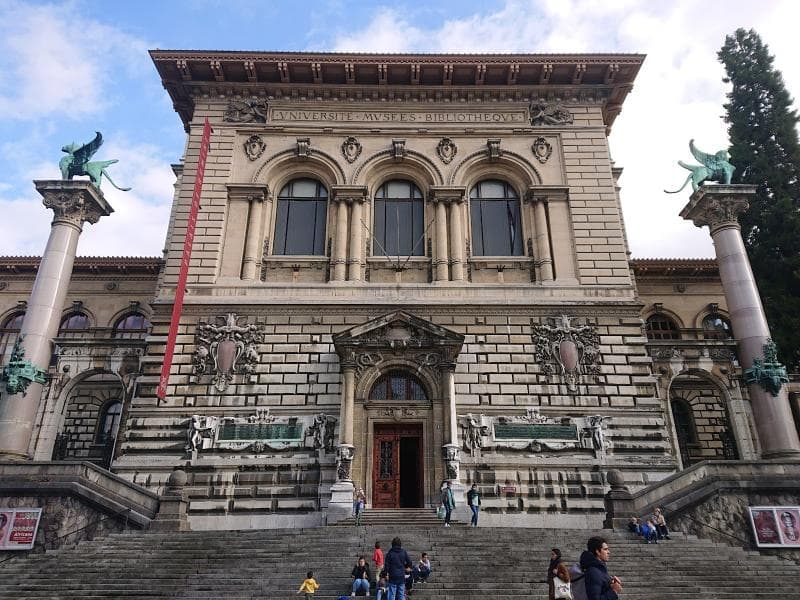
Explore the Cantonal Museum of Archaeology and History (MCAH) in Lausanne, Switzerland, located within the stunning Palais de Rumine. Discover Vaud's ancient past.
Overview
Nestled within the magnificent Palais de Rumine in Lausanne, Switzerland, the Musée cantonal d'archéologie et d'histoire, or the Cantonal Museum of Archaeology and History (MCAH), serves as a captivating gateway to the rich past of the Canton of Vaud. This museum is a central institution dedicated to the preservation, study, and presentation of archaeological, historical, and ethnographic collections from the region. Located on Place de la Riponne, the Palais de Rumine itself is an architectural marvel in Florentine Renaissance style, housing not only the MCAH but also several other cantonal museums and a library, creating a vibrant cultural hub in the heart of Lausanne.
The permanent exhibitions at the MCAH invite visitors on a journey through time, from the earliest traces of human activity in Vaud to the modern era. Admission to these permanent displays is free, making it an accessible and enriching experience for all curious travelers.
History & Cultural Background
The story of the Archaeology Museum is intrinsically linked to the grand Palais de Rumine, a testament to philanthropy and a vision for public education. The palace owes its existence to Gabriel de Rumine, a generous aristocrat of Russian origin who bequeathed 1.5 million Swiss Francs to the city of Lausanne upon his death in 1871. His wish was for a public building to house collections and foster learning.
Construction of the Palais began in 1892, following the designs of the Lyonnais architect Gaspard André, and it was inaugurated on November 3, 1902, with work continuing until 1904. Its imposing Florentine Renaissance architecture was intended to reflect universalist humanism and its encyclopedic ambitions. The building originally housed the University of Lausanne, along with various scientific and artistic collections. Over time, the university relocated, and the Palais was restructured to exclusively host cultural institutions.
The museum itself has a storied past, originating as early as 1818. It underwent several name changes, being known as the Musée des Antiquités in 1852, then the Musée archéologique in 1877, and the Musée historique in 1908, before finally adopting its current name, Musée cantonal d'archéologie et d'histoire, in 1955.
What Makes It Special
The Cantonal Museum of Archaeology and History distinguishes itself through its comprehensive focus on the archaeological and historical narrative of the Canton of Vaud. Its collections span vast periods, including rich artifacts from the Neolithic, Bronze Age, Iron Age, and Roman periods, as well as objects from early medieval necropolises and later historical eras.
One of the museum's particularly engaging features is its permanent exhibition, which often includes unique displays such as a full-scale 'lacustrine' excavation and a Neolithic cemetery viewed through a glass floor. This innovative presentation offers a tangible connection to ancient life. Furthermore, the museum actively incorporates findings from ongoing archaeological digs across the canton, ensuring its collections are continuously enriched with new discoveries. In 2019, the extensive collections of coins and medals of the State of Vaud were integrated into the MCAH, making it home to one of Switzerland's largest numismatic collections.
Beyond its exhibits, the Palais de Rumine itself is a work of art, with its monumental columns, pergolas, and an elaborate central staircase known for creating an optical illusion. Exploring the building's intricate design adds another layer of discovery to any visit.
Stories, Fun Facts & Local Details
The Palais de Rumine is steeped in history, not only as a cultural institution but also as a significant landmark in Swiss and international affairs. A notable historical event that took place within its walls was the signing of the Treaty of Lausanne on July 24, 1923, a pivotal moment in shaping the modern borders of Turkey and Greece.
Gabriel de Rumine's legacy is a compelling tale of a philanthropic spirit. Born in Lausanne to Russian nobility, his generous bequest laid the foundation for this impressive public edifice dedicated to knowledge and culture. The sheer scale of his donation, 1.5 million Swiss Francs, was immense for its time.
For those interested in the behind-the-scenes world of archaeology, the museum's collections are constantly expanding due to the intensive archaeological activity and numerous excavations undertaken in the Canton of Vaud since the 1970s. The MCAH plays a crucial role in conserving and restoring these artifacts. While the primary language for exhibit information is French, the artifacts themselves speak volumes, telling stories of ancient civilizations and the development of the region.
Visitor Perspective
Visiting the Musée cantonal d'archéologie et d'histoire is a rewarding experience for anyone interested in the rich tapestry of human history in Switzerland. The museum is conveniently located in central Lausanne, at Place de la Riponne 6, 1005 Lausanne. It is easily accessible via public transportation, with Metro M2, numerous bus lines, and a public car park nearby.
The museum is generally open from Tuesday to Sunday, typically between 10:00 AM and 5:00 PM, though it is advisable to check the official website for the most current opening hours, especially concerning temporary exhibitions or public holidays. While permanent exhibitions are free, a modest fee may apply for temporary exhibits. Access for visitors with reduced mobility is partially available.
As you plan your visit, consider allocating ample time not just for the museum's fascinating collections but also to appreciate the stunning architecture of the Palais de Rumine itself. While most exhibit labels are in French, the visual nature of the displays and the historical context provided offer a profound and understandable journey through time. Be aware that during warmer months, the historic building may not have air conditioning, so dressing appropriately is recommended.
Coordinates: 6.63389, 46.52361
View on Google Maps💬 How Travelers Describe This Place
Based on community votes
Beautiful
853Interesting
639Photogenic
569Must See
190Unique
93
Traveler Stories
Discover memorable experiences shared by travelers who have visited this place.
No traveler stories yet.
Be the first traveler to share what made this place memorable.

Tour
By
Spot
Discover amazing places around the world. Your journey starts here.
Explore
© 2026 TourBySpot. All rights reserved.