Archaeological Park
Lyon, France
Overview
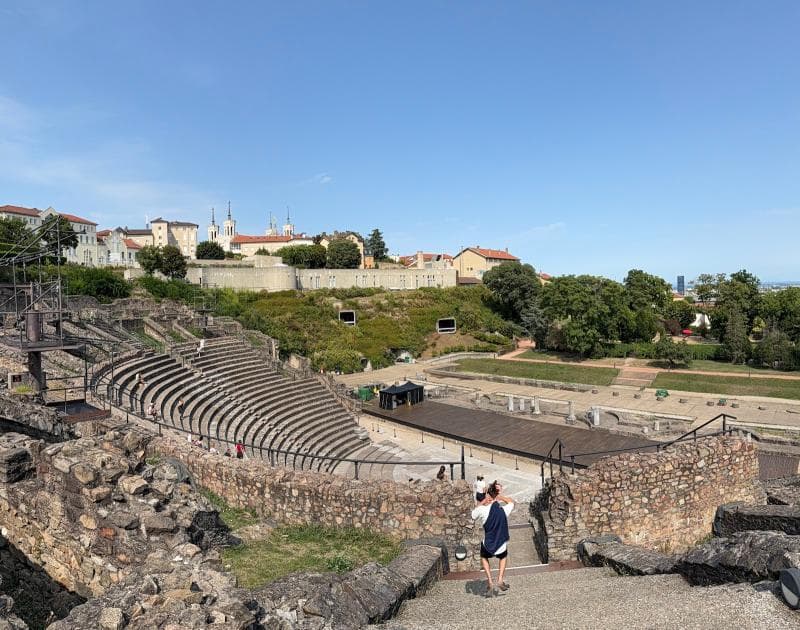
Perched majestically on the Fourvière hill, overlooking the vibrant city of Lyon, lies the Archaeological Park of Théâtres Romains De Fourvière. This remarkable site, part of a larger UNESCO World Heritage area, offers an unparalleled journey into the heart of ancient Roman Gaul. It is not merely a collection of ruins but a living testament to Lugdunum's (ancient Lyon's) past, comprising two main structures: the Grand Théâtre and the smaller Odéon, along with surrounding archaeological vestiges. Today, it stands as one of France's most significant Roman archaeological ensembles, welcoming curious travelers to explore its ancient stones and take in breathtaking panoramic views of modern Lyon. Even thousands of years after its inception, this site continues to buzz with life, notably as the captivating venue for the annual Nuits de Fourvière festival.
Visitors can freely wander through the tiers where thousands once gathered, absorbing the atmosphere of a bygone era. The park provides a unique opportunity to connect with history, culture, and architecture, all while enjoying the natural beauty of the Fourvière hillside. It truly is a place where the echoes of ancient performances mingle with the vibrant pulse of contemporary life.
History & Cultural Background
The story of the Archaeological Park begins with the founding of Lugdunum in 43 BCE, a city that quickly rose to prominence as the capital of Roman Gaul. The construction of the Grand Théâtre commenced around 15 BC, under the reign of Emperor Augustus, making it one of the oldest Roman monuments in Lyon. Initially, it had a diameter of 90 meters. It was later expanded significantly in the early 2nd century AD, likely under Emperor Hadrian, reaching a diameter of 108 meters and a seating capacity for approximately 10,000 spectators.
Adjacent to the large theatre is the Odéon, a more intimate structure dedicated to musical and poetic performances. Built in the 2nd century, it could accommodate around 3,000 people and was richly decorated, with remnants of its inlaid marble and porphyry designs still visible. Both structures were central to the social, political, and cultural life of Lugdunum, hosting theatrical plays, political gatherings, public ceremonies, concerts, and poetry readings.
Following the 3rd century, the site was abandoned and gradually fell into disrepair, eventually becoming a quarry for building materials and largely buried by centuries of landslides and neglect. It remained forgotten until major archaeological excavations in the early to mid-20th century brought these magnificent ruins back to light, revealing the grandeur of Lugdunum once more. These restoration efforts have allowed the present-day Archaeological Park to exist as a remarkably preserved historical treasure.
What Makes It Special
What truly sets the Archaeological Park of Théâtres Romains De Fourvière apart is its dual identity as both a profoundly ancient site and a thriving modern cultural venue. The sheer scale of the Grand Théâtre, designed to hold thousands, is awe-inspiring, offering a tangible sense of the Roman Empire's engineering prowess and its ability to construct enduring monuments. Its semi-circular shape and the arrangement of its seating tiers were ingeniously designed to optimize acoustics, ensuring that performances could be heard throughout the vast space.
The smaller Odéon, with its more refined purpose for music and spoken word, provides a contrasting yet equally compelling experience. Its decorative elements, hinting at a lavish past, speak to the Romans' appreciation for the arts beyond grand spectacles. Together, these structures offer a comprehensive glimpse into the entertainment and cultural life of Roman citizens.
Beyond the architectural marvels, the location itself is extraordinary. Situated on Fourvière hill, the park boasts magnificent panoramic views of Lyon, with its rivers, historic buildings, and modern cityscape unfolding below. This unique vantage point allows visitors to appreciate the continuity of history, seeing how ancient Lugdunum laid the foundations for the modern metropolis.
Stories, Fun Facts & Local Details
Did you know that ancient Lyon, then known as Lugdunum, was not only the capital of Roman Gaul but also a city of immense privilege? It was one of the few places outside of Rome itself permitted to mint its own gold and silver coins, a testament to its economic and political importance in the Roman Empire.
The construction of these theatres was an enormous undertaking, involving not just local materials but also imported stones, some even from as far away as Glanum, in the region of Bouches-du-Rhône. This highlights the extensive network of trade and resources available to the Roman builders.
A fascinating 'fun fact' is how these incredible structures were lost and then found again. After centuries of being buried and used as a convenient source of stone, their rediscovery in the 20th century was a significant archaeological event. The diligent work of excavators brought these monumental witnesses to history back into the public consciousness.
Perhaps the most charming local detail is the continuation of its original purpose. Every summer, the Archaeological Park transforms into a vibrant cultural hub during the Nuits de Fourvière festival. This acclaimed event hosts a diverse program of concerts, plays, and dance performances within the ancient confines, allowing contemporary artists to breathe new life into the historic setting and connect new audiences with this remarkable heritage. Imagine experiencing a modern concert surrounded by stones that once echoed with Roman dramas!
Visitor Perspective
Stepping into the Archaeological Park of Théâtres Romains De Fourvière is like stepping through a portal to another time. The sheer scale of the Grand Théâtre, with its vast tiers reaching towards the sky, immediately evokes a sense of wonder. You can almost hear the roar of the crowds and the voices of actors from two millennia ago. The smaller, more intimate Odéon offers a quieter, contemplative experience, allowing for a closer look at the intricate details that survive.
The site is remarkably open and easy to explore, inviting visitors to wander at their own pace. Climbing the ancient steps and walking along the stone tiers offers not just a physical connection to history but also increasingly spectacular views of Lyon with every ascent. It's a truly photogenic spot, especially at sunset.
For those seeking a deeper understanding, the adjacent Lugdunum Museum – Musée et Théâtres Romains (formerly the Gallo-Roman Museum) is highly recommended. It offers invaluable context with artifacts, models, and explanations that bring the ancient city of Lugdunum to life, seamlessly complementing a visit to the outdoor ruins. Entry to the Archaeological Park itself is free, making it an accessible historical experience for everyone. Practical advice for visiting includes wearing comfortable shoes with good grip, as the stone surfaces can be uneven, and bringing water and sun protection, especially on warmer days, as there is limited shade. The site is easily reached by the Funicular F2 to the Minimes – Théâtres Romains station, making for a pleasant journey up the hill.
Coordinates: 4.81975, 45.75975
View on Google Maps💬 How Travelers Describe This Place
Based on community votes
Photogenic
551Interesting
547Unique
336Beautiful
219Must See
186
Traveler Stories
Discover memorable experiences shared by travelers who have visited this place.
No traveler stories yet.
Be the first traveler to share what made this place memorable.

Tour
By
Spot
Discover amazing places around the world. Your journey starts here.
Explore
© 2026 TourBySpot. All rights reserved.