Archaeological Artifacts Galleries
Odessa, Ukraine
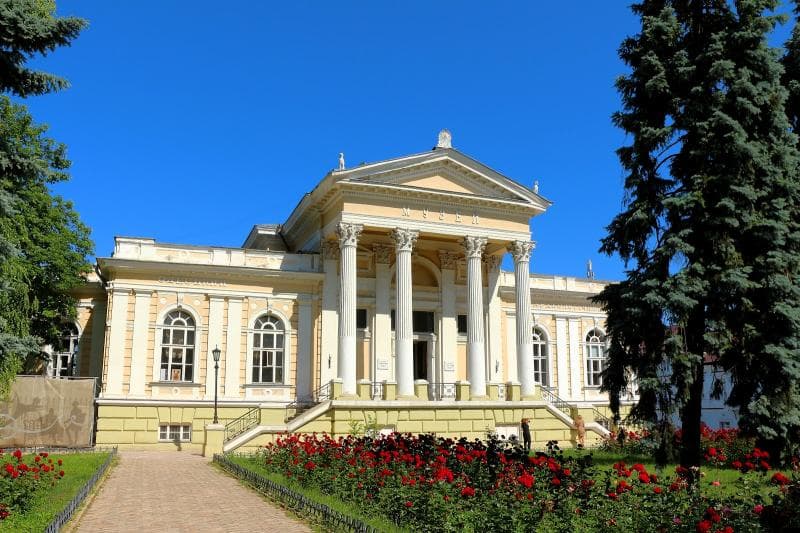
Explore the Archaeological Artifacts Galleries at Odessa Archaeological Museum, Ukraine. Discover ancient civilizations, Egyptian antiquities, and rare coins.
Overview
Nestled in the vibrant city of Odessa, Ukraine, the Archaeological Artifacts Galleries within the Odessa Archaeological Museum offer an immersive journey into the ancient past of the Northern Black Sea region and beyond. Established in 1825, this esteemed institution is one of Ukraine's oldest, boasting a vast collection of over 170,000 archaeological sources. The museum itself is housed in an impressive Neo-Greek style building at 4 Lanzheronivska Street, a structure completed in 1883 that stands as a monument to 19th-century architectural ambition. Visitors can explore a chronological display of artifacts, from the earliest human settlements to the rich cultures of the Middle Ages, providing a profound understanding of the historical tapestry that shaped this significant crossroads of civilizations.
History & Cultural Background
The Odessa Archaeological Museum began its illustrious journey in 1825 as the 'Odessa City Museum of Antiquities', founded by the notable philanthropist Ivan Blaramberg, whose personal collection formed the initial core of its exhibits. Its subsequent development was greatly aided by the Imperial Odessa Society of History and Antiquities, an influential body that possessed the authority to conduct archaeological excavations throughout the expansive Northern Black Sea region. The museum moved into its purpose-built, elegant neoclassical home in 1883, a design attributed to the Polish architect Feliks Gąsiorowski. Beyond its role as a custodian of history, the museum actively contributes to scholarly understanding as a leading scientific research institution, conducting extensive archaeological explorations of sites dating from the Chalcolithic and Bronze Ages, the early Iron Age, antiquity, and the Middle Ages. This ongoing research continually enriches its already impressive collections and furthers our knowledge of the region's complex past.
What Makes It Special
The Archaeological Artifacts Galleries are distinguished by several remarkable features. At its heart is an unparalleled collection of over 170,000 archaeological finds, making it the largest repository of ancient history from the Northern Black Sea coast. Visitors are captivated by Ukraine's only collection of ancient Egyptian antiquities, recognized as the third largest in the former USSR. This extraordinary section features authentic mummies, intricately carved sarcophagi, and fragments of papyri, offering a rare glimpse into a distant civilization. Another highlight is the extensive numismatic collection, comprising more than 50,000 coins. This includes rare gold and silver pieces minted in ancient Greece, Rome, Byzantium, and Kyivan Rus, with a particularly noteworthy 'gold coin' of Prince Volodymyr, one of only two in Ukraine. The galleries also proudly showcase significant artifacts recovered from ancient Greek colonies like Olbia, Tyras, and Niconium, alongside treasures from the Scythian and Sarmatian cultures, including their distinctive gold work, weaponry, and jewelry. Prehistoric cultures, such as the Humelnytsia, Trypillia, and Usatovo, are also well represented with fascinating finds that shed light on early human life in the region.
Stories, Fun Facts & Local Details
Among the museum's many treasures, the 'Golden Pantry' stands out, housing exquisite objects made of precious metals, with some pieces dating back to the early second millennium BC. Imagine walking past an ancient Greek amphora, a daily utility turned historical artifact, which was discovered during the construction of the iconic Odessa Opera Theater, connecting two significant city landmarks through time. The museum is not just a static display; it is a dynamic center for scientific exploration. Its active research group continuously conducts excavations in the surrounding areas, regularly enriching the collection with new discoveries and deepening our understanding of ancient civilizations that thrived along the Black Sea. The very building housing these artifacts, with its neoclassical grandeur, symbolizes Odessa's 19th-century aspiration to be a cultural and intellectual hub, a 'Southern Palmyra' fostering learning and discovery.
Visitor Perspective
A visit to the Archaeological Artifacts Galleries is a journey through millennia. The exhibitions are thoughtfully arranged, often following a chronological order from the Stone Age to the Middle Ages, allowing visitors to easily follow the development of cultures and daily life through various epochs. As you wander through the halls, you'll gain a unique perspective on how different civilizations, from ancient Greeks to Scythian nomads, influenced and interacted with the Northern Black Sea region. The museum's central location in Odessa makes it easily accessible, typically within walking distance of other city landmarks. Given the sheer volume and diversity of artifacts, allocating ample time to explore each hall and absorb the rich historical context is highly recommended for a truly enriching experience.
Coordinates: 30.743972, 46.4850361
View on Google Maps💬 How Travelers Describe This Place
Based on community votes
Photogenic
753Must See
747Beautiful
302Interesting
172Unique
79
Traveler Stories
Discover memorable experiences shared by travelers who have visited this place.
No traveler stories yet.
Be the first traveler to share what made this place memorable.

Tour
By
Spot
Discover amazing places around the world. Your journey starts here.
Explore
© 2026 TourBySpot. All rights reserved.