Apse Mosaic
Istanbul, Turkey
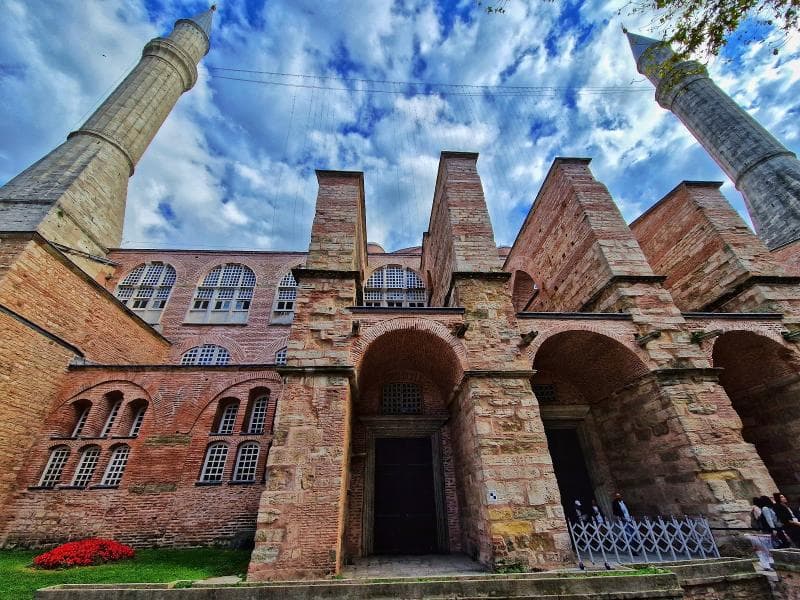
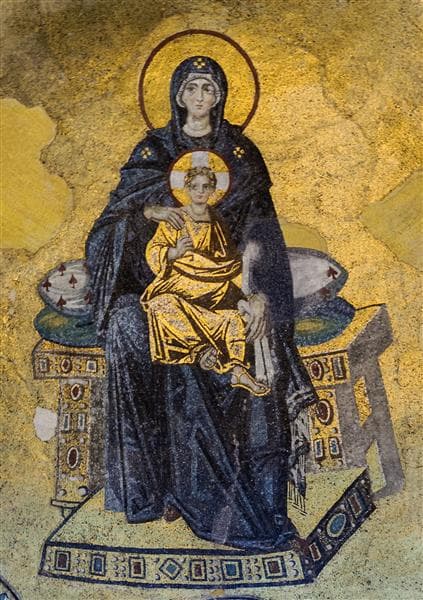
Discover the breathtaking Apse Mosaic in Hagia Sophia, Istanbul, Turkey. This ancient mosaic of the Virgin and Child tells a rich story of Byzantine history and faith.
Overview
High above the main altar, nestled within the semi-dome of the eastern apse of Hagia Sophia in Istanbul, Turkey, resides a monumental and deeply significant mosaic. This breathtaking artwork depicts the Virgin Mary, known as the Theotokos or 'God-bearer', seated upon a jeweled throne, cradling the Christ Child on her lap. It stands as one of the most ancient and revered mosaics within the venerable structure, dating back to the 9th century. Its sheer scale and elegant simplicity against a radiant golden background create a powerful visual experience that has captivated visitors for centuries.
History & Cultural Background
The Apse Mosaic holds immense historical and cultural importance, as its installation in 867 AD marked a pivotal moment in Byzantine history: the triumphant return of sacred images following the tumultuous period of Iconoclasm. During the 8th and early 9th centuries, figural representations were largely removed from churches across the Byzantine Empire due to religious controversy. The restoration of these images was not merely an artistic decision but a profound political and theological statement. Commissioned during the reign of Emperor Basil I, the mosaic powerfully declared the re-establishment of religious imagery and the victory of those who championed icons. Historical accounts mention that Patriarch Photios delivered a sermon on March 29th, 867, specifically to celebrate the mosaic's inauguration, underscoring its profound significance. Its strategic placement in the apse, traditionally the holiest part of the church and directly above the altar, further emphasized the central role and importance of the Virgin Mary in Orthodox Christianity.
What Makes It Special
The Apse Mosaic's enduring allure lies in its remarkable artistic qualities and profound symbolism. The Virgin Mary, a commanding sixteen feet in height, appears deceptively small within the immense proportions of Hagia Sophia, yet her presence is undeniably majestic. Both figures are rendered with soft modeling, creating an image that feels both intimate and grand. The radiant gold background is not merely decorative; it is a quintessential feature of Byzantine art, symbolizing the divine light of heaven. This celestial backdrop, combined with the way the figures seem to float above the windows below, creates an ethereal halo around them, reinforcing their sacredness. The Christ Child, though depicted with childlike features, conveys a serious and knowing expression, offering a blessing with one hand and holding a scroll in the other. Mary is adorned in deep blue and imperial purple garments, colors rich with symbolic meaning. The mosaic's creators masterfully considered the viewer's perspective from the church floor, meticulously adjusting the figures' proportions to appear natural when observed from below. This meticulous attention to detail and symbolic depth makes the Apse Mosaic a masterpiece of Middle Byzantine art.
Stories, Fun Facts & Local Details
Beyond its visual splendor, the Apse Mosaic is rich with fascinating stories and cultural nuances. Its creation was, in many ways, a political act by Emperor Basil I, intended to solidify his role as a protector of the true faith and to symbolize the unity between the divine, the empire, and its people. The Virgin Mary's depiction as the 'Theotokos' (God-bearer) reinforces her paramount status as the mother of Christ within the Orthodox tradition. A remarkable aspect of its history is its treatment after the Ottoman conquest of Constantinople in 1453. Unlike many other figural mosaics that were immediately covered, this particular mosaic was not. Millions of Muslims revered Mary as the mother of a prophet, allowing the mosaic to remain visible for nearly three centuries after Hagia Sophia's conversion into a mosque. It was only around 1750 that the mosaic was eventually covered with plaster and paint, likely due to changing political and religious climates. This unique period highlights a shared reverence that transcended religious boundaries within the monumental structure.
Visitor Perspective
To truly appreciate the grandeur of the Apse Mosaic, visitors are encouraged to view it from the central nave, directly facing east towards the mihrab area. From this vantage point, one can best grasp the monumental scale and artistic ingenuity. Because of its considerable height, bringing binoculars or a camera with a zoom lens can greatly enhance the experience, allowing for a closer look at the intricate details of the figures' faces and garments that might otherwise be missed. Standing directly beneath the main dome and slowly turning towards the apse allows one to witness how the Virgin and Child appear majestically suspended within the semi-dome, beautifully framed by the surrounding architecture and illuminated by the natural light filtering through the windows.
Coordinates: 28.98, 41.00833
View on Google Maps💬 How Travelers Describe This Place
Based on community votes
Unique
934Must See
879Beautiful
741Interesting
276Photogenic
30
Traveler Stories
Discover memorable experiences shared by travelers who have visited this place.
No traveler stories yet.
Be the first traveler to share what made this place memorable.

Tour
By
Spot
Discover amazing places around the world. Your journey starts here.
Explore
© 2026 TourBySpot. All rights reserved.