Ancient Greek Collection
Odessa, Ukraine
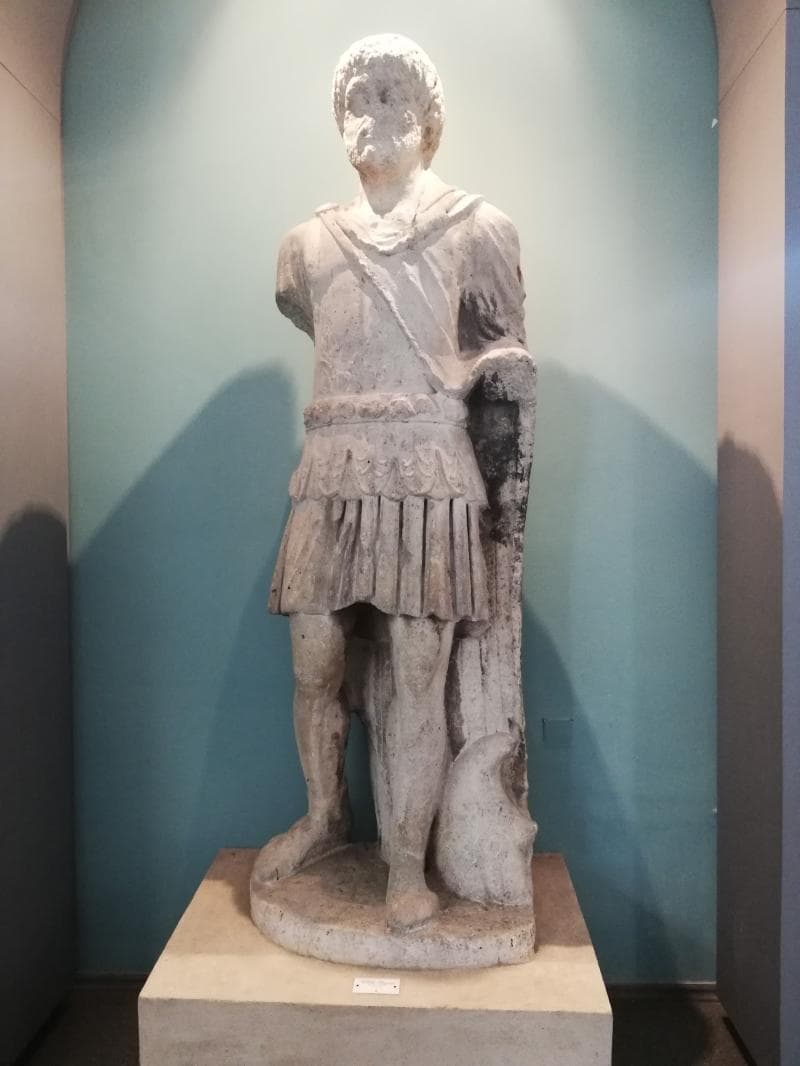
Explore the Ancient Greek Collection at the Odessa Archaeological Museum in Odessa, Ukraine, home to vast Hellenic artifacts from the Black Sea region.
Overview
Step into the rich tapestry of ancient history at the Ancient Greek Collection, a prominent section within the esteemed Odessa Archaeological Museum in Odessa, Ukraine. As one of Ukraine's oldest museums, founded in 1825, the Odessa Archaeological Museum serves as a vital repository of the region's past, housing an impressive collection of over 170,000 exhibits. The Ancient Greek Collection forms a substantial part of this vast treasure, comprising approximately two-thirds of the museum's entire display. Located at 4 Lanzheronivska Street in the heart of Odessa, the museum's elegant neoclassical building invites curious travelers to explore the civilizations that flourished along the northern Black Sea coast from the Stone Age through the Middle Ages, with a particular focus on its profound Greek heritage.
History & Cultural Background
The story of Odessa's connection to ancient Greece stretches back millennia, long before the modern city's founding. Historical evidence suggests the presence of significant Greek settlements along this strategic Black Sea coastline as early as the mid-6th century BC. This region was not merely a distant outpost but an integral part of the wider Greek world, dotted with bustling trading posts that facilitated exchange between the Mediterranean and the Eurasian steppe. Illustrious Greek colonies like Olbia, Tyras, Chersonesus, and even an ancient Odessos, believed to be near present-day Odessa, thrived here, shaping the cultural and economic landscape.
The Odessa Archaeological Museum itself boasts a rich history, tracing its origins to 1825 when customs official I. Blaramberg opened his private collection of antiquities to the public. The institution's growth was significantly spurred by the Imperial Odessa Society of History and Antiquities, which actively conducted archaeological excavations across the Northern Black Sea region, continuously enriching the museum's holdings. The grand building that houses the museum today was specially constructed and completed in 1883, reflecting the city's commitment to preserving its historical legacy.
What Makes It Special
The Ancient Greek Collection is truly exceptional, offering a comprehensive glimpse into the Hellenic presence in the Black Sea region. Visitors will encounter a diverse array of artifacts, including exquisite antique vases, intricate terracottas, powerful sculptures, and detailed lapidary inscriptions. Among the prized possessions are relics unearthed from once-flourishing Greek colonies such as Olbia and Tyras, providing direct links to daily life and artistic expression of ancient times.
A particularly captivating exhibit is an ancient Greek amphora, famously discovered during the construction of Odessa's magnificent Opera Theater, embodying the layers of history that lie beneath the city's modern facade. In a poignant testament to the enduring presence of these ancient roots, Ukrainian soldiers recently unearthed several ancient Greek amphorae dating from 400 to 300 BCE while digging trenches in 2022. These remarkable finds were carefully transferred to the museum, highlighting how ancient discoveries continue to emerge even amidst contemporary events. Beyond these, the museum also proudly displays a vast numismatic collection, featuring ancient Greek coins that tell tales of trade, power, and belief from centuries past.
Stories, Fun Facts & Local Details
Odessa's very name carries an echo of its ancient Greek past, believed to be a feminized version of the ancient city of Odessos. Archaeologists have meticulously uncovered remnants of early Greek settlements directly beneath modern-day central Odessa, including the site of Havan Istrion, once the oldest and largest Greek settlement in the area. Fascinating discoveries from cult pits reveal 'gifts' offered to the goddess Demeter by ancient Greek inhabitants, such as beautifully crafted amphorae, refined black-figure pottery, and bronze arrowheads, painting a vivid picture of their religious practices and daily lives.
Another intriguing artifact unearthed on Zhevakhova Hora is a lead plate bearing a letter from Olbia, dating back to the 4th century BC, offering a rare personal insight into the communications of the time. It's a little-known fact that the Black Sea was one of the last significant frontiers for Greek colonization, with the city of Miletus playing a pivotal role in establishing many of these settlements. The museum's dedication extends beyond display; its active research teams and annual archaeological expeditions continuously bring new and exciting finds to light, ensuring the collection remains dynamic and ever-growing.
Visitor Perspective
Visiting the Ancient Greek Collection at the Odessa Archaeological Museum is like embarking on a journey through time. Its central location at 4 Lanzheronivska Street makes it easily accessible for travelers eager to delve into the ancient world. The museum's thoughtfully arranged exposition allows visitors to effortlessly trace the evolution of culture and daily life across various epochs. Upon entering, the first two halls immediately transport you to the Stone Age and the ancient period, setting the stage for the profound Greek and Roman exhibits.
Beyond the captivating displays, the museum's setting in a grand neoclassical building adds to the overall experience. Its proximity to other iconic Odessa landmarks such as the Opera House, Primorsky Boulevard, and the Duke de Richelieu Monument allows for a culturally rich day of exploration, seamlessly blending ancient history with the city's more recent architectural splendors. The Ancient Greek Collection offers not just an exhibition of artifacts, but a narrative of enduring human connection to a vital maritime crossroads.
Coordinates: 30.743972, 46.4850361
View on Google Maps💬 How Travelers Describe This Place
Based on community votes
Photogenic
753Must See
747Beautiful
302Interesting
172Unique
79
Traveler Stories
Discover memorable experiences shared by travelers who have visited this place.
No traveler stories yet.
Be the first traveler to share what made this place memorable.

Tour
By
Spot
Discover amazing places around the world. Your journey starts here.
Explore
© 2026 TourBySpot. All rights reserved.