Alisher Navoi National Park
Tashkent, Uzbekistan
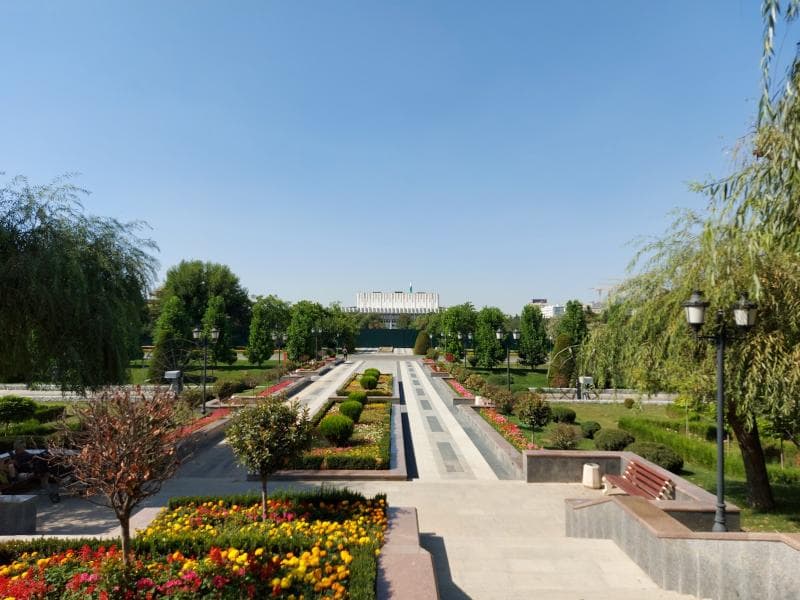
Explore Alisher Navoi National Park in Tashkent, Uzbekistan, a historical oasis honoring the great poet, with a lake, Alley of Writers, and children's railway.
Overview
Alisher Navoi National Park, often simply called Milliy Bog by locals, stands as a verdant oasis in the bustling heart of Tashkent, Uzbekistan. Spanning an impressive 65 hectares, this expansive green space offers a welcome retreat from urban life, characterized by its lush landscapes, a large artificial lake, and intricate network of canals. It is a place where history, culture, and recreation seamlessly intertwine, providing both serene contemplation and lively activity for visitors of all ages. The park's design thoughtfully incorporates natural beauty with cultural landmarks, making it a pivotal site for understanding Uzbek heritage and contemporary city life.
History & Cultural Background
The park's origins trace back to the 1930s, specifically between 1932 and 1939, when it was established on the site of an old brick factory quarry by members of the Komsomol youth organization in Tashkent. The construction was a significant communal effort, often utilizing 'hashar,' a traditional form of volunteer labor for public good. Initially, upon its opening in 1939, the park bore the name of I. V. Stalin Park of Culture and Leisure. Following political shifts in 1961, it was renamed the Lenin Komsomol Central Park of Culture and Recreation, with its prominent lake known as Komsomolskoye Lake.
A pivotal moment in its history occurred on September 22, 1991, when the park was officially renamed Alisher Navoi National Park. This renaming honored the 550th anniversary of Alisher Navoi, a towering figure of 15th-century Central Asian culture. Navoi was not only a great Uzbek poet but also a distinguished writer, politician, statesman, philosopher, linguist, and mystic, widely celebrated as one of the greatest poets in Uzbek and Turkic literature. His enduring legacy and profound contributions to the region's cultural and intellectual development are deeply embedded in the park's identity, symbolizing the nation's rich historical narrative.
What Makes It Special
Alisher Navoi National Park distinguishes itself through a unique blend of natural beauty and cultural monuments. At its core stands the world's largest monument dedicated to Alisher Navoi himself, majestically positioned on a mound beneath a light, domed rotunda with blue columns, typical of Uzbek architectural elegance. This central monument serves as a powerful symbol of national pride and artistic heritage.
Beyond this, the park hosts the 'Alley of Writers,' a significant cultural addition created by presidential decree in 2017. This alley features over 20 statues and informational displays honoring renowned Uzbek writers, poets, and scholars, offering visitors a profound journey through the nation's literary landscape. The park's expansive artificial lake, covering 9 hectares, allows for various recreational activities like boating and, in warmer seasons, swimming, complemented by sandy beaches. The presence of significant public buildings, such as the Oliy Majlis (Uzbek Parliament), the Main Register Office, and the Istiklol Concert Hall, further underscores its importance as a civic and cultural hub. The medieval Abulkasym Madrasah, a 16th-century structure within the park, now houses the Centre for Traditional Applied Arts, where artisans preserve and showcase Uzbekistan's rich craft traditions.
Stories, Fun Facts & Local Details
One of the most charming and enduring features of Alisher Navoi National Park is its miniature children's railway, originally built in 1940. This railway is not merely an amusement ride but an exact, scaled-down replica of a real train system, complete with a locomotive, tracks, carriages, and functioning signals. What makes it particularly special is that it is operated by children between the ages of 12 and 16, under adult supervision, offering a unique, interactive experience for young visitors and a nostalgic touch for adults.
The park's tranquil, shaded alleys, formed by century-old trees, vibrant flower beds, and well-manicured lawns, create an idyllic setting for leisurely strolls. The artificial lake attracts unexpected visitors—gulls, which are an unusual sight in the city landscape. Young couples often visit the Alisher Navoi monument, viewing it as a place to symbolically bless their unions, continuing the traditions of peace, love, and community. The Abulkasym Madrasah, now a vibrant center for traditional crafts, provides a window into Uzbekistan's artistic soul, where painters, jewelers, wood engravers, and miniaturists demonstrate their skills and sell their exquisite works.
Visitor Perspective
For any traveler to Tashkent, Alisher Navoi National Park offers a multifaceted experience. It is a place to connect with Uzbekistan's profound history through the legacy of Alisher Navoi and the 'Alley of Writers,' providing deep cultural context. Simultaneously, it serves as a dynamic recreational space where one can enjoy a peaceful boat ride on the lake, cycle along dedicated paths, or simply relax amidst abundant greenery.
The park is designed to cater to various interests, from those seeking quiet contemplation to families looking for engaging activities. Its proximity to other significant sites like the State Museum of History of Uzbekistan and various cultural institutions makes it an integral part of a broader exploration of Tashkent. Whether you're drawn to its historical depth, its vibrant recreational opportunities, or simply its serene atmosphere, Alisher Navoi National Park provides a memorable glimpse into the heart and soul of Uzbekistan.
Coordinates: 69.245, 41.298
View on Google Maps💬 How Travelers Describe This Place
Based on community votes
Beautiful
995Must See
964Interesting
929Unique
730Photogenic
275
Traveler Stories
Discover memorable experiences shared by travelers who have visited this place.
No traveler stories yet.
Be the first traveler to share what made this place memorable.
Things to see at Alisher Navoi National Park



Tour
By
Spot
Discover amazing places around the world. Your journey starts here.
Explore
© 2026 TourBySpot. All rights reserved.