Alberta Street
Riga, Latvia
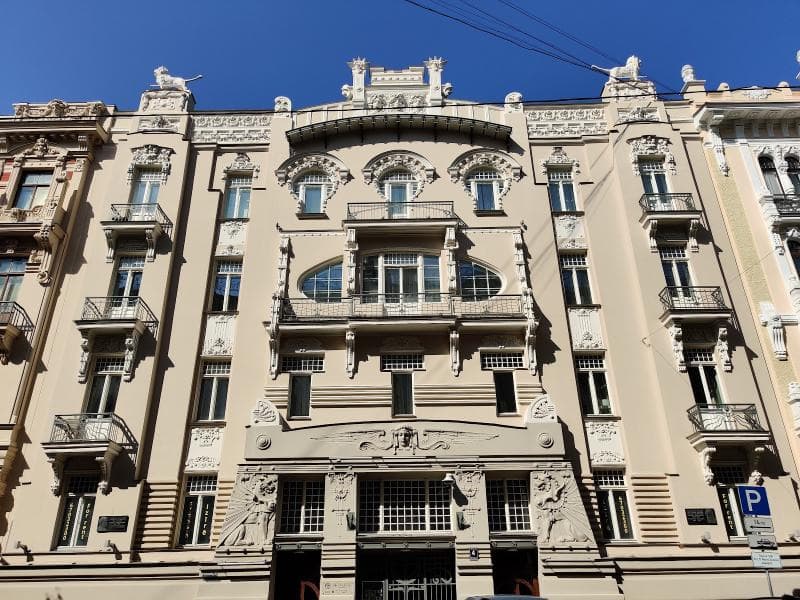
Discover Alberta Street in Riga, Latvia, a stunning UNESCO-listed Art Nouveau district featuring whimsical facades, intricate details, and historical charm.
Overview
Stepping onto Alberta Street in Riga, Latvia, is like wandering into an open-air museum dedicated to the whimsical and flamboyant Art Nouveau movement. This relatively short street, nestled within Riga's 'Quiet Centre', is globally renowned for its exceptional collection of early 20th-century architecture. Every building here is a distinctive testament to the artistic and economic boom Riga experienced at the turn of the century, making it an essential destination for any traveler with an appreciation for history, art, and architectural grandeur. The entire Historic Centre of Riga, including Alberta Street, is proudly recognized as a UNESCO World Heritage site, underscoring its profound cultural significance.
Constructed within a remarkably brief period, primarily between 1901 and 1908, Alberta Street serves as the pulsating heart of Riga's Art Nouveau District. It stands as a vivid showcase of Jugendstil, the German variant of Art Nouveau, adorned with a dazzling array of sculptural details, ornate balconies, and symbolic motifs that captivate the eye at every turn. Eight of its magnificent buildings have been officially recognized as architectural monuments of national significance, marking Alberta Street as a jewel in Riga's crown and a must-see for anyone exploring the city's rich heritage.
History & Cultural Background
The story of Alberta Street is deeply intertwined with Riga's rapid transformation into a major economic and cultural powerhouse in the late 19th and early 20th centuries. Named after Bishop Albert, the founder of Riga in 1201, the street was laid out in 1901, coinciding with the city's 700th anniversary. This period saw an unprecedented surge in Riga's population and wealth, largely due to its status as a vital port and industrial hub within the Russian Empire. As the city expanded beyond its medieval core, affluent merchants and landowners sought to express their prosperity and embrace modernity through new residential and commercial structures.
The Art Nouveau style, or Jūgendstils as it's known locally, offered the perfect artistic language for this ambition. It emerged across Europe as a reaction against rigid historical styles, promoting individuality, a connection to local identity, and a more rational approach to architecture. Riga became a global epicenter for this movement, boasting one of the largest concentrations of Art Nouveau buildings anywhere in the world. The architects who shaped Alberta Street, both local and Baltic German, were instrumental in blending international Art Nouveau trends with distinctive Baltic motifs, creating a unique and vibrant architectural landscape.
What Makes It Special
What sets Alberta Street apart is not just the sheer volume of Art Nouveau buildings, but the artistic intensity and diversity concentrated within such a small area. The street is dominated by the dramatic and imaginative designs of Mikhail Eisenstein, arguably Riga's most famous Art Nouveau architect and father of the renowned film director Sergei Eisenstein. His buildings are instantly recognizable for their exuberant facades, rich with ornamental details, vivid colors, and theatrical compositions. You'll encounter elaborate sculptures, enigmatic masks, and fantastical creatures that seem to leap from the stone, all reflecting a style often described as 'Romantic Nationalism'.
Beyond Eisenstein's bold statements, other prominent architects like Konstantīns Pēkšēns and Eižens Laube also left their indelible mark. Pēkšēns, whose former residence at number 12 now houses the Riga Art Nouveau Museum, often incorporated elements of Latvian folk art, offering a more restrained yet equally elegant interpretation of the style. Laube, his pupil, pushed the boundaries further, moving towards more structural clarity and functionalism, anticipating later modernist trends. This interplay of varied artistic visions within a single street creates a compelling architectural dialogue, making every step a discovery.
Stories, Fun Facts & Local Details
Alberta Street is rich with stories that bring its architecture to life. Mikhail Eisenstein's buildings, for instance, are often said to reflect his own complex personality, with their 'femme fatale' themes sometimes linked to his marriage. One of his earliest designs on the street, House No. 8, was famously nicknamed 'the coffin' by locals due to its Egyptian-themed facade, showcasing the playful and sometimes macabre symbolism prevalent in Art Nouveau. Another building, Alberta Street 2a, was once home to the celebrated Russian-British philosopher Isaiah Berlin.
The street itself has witnessed historical changes, having been renamed Friča Gaiļa iela during the Soviet occupation and Hollanderu iela under German control, before its original name was restored in 1990, a year before Latvia regained its independence. This resilience highlights the enduring cultural value of Alberta Street. The Riga Art Nouveau Museum, located in the beautifully restored apartment at Alberta Street 12, offers a fascinating glimpse into the domestic life of Riga's elite during the Art Nouveau era, complete with authentic period furnishings and decor.
Visitor Perspective
For the curious traveler, exploring Alberta Street is an immersive journey into a bygone era. It's best experienced on foot, allowing ample time to pause and admire the intricate details on each facade. Photography enthusiasts will find endless opportunities to capture the vibrant colors, elaborate sculptures, and unique 'squished faces' that adorn the buildings. To make the most of your visit, consider going in the early morning or late afternoon, when the softer light highlights the architectural elements and the street is less crowded.
A walk along Alberta Street isn't merely sightseeing; it's an exploration of a unique artistic philosophy that embraced nature, symbolism, and craftsmanship. The street is calm, elegant, and invites you to wander at your own pace, absorbing the atmosphere. After admiring the exteriors, a visit to the Riga Art Nouveau Museum at number 12 provides deeper insight into the interior design and daily life of the period, completing the experience. This iconic street truly transforms a simple stroll into a treasure hunt of architectural wonders, making it an unforgettable highlight of any trip to Riga.
Coordinates: 24.1097, 56.959
View on Google Maps💬 How Travelers Describe This Place
Based on community votes
Must See
950Beautiful
287Photogenic
255Unique
231Interesting
86
Traveler Stories
Discover memorable experiences shared by travelers who have visited this place.
No traveler stories yet.
Be the first traveler to share what made this place memorable.

Tour
By
Spot
Discover amazing places around the world. Your journey starts here.
Explore
© 2026 TourBySpot. All rights reserved.